In lieu of an actual post of actual substance, here's a traditional Irish song about the day, Thugamar Féin an Samhradh Linn.
I hope you have a good Bealltainn!


| ‘Dh’ fhag e mhan mi, dh’ fhag e ‘n ard mi Dh’ fhag e eadar mo dha lamh mi, Dh’ fhag e bial mi, dh’ fhag e cul mi, Dh’ fha e eadar mo dha shul mi. |
It escaped me below, it escaped me above. It escaped me between my two hands, It escaped me before, it escaped me behind, It escaped me between my two eyes. | |
Dh’ fhag e shios mi, dh’ fhag e shuas mi, Dh’ fhag e eadar mo dha chluas mi, Dh’ fhag e thall mi, dh’ fhag e bhos mi, Dh’ fhag e eadar mo dha chos mi. |
It escaped me down, it escaped me up, It escaped me between my two ears, It escaped me thither, it escaped me hither, It escaped me between my two feet. | |
Thilg mi ‘n slacan druidh donai, Am bun preis crin cruaidh conuis. Far nach fas fionn no foinnidh, Ach fracan froinnidh feurach.’ |
I threw my druidic evil wand. Into the base of a withered hard whin bush, Where shall not grow 'fionn' nor 'fionnidh,' But fragments of grassy 'froinnidh.' |

Nothain (was) an old woman [cailleach] of Connaught, and from the time she was born her face never fell on a field, and her thrice fifty years were complete. Her sister once went to have speech with her. Sentuinne (” Old Woman”) was her name: her husband was Sess Srafais, and Senbachlach (“Old-Churl”) was another name for him. Hence said the poet:
Sentuinne and Senbachlach,
A seis srofais be their withered hair!
If they adore not God’s Son
They get not their chief benefit.
From Berre, then, they went to her to bring her on a plain on May-day. When she beheld the great plain, she was unable to go back from it, and she planted a stone (lia) there in the ground, and struck her head against it and….and was dead. ” It will be my requiem….I plant it for sake of my name.” Whence Lia Nothan (“Nothan’s Stone”).
Nothain, daughter of Conmar the fair,
A hard old woman of Connaught,
In the month of May, glory of battle,
She found the high stone.

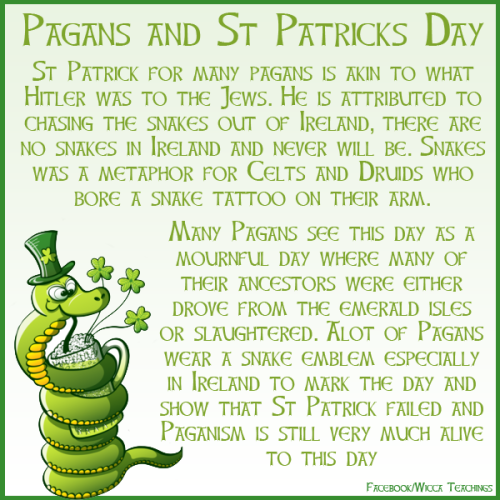
Mythically, at least, Pádraig and later saints subsumed the role of the warrior-elite heroes in the popular imagination. By replacing chieftains and druids with Christian saints possessed of miraculous powers, early Christian mythology carried on the patterns of the polytheistic originals they replaced. The mystical, and not the physical, would be the lynchpin in the conquest of the mythic landscape; a trope which is common enough that it appears in the Mythological Cycle, among others. While not unique to Irish hagiography, this is something that occurs repeatedly in the Irish lore. The supremacy of a figure like Patrick over that of the Druids (the most common representative of the Pagan past) is not based on his moral character, but on his supernatural abilities. This is a pattern which is discernible in other hagiographies, particularly that of St. Brigid of Kildare and St. Columba.That's up on the Gaol Naofa website, and many thanks go to Gorm for writing it, and to everyone who helped with the brainstorming, tweaking and proofing for the videos. In particular, thanks as always go to Kathryn and Treasa for their hard work.

