Back at the start of summer I got a good haul from the library that I planned on working my way through for reading or research purposes, and of the ones I decided to read all the way through, I got an lot of good stuff from them, which is always yay-making. I didn't manage to read two of them before I had to take the haul back so I decided to renew them and I've been making a concerted effort to get through them as fast as I can, and now I'm one down with half of the other to go.
Like the other books I've reviewed from the haul so far, these two are relatively recent publications, so they're more up to date than a lot of the recommended reading on Celtic Reconstructionist reading lists and I think they'll make good additions to any wish list. The one I'll be reviewing just now is from 2009 and of the two I think it has a wider appeal. Gaulish and, to a lesser extent, Brythonic or Welsh Polytheists will benefit from this book as well, I reckon.
Celtic Curses
Bernard Mees
Going by the title alone it's the sort of thing that could go one of two ways, being either the kind of book that would be more at home amongst the likes of your common or garden variety ye ancient Irish potato goddess fluff, or else one that lurks on my wishlist for many a birthday until I can justify splurging on it. Or, y'know. Get a job. Considering it's the latter, the title seems a little provocative and I think to a certain extent it is. But I'll get to that.
Just like the title suggests, we're dealing mainly with the subject matter of cursing in Celtic contexts. The "Celtic" in question is primarily Gaulish to start with, before moving to Brythonic areas (particularly the evidence from Bath), and then Irish evidence. Some Scottish and Welsh gets a look in, but that's mainly incidental, to be honest. Other kinds of magical practices are considered too - ones that might also share some sort of similarities with cursing that might indicate common origins in practice, or perhaps even direct influences. In these cases we're especially looking at Irish evidence like gessi and lorica prayers, and things like the Song of Lugh and the Morrígan's (or Badb's) prophecy from Cath Maige Tuired. Gessi and loricae get chapters to themselves, but things like the prophecy and the Song of Lugh get a few pages or so in the penultimate chapter "Incantations."
The first part of the book primarily deals with the Gaulish evidence while the latter half concentrates more on the Irish and (to a lesser extent) the Welsh evidence, although there are frequent cross-overs. As far as the Gaulish evidence goes we're primarily looking at defixiones, and Mees argues that while the practice certainly owes a lot to Classical influence, Gaulish defixiones also bear the hallmarks of "indigenous" beliefs at play as well. This is mainly borne out by the fact that Gaulish defixiones are often metrical, where as they aren't in Classical practice. Mees also points to the fact that the Irish word for charm or incantation, bricht, also refers to poetic metre of eight syllables, implying the metre itself was originally an integral part of magical charms, and the Gaulish word brixt which is clearly related to the Irish bricht suggests that the metrical element is ultimately a Celtic feature of magic in general.
This is where the slightly provocative part comes in; from the beginning Mees makes it clear that he views the evidence as a continuum between the earlier and later evidence - i.e from the early evidence in Gaul to the later evidence in Ireland. In supporting this theory, Mees sets out to show coincidences and possible continuity in the evidence (like with brixt --> bricht) in order to argue that such practices bear underlying "Celtic" features. I'm sure there will be strong critics of Mees' idea, and I think it's safe to say that some points are more convincing than others. One of the quibbles I had is that in some places there is very little discussion of the kinds of issues affecting the sources we're looking at, and it seems assumed that because it is written, it must be authentic and representative of actual practice. Given the amount of issues that affect Irish myth in particular, this could have done with being addressed in a bit more detail than it was.
All in all it's a fascinating read and the author gives plenty of examples of curses in discussing the kind of forms they took, the context they were found in, and the features that could be considered to be specifically "Celtic" or specific to a particular Celtic culture and why that might be. In most cases the original language is given alongside with a translation, which is extremely useful, and considering the fact that the language can often be very obscure or difficult there's good discussion of how the translation was arrived at, and the kinds of symbolism and meaning might lurk beneath the techncial terms used. You also get the delights of the kinds of phrasing that people chose to use - one Gaulish example invoking a curse on various things belonging to their intended victim, including their lunch box.
For the most part we just look at what the curses say and what that tells us about cursing and concepts like fate or destiny that must be manipulated in order to effect the curse. This is extremely useful in itself, but I couldn't help but feel that it would have been more useful with some discussion of the religious context they were performed in - not just how the curses were made, who did them, and so on, but also the underlying cosmological and religious concepts they drew on. There is some discussion, but more would have been better. I was also slightly disappointed about the fact that bullauns don't get a look in - or really any kinds of more modern "pishrogues" and folk practices. Cursing wells get a brief mention as the final chapter, but that's about it.
There really isn't much else like this out there that's so readily accessible, so in many respects the few negatives are forgivable because it's very much a beginning in looking at this sort of subject, and there is only so much you can fit in to one book. As far as things Gaelic go, the chapter on "Breastplates and Clamours" has a lot to offer, and so do the chapters on ''Geasa and Binding" and "Incantations" (in spite of my aforementioned reservations about how the myths are approached). In a lot of the Gaulish curses there are deities that are called upon that results in good discussion that I think will be of interest - for Ogmios in particular.
If
you're at all interested in how magical practices might look in a
reconstructionist context then I'd highly recommend it. I've not seen it going for very cheap but if you can get your hands on a copy then I don't think you'll regret it.
Saturday, 13 October 2012


Saturday, 29 September 2012
Notes: Early Irish Attitudes toward Hair and Beards
Early Irish Attitudes toward Hair and Beards, Baldness and Tonsure
William Sayers
ZcP Volume 44 (1991)
There's something about reading an article that's entirely devoted to hair and beards in particular that...well, it points to a level of geekery bordering on the ultimate, does it not? If that's the case then I shall wear my Official CR TonsureTM with pride...The trick with the styling is to get the right balance of lime and urine. Just FYI.
Anyway, in case you didn't already know the medieval Irish took their beards seriously. I mean really seriously. See for example: Geisi Ulcai: The Prohibitions of a Beard. But as amusing as it might be on the surface to think of the fact that somebody went to all that trouble over facial hair, it really is serious business when you get down to the nitty gritty of what this kind of thing represents. This is where Sayers' article comes in, because happily enough he lays out the major points quite nicely.
Firstly, he notes that the word for hair - OIr folt (in Gàidhlig today it's falt) - can also mean 'foliage, thatch'. In cosmogonical terms (creation myths), where it's speculated that the Proto-Indo-European creation myth involved the dismembering of a giant or primordial being (each part contributing towards the making of certain things - in this case the hair of the giant or being making the world's trees and grass), it can therefore be seen to have an extremely deep significance. There's a Dindshenchas tale about the first hair cut in Ireland, incidentally, which is analogous to the clearing of plains, reinforcing the creative potential.
In the relationship between hair and grass/trees it's easy to equate hair with the over all physical and social condition of a person. Long, glossy hair suggests a healthy, fertile person, and also denotes beauty. It also implies a high social status, having the luxury to take care of such hair to keep it in good condition. Those of lowly status, or the unfree, have shorn hair - a sign of their bonds, but also their position in society; no muss no fuss. Baldness, on the other hand, is utterly shameful, and it is one of the penalties for failing to attend the fair of Carmun. Being a harvest festival, the associations of hair with fertility brings us back to the cosmogonical overtones of hair's significance.
Different styles of hair can express certain relationships, and lots of sources refer to a kind of "druidic tonsure" that serves as a marker of the druid's station. Early on in the Irish Church an argument broke out of the appropriate form of tonsure, with different styles being favoured by two different factions. The "Celtic" tonsure had the front of the head shaved back to a line going across the way from ear to ear, but with a "fringe" at the front which reached round to the side, connecting the fringe to the hair around the ears. The druidic tonsure was said to have been similar, but with more of a "tuft" at the front, so they Celtic tonsure was clearly seen to be related to that, although it came to be called "Simon's tonsure" after Simon Magus. Ultimately, the other method - the Petrine tonsure (with the bald spot on top of the head, the resulting ring of hair supposed to resemble Christ's crown of thorns) - won out.
Sayers notes that warriors are frequently described in terms of general appearance, stature, and the state of the hair - generally long locks that are combed backwards and shaved at the front. Conchobar is described as having long, wavy, yellow hair befitting his royal status, whereas warriors are often described as brown-haired. Cú Chulainn is described as having three colours in his hair at points, both brown, red and gold denoting the way he straddles all levels of society and beyond (with his semi-divine origins). Or:
Different hairstyles denoted different things as well, and mention is made of the fíanna or díberga (brigands) wearing distinctive hairstyles that were supposed to give a lupine or ursine effect. Warriors are frequently referred to as having bristly hair, especially during battle when the stiffness of their hair is made to reflect their virility and resolve; there are comments that if apples, crab apples or even nuts were to fall on their head, not one would reach the floor because the spikes of the hair would impale them, but they might also braid their hair or model it along an equine mane or that kind of thing.
Fertility and virility equals strength and power. Slaves and lowly servants have a certain type of short or reoughly cropped hair, while charioteers have a special filet in their hair "reflecting the glory of their masters," as do poets. Picts apparently had cropped hair, of equal length at the front as at the back (a bowl cut, then!), and jugglers or fools were bald. I presume that means their heads were shaved. Not that they became jugglers just because they were bald; either way, the lack of hair is an indicator of their subservience. In the case of tonsures, partial baldness was indicative of their sacrifice (in return for knowledge and wisdom) and dedication to the gods, or God. Craftsmen and and farmers weren't supposed to have long hair or beards; these were reserved for the upper classes, warriors.
One of the most interesting bits, perhaps, is the implications of age and hair length. Long hair is associated with warriors, boys only being able to keep their hair long if they showed bravery and courage. In the case of beards (as per the Geisi Ulcae), beards are only appropriate for warriors or poets (a mark of maturity, the ability to fight or carry wisdom and the appropriate knowledge for their art/profession), but the warrior is only worthy of a beard if they observe the appropriate proscriptions. Cú Chulainn, being exceptionally young, occasionally had to fake a beard so that he might be able to fight; without a beard other warriors wouldn't fight him, because killing a mere boy would be a stain on their honour. Sometimes he used berry juice, other times he sang spells over grass (the hair:grass theme recurring once more).
In the case of women, their depictions are fairly uniform, yellow, gold, red-gold in colour, and aristocratic women tended to have long hair, plaited or loose (men might also wear plaits). Women's pubic hair is often described as well (the woman/goddess who arrives at Da Derga's hostel is described as having pubic hair down to her knees), and the penalty for shaving a woman's pubic hair was "two thirds of the éraic, plus her honour price if she is violated." Other fines covered offences to eyebrows, eyelashes and the hair or hair-pieces of "shorn girls", as well as against the beard and body hair of men. Seizing of hair during a fight between a wife and a concubine was not a punishable offence, however, given the understandable circumstances of the disagreement. For clerics, even touching their tonsure was a punishable offence.
So in general, hair articulated a few things - your social status, your station in life/profession, and sexual maturity. Cutting the hair appears to have marked various milestones of age and legal maturity, while hair colour could be very symbolic. Over all, the kind of hair you had helped to mark out your identity, and as such is an important motif in myth and legend.
William Sayers
ZcP Volume 44 (1991)
There's something about reading an article that's entirely devoted to hair and beards in particular that...well, it points to a level of geekery bordering on the ultimate, does it not? If that's the case then I shall wear my Official CR TonsureTM with pride...The trick with the styling is to get the right balance of lime and urine. Just FYI.
Anyway, in case you didn't already know the medieval Irish took their beards seriously. I mean really seriously. See for example: Geisi Ulcai: The Prohibitions of a Beard. But as amusing as it might be on the surface to think of the fact that somebody went to all that trouble over facial hair, it really is serious business when you get down to the nitty gritty of what this kind of thing represents. This is where Sayers' article comes in, because happily enough he lays out the major points quite nicely.
Firstly, he notes that the word for hair - OIr folt (in Gàidhlig today it's falt) - can also mean 'foliage, thatch'. In cosmogonical terms (creation myths), where it's speculated that the Proto-Indo-European creation myth involved the dismembering of a giant or primordial being (each part contributing towards the making of certain things - in this case the hair of the giant or being making the world's trees and grass), it can therefore be seen to have an extremely deep significance. There's a Dindshenchas tale about the first hair cut in Ireland, incidentally, which is analogous to the clearing of plains, reinforcing the creative potential.
In the relationship between hair and grass/trees it's easy to equate hair with the over all physical and social condition of a person. Long, glossy hair suggests a healthy, fertile person, and also denotes beauty. It also implies a high social status, having the luxury to take care of such hair to keep it in good condition. Those of lowly status, or the unfree, have shorn hair - a sign of their bonds, but also their position in society; no muss no fuss. Baldness, on the other hand, is utterly shameful, and it is one of the penalties for failing to attend the fair of Carmun. Being a harvest festival, the associations of hair with fertility brings us back to the cosmogonical overtones of hair's significance.
Different styles of hair can express certain relationships, and lots of sources refer to a kind of "druidic tonsure" that serves as a marker of the druid's station. Early on in the Irish Church an argument broke out of the appropriate form of tonsure, with different styles being favoured by two different factions. The "Celtic" tonsure had the front of the head shaved back to a line going across the way from ear to ear, but with a "fringe" at the front which reached round to the side, connecting the fringe to the hair around the ears. The druidic tonsure was said to have been similar, but with more of a "tuft" at the front, so they Celtic tonsure was clearly seen to be related to that, although it came to be called "Simon's tonsure" after Simon Magus. Ultimately, the other method - the Petrine tonsure (with the bald spot on top of the head, the resulting ring of hair supposed to resemble Christ's crown of thorns) - won out.
Sayers notes that warriors are frequently described in terms of general appearance, stature, and the state of the hair - generally long locks that are combed backwards and shaved at the front. Conchobar is described as having long, wavy, yellow hair befitting his royal status, whereas warriors are often described as brown-haired. Cú Chulainn is described as having three colours in his hair at points, both brown, red and gold denoting the way he straddles all levels of society and beyond (with his semi-divine origins). Or:
The progression from inside to outside, top to bottom, and the three colours, black, red and gold, may be equated with the three estates of agriculturalists and herdsmen, warriors, and priests and kings. Cú Chulainn's semi-divine origin and responsibility to defend all Ulster during the debility of its king and hosts account for his subsuming all three functions, as does, in other instances, the king.(p160)Red hair is typically associated with Otherworldly figures like Da Derga, while yellow or gold is often used to describe the English (Anglo-Saxons) if it's not being associated with kings. Women, on the other hand, are stereotypically blond to one degree or another, unless clearly Otherworldly.
Different hairstyles denoted different things as well, and mention is made of the fíanna or díberga (brigands) wearing distinctive hairstyles that were supposed to give a lupine or ursine effect. Warriors are frequently referred to as having bristly hair, especially during battle when the stiffness of their hair is made to reflect their virility and resolve; there are comments that if apples, crab apples or even nuts were to fall on their head, not one would reach the floor because the spikes of the hair would impale them, but they might also braid their hair or model it along an equine mane or that kind of thing.
Fertility and virility equals strength and power. Slaves and lowly servants have a certain type of short or reoughly cropped hair, while charioteers have a special filet in their hair "reflecting the glory of their masters," as do poets. Picts apparently had cropped hair, of equal length at the front as at the back (a bowl cut, then!), and jugglers or fools were bald. I presume that means their heads were shaved. Not that they became jugglers just because they were bald; either way, the lack of hair is an indicator of their subservience. In the case of tonsures, partial baldness was indicative of their sacrifice (in return for knowledge and wisdom) and dedication to the gods, or God. Craftsmen and and farmers weren't supposed to have long hair or beards; these were reserved for the upper classes, warriors.
One of the most interesting bits, perhaps, is the implications of age and hair length. Long hair is associated with warriors, boys only being able to keep their hair long if they showed bravery and courage. In the case of beards (as per the Geisi Ulcae), beards are only appropriate for warriors or poets (a mark of maturity, the ability to fight or carry wisdom and the appropriate knowledge for their art/profession), but the warrior is only worthy of a beard if they observe the appropriate proscriptions. Cú Chulainn, being exceptionally young, occasionally had to fake a beard so that he might be able to fight; without a beard other warriors wouldn't fight him, because killing a mere boy would be a stain on their honour. Sometimes he used berry juice, other times he sang spells over grass (the hair:grass theme recurring once more).
In the case of women, their depictions are fairly uniform, yellow, gold, red-gold in colour, and aristocratic women tended to have long hair, plaited or loose (men might also wear plaits). Women's pubic hair is often described as well (the woman/goddess who arrives at Da Derga's hostel is described as having pubic hair down to her knees), and the penalty for shaving a woman's pubic hair was "two thirds of the éraic, plus her honour price if she is violated." Other fines covered offences to eyebrows, eyelashes and the hair or hair-pieces of "shorn girls", as well as against the beard and body hair of men. Seizing of hair during a fight between a wife and a concubine was not a punishable offence, however, given the understandable circumstances of the disagreement. For clerics, even touching their tonsure was a punishable offence.
So in general, hair articulated a few things - your social status, your station in life/profession, and sexual maturity. Cutting the hair appears to have marked various milestones of age and legal maturity, while hair colour could be very symbolic. Over all, the kind of hair you had helped to mark out your identity, and as such is an important motif in myth and legend.
Thursday, 27 September 2012
Out and about
I took a walk in the woods at the weekend and conveniently forgot to charge the battery in the camera...But luckily things were so exciting (LOOK AT THE LEAVES, MUM!!!) Rosie wanted to go again yesterday, and it wasn't like the dogs would complain, was it?
This time I remembered to charge the camera battery in advance, all the better to capture the colours of autumn:

Crunchy leaves underfoot.


Mushrooms!

Moss...

And red red hawthorn berries.
Sometimes it's the simple things, like showing a five-year-old that sycamore seeds fall like "helicopters" (and I suspect a couple of helicopters might have been buried in the garden by now...), that bring the greatest joy.
This time I remembered to charge the camera battery in advance, all the better to capture the colours of autumn:

Crunchy leaves underfoot.
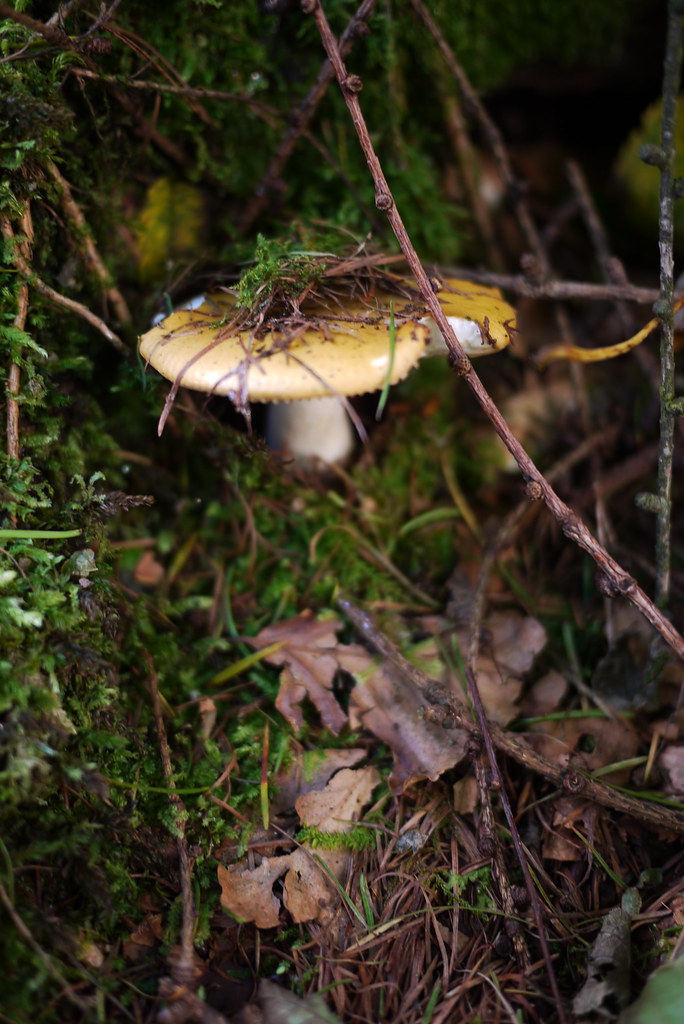
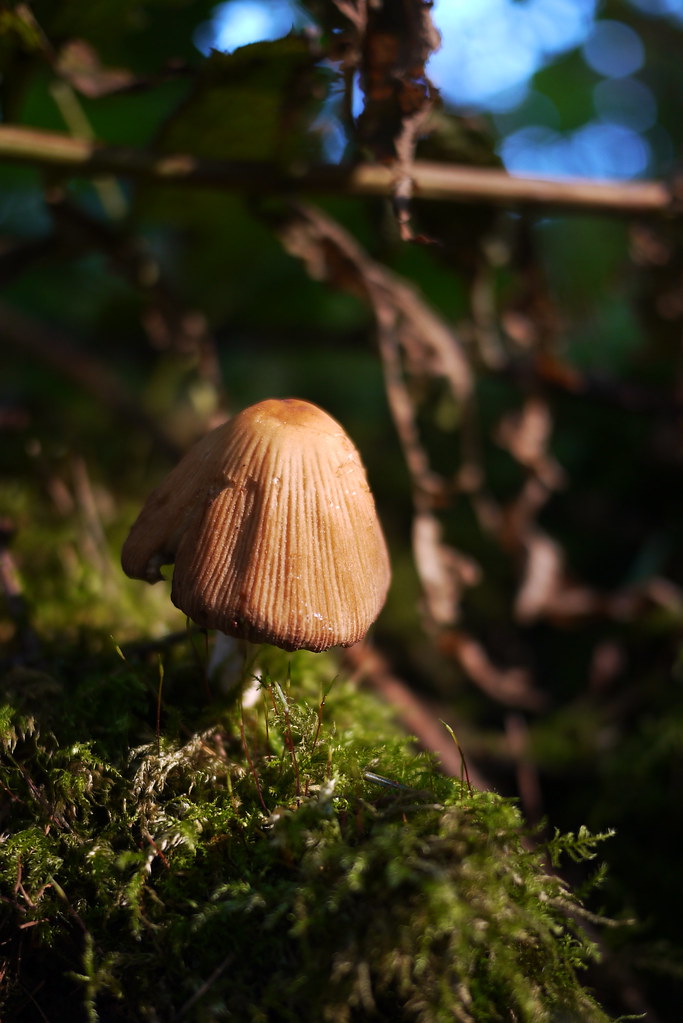
Mushrooms!
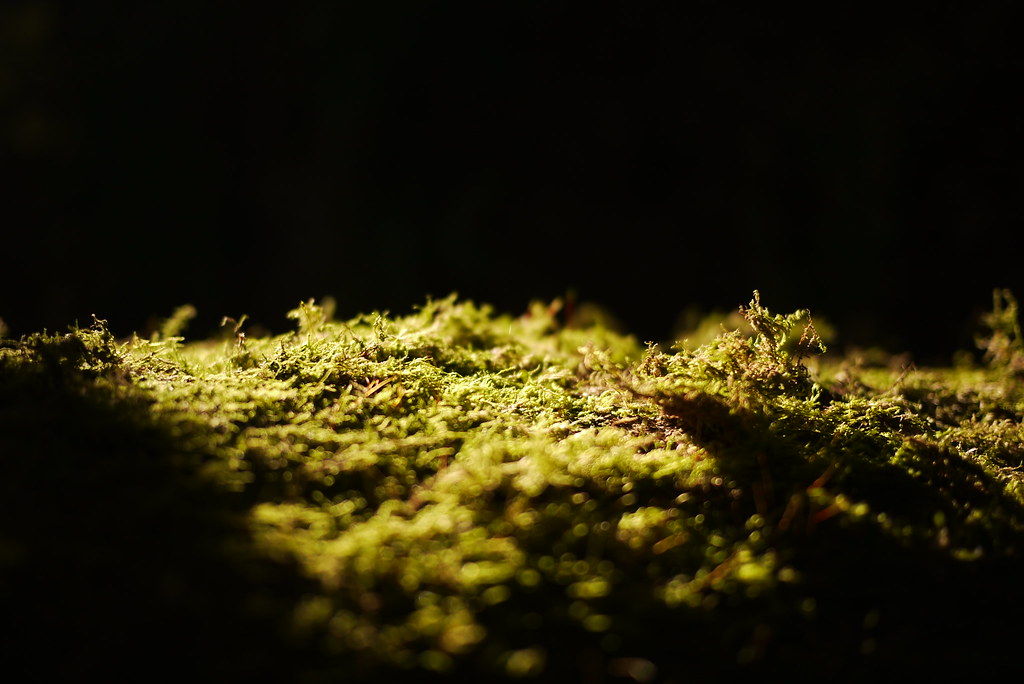
Moss...
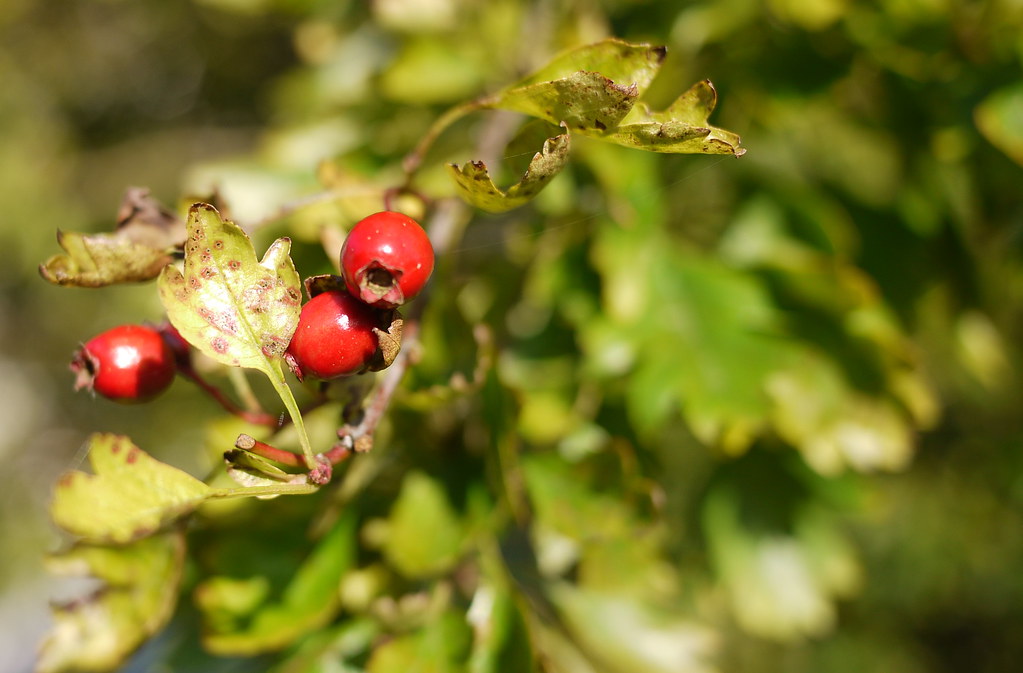
And red red hawthorn berries.
Sometimes it's the simple things, like showing a five-year-old that sycamore seeds fall like "helicopters" (and I suspect a couple of helicopters might have been buried in the garden by now...), that bring the greatest joy.
Friday, 21 September 2012
Healing
Last week I finally had surgery to try and help fix my back problems and I can say with absolute certainty that I still hate hospitals with the fiery passion of a thousand suns. It's not something I'm particularly keen to repeat, let's say.
It's early days yet and it's too soon to tell just how successful the surgery has been but as it is, things are much improved and I seem to be healing up nicely; touch wood it stays that way. For now I'm enjoying the novelties of being able to do exciting things like sit and walk again. That's nice. But I'm also facing the prospect of being able to do stuff and have a life again. Yay! The idea is liberating and a little scary at the same time, in a way, because being only a little less than housebound has meant that I've been holed up in a safe little cocoon for going on eighteen months. My world has been small and predictable in many ways, and stepping out of that is an odd sort of thought to entertain. Maybe I can get a job and be a productive member of society once more? That's going to have to wait a little longer while I see how my recovery goes, but the possibilities on offer could invite big changes. As I've discovered in the last week - in more ways than one - change can be painful and stressful, but sometimes it's for the better. One can only hope, anyway.
In the meantime, one of the things I could do is get back into my Gaelic lessons; I had to give them up when my disc went but hopefully now I might be able to think about going back and pick up where I left off (with a bit of revision over the next few days...). Lessons start next week so if I continue improving then it might be doable and hopefully this time I won't get so frustrated at the slow pace. I'm ultimately hoping to be able to find a way to get some sort of qualification in it; I think for me it's the best way to stay motivated, but that costs money and these lessons are free...In the current economic climate I'm surprised they're still going at all but I'm certainly not complaining.
Going back to the whole surgery thing though: It's been a long journey to get to this point, mainly because my bog-standard, boring old prolapsed disc didn't present itself in the usual manner, which apparently confuses orthopedic surgeons who lack the imagination or foresight to actually listen to their patients (I'm not bitter...). Along the way I've tried to look into ways of dealing with it from a spiritual perspective, if anything to find comfort, and maybe grow and learn a little. I don't believe the gods are there to hold my hand and stroke my hair and make it all better, or shield me from the kinds of trials and tribulations that tend to come everybody's way now and then. Nor do I believe that when bad things happen that we're being punished for something we've done that's wrong...But I do believe that they can offer some comfort in the right circumstances while remembering that first and foremost, one must help oneself, because shit happens. And when it does, at least you're not alone.
So aside from seeking comfort and even perhaps a little wisdom and understanding in it all, I tried looking for the kind of things I could do. With limited success, to be fair (and funny how I revisit the subject almost a year to the day), but recently I did find something from an Irish source (though not too helpful to my circumstances) and an anecdote in Mary Beith's Healing Threads about a journalist who saw a wise woman about his sciatic problems back in the 70s, and he was given a thread to wear. Beith says that much to the man's surprise the threads worked until they got worn and broke, at which point the pain soon came back. So I thought that maybe I could do something like that myself; maybe not as effective as getting it from a bonafide fiosaiche or ban-fhiosaiche, but it's worth a try, right?
It so happened that while Rosie was helping me make the wind-chimes for the garden she found some extra wooden beads that were plain, so she painted them and snuck them upstairs to get Mr Seren to help her thread them. She then proudly presented them to me, saying I could take them with me to hospital and they'd help me get better. That seemed like the perfect sort of thing to adapt to my purpose, and so I have, though a bracelet isn't really feasible for a variety of reasons so I've made a sort of key ring instead.
And now...I'm looking forward to having the opportunity to get out and about; enjoy the beach, walk the dogs, take a walk through the woods and watch the autumn unfold...I managed to go pick some brambles just before I went into hospital and with the cold weather starting to bite hopefully I'll be able to go get some more soon. It's a bumper harvest this year:

I have some rounds to make, offerings and thanks to give. At times it's been a struggle to keep grounded and connected. I'm sure most people can agree that having to deal with pain or illness on a long-term basis can be incredibly wearing. Exhausting, at times. There are times when compromises have to be made, ambitions have to be lessened somewhat, or else there are just not enough spoons left to do much of anything at all. In amongst it all you can end up feeling a little lost or disconnected.
You learn to adapt, and work within your limitations as much as you can. You focus on what you still have - all the many wonderful things, and I'm not talking about faith or belief or personal practices, or material possessions or whatever; I'm talking about community as well. There's a ways to go yet but in amongst all of this the kind of support I've received from close friends (online or in real life, in or out of the CR community) and people I maybe don't know so well yet; people who've commented here with good wishes, or else listened patiently to me while I moan and wail, offered wise words and prayer, or sent the occasional wonderful surprise in the post that brightened my day more than you could know...I think in many ways those are the things have meant the most to me, and makes me realise not just how lucky I am, but how great this community can be.
I want to thank you all for that. Words seem a little inadequate, really. But seriously. Thank you.
It's early days yet and it's too soon to tell just how successful the surgery has been but as it is, things are much improved and I seem to be healing up nicely; touch wood it stays that way. For now I'm enjoying the novelties of being able to do exciting things like sit and walk again. That's nice. But I'm also facing the prospect of being able to do stuff and have a life again. Yay! The idea is liberating and a little scary at the same time, in a way, because being only a little less than housebound has meant that I've been holed up in a safe little cocoon for going on eighteen months. My world has been small and predictable in many ways, and stepping out of that is an odd sort of thought to entertain. Maybe I can get a job and be a productive member of society once more? That's going to have to wait a little longer while I see how my recovery goes, but the possibilities on offer could invite big changes. As I've discovered in the last week - in more ways than one - change can be painful and stressful, but sometimes it's for the better. One can only hope, anyway.
In the meantime, one of the things I could do is get back into my Gaelic lessons; I had to give them up when my disc went but hopefully now I might be able to think about going back and pick up where I left off (with a bit of revision over the next few days...). Lessons start next week so if I continue improving then it might be doable and hopefully this time I won't get so frustrated at the slow pace. I'm ultimately hoping to be able to find a way to get some sort of qualification in it; I think for me it's the best way to stay motivated, but that costs money and these lessons are free...In the current economic climate I'm surprised they're still going at all but I'm certainly not complaining.
Going back to the whole surgery thing though: It's been a long journey to get to this point, mainly because my bog-standard, boring old prolapsed disc didn't present itself in the usual manner, which apparently confuses orthopedic surgeons who lack the imagination or foresight to actually listen to their patients (I'm not bitter...). Along the way I've tried to look into ways of dealing with it from a spiritual perspective, if anything to find comfort, and maybe grow and learn a little. I don't believe the gods are there to hold my hand and stroke my hair and make it all better, or shield me from the kinds of trials and tribulations that tend to come everybody's way now and then. Nor do I believe that when bad things happen that we're being punished for something we've done that's wrong...But I do believe that they can offer some comfort in the right circumstances while remembering that first and foremost, one must help oneself, because shit happens. And when it does, at least you're not alone.
So aside from seeking comfort and even perhaps a little wisdom and understanding in it all, I tried looking for the kind of things I could do. With limited success, to be fair (and funny how I revisit the subject almost a year to the day), but recently I did find something from an Irish source (though not too helpful to my circumstances) and an anecdote in Mary Beith's Healing Threads about a journalist who saw a wise woman about his sciatic problems back in the 70s, and he was given a thread to wear. Beith says that much to the man's surprise the threads worked until they got worn and broke, at which point the pain soon came back. So I thought that maybe I could do something like that myself; maybe not as effective as getting it from a bonafide fiosaiche or ban-fhiosaiche, but it's worth a try, right?
It so happened that while Rosie was helping me make the wind-chimes for the garden she found some extra wooden beads that were plain, so she painted them and snuck them upstairs to get Mr Seren to help her thread them. She then proudly presented them to me, saying I could take them with me to hospital and they'd help me get better. That seemed like the perfect sort of thing to adapt to my purpose, and so I have, though a bracelet isn't really feasible for a variety of reasons so I've made a sort of key ring instead.
And now...I'm looking forward to having the opportunity to get out and about; enjoy the beach, walk the dogs, take a walk through the woods and watch the autumn unfold...I managed to go pick some brambles just before I went into hospital and with the cold weather starting to bite hopefully I'll be able to go get some more soon. It's a bumper harvest this year:

I have some rounds to make, offerings and thanks to give. At times it's been a struggle to keep grounded and connected. I'm sure most people can agree that having to deal with pain or illness on a long-term basis can be incredibly wearing. Exhausting, at times. There are times when compromises have to be made, ambitions have to be lessened somewhat, or else there are just not enough spoons left to do much of anything at all. In amongst it all you can end up feeling a little lost or disconnected.
You learn to adapt, and work within your limitations as much as you can. You focus on what you still have - all the many wonderful things, and I'm not talking about faith or belief or personal practices, or material possessions or whatever; I'm talking about community as well. There's a ways to go yet but in amongst all of this the kind of support I've received from close friends (online or in real life, in or out of the CR community) and people I maybe don't know so well yet; people who've commented here with good wishes, or else listened patiently to me while I moan and wail, offered wise words and prayer, or sent the occasional wonderful surprise in the post that brightened my day more than you could know...I think in many ways those are the things have meant the most to me, and makes me realise not just how lucky I am, but how great this community can be.
I want to thank you all for that. Words seem a little inadequate, really. But seriously. Thank you.
Monday, 17 September 2012
Volume IV
There comes a point of blogging and trawling the internet where I'm not sure if I'm repeating myself...Have I said this before? Do I know this already? I'm not sure...I'll blame it on the painkillers.
Anyway, if I didn't already know this and haven't already posted this, then hurrah! Volume IV of the Carmina Gadelica is online:
Carmina Gadelica
It takes a while to load but the formatting is good. Volumes 1-3 are also listed there.
Anyway, if I didn't already know this and haven't already posted this, then hurrah! Volume IV of the Carmina Gadelica is online:
Carmina Gadelica
It takes a while to load but the formatting is good. Volumes 1-3 are also listed there.
Subscribe to:
Posts (Atom)