Wednesday, 3 September 2008

Archive: Lùnasdal 2008 (3)

Monday morning dawned wet and dull - not an auspicious start to the day, and I wasn't too chuffed at being awake early enough to actually see it. After spending a good portion of the night trying to get Rosie back to sleep I was feeling crappy, irritable, tired and headachy. Nothing had seemed to make Rosie feel better and eventually, thankfully, Mr Seren had taken over the duties and ordered me back to bed to nurse my failing sanity. So as you might guess, I wasn't exactly awed by the wonder of nature, or overcome with a spiritual sense of...well, anything, really...as the sun rose behind the clouds and the dawn chorus got into full swing.

Still, I'd had it in mind that Monday might be the day for celebrating Lùnasdal, and making an effort to focus my thoughts, I slouched about the house, cleaning, tidying, sorting and playing with the kids, being all domesticated and trying to muster up some enthusiasm for any other than a cup of coffee and some freshly baked shortbread.

I ventured into the garden, briefly, to see if the blackberries were ripe yet, and they were, so that seemed like a good sign. I didn't pick any, seeing as there were so few, but decided to go blackberrying with the kids the following day in some of the larger hedgerows, intending to finish my celebrations off with a nice apple and blackberry pie (although that never happened, thanks to the fact that I got stranded in Largs after the bus never showed up. I ended up having to get dinner there while I waited for Mr Seren to pick us up, and Tom and Rosie were thoroughly disgruntled).

As Rosie napped the rain took a brief respite and the pressure began to build, with more and more clouds rolling in overhead. While she slept I tidied up in the bedroom and Tom helped me sort out the washing, and the atmosphere started to get very close and the dogs, who were playing in the garden, began to get a little on edge and frisky. Then came the thunder...

I love thunder and Tom was excited too, and as we came downstairs to watch it and make sure Mungo didn't freak out at the noise (Eddie's always been fine with it) I thought, well, I can't ask for a better sign than this, can I? That decided it.

For my first attempt at celebrating I made stovies and some cream crowdie for the feast. I wanted to incorporate something that I'd harvested myself into the food, but seeing as I decided against a vegetable patch this year I made do with some mint from the garden, as a garnish to compliment the raspberries (and the chocolate I'd added) to the cream crowdie (a traditional dessert at this time of year). This time neither Mr Seren nor I were particularly hungry so Mr Seren said he'd just pick at something, and I had some Scotch broth (because that's what was in the cupboard, not trying to be traditional or anything like that, but it seemed to fit well at least) while the kids ate their dinner.

With the kids in bed I started on my evening of devotions. I started off with a Good Wish and the sop seille, sprinkling some of the water I'd saved from Bealltainn around the house to cleanse and protect. Then I started on the bannock, and as planned I had a go at a Selkirk bannock this time. I've never been all that successful at bread making so I was a bit worried about how it would turn out - there's a knack to yeast that I don't seem to have discovered (yet, hopefully). I had to adapt the recipe a little, using all butter instead of half butter, half lard, and some mixed dried fruit instead of sultanas and a little mixed peel, but otherwise I stuck with it.

The Selkirk bannock is hard work but to make but very straightforward, and I blessed the dough, asking for prosperity and protection for the family as I mixed it together and then put it in the tin to bake in the oven (it should be round, but I used a loaf-tin because that's all I had that was suitable - pictured is what was left of it the next day), like I usually do with the more traditional oatmeal bannocks. All told it must have taken three hours to make (including allowing the dough to rise), and persuading the dried fruit to work into the dough was a trial. I'm not sure the dough rose as much as it should have, and next time I think I'll leave it a bit longer and maybe try the oven a bit warmer - the end result was very heavy and brick-like - but overall I was pleased with the result and the extra effort meant I felt more focused on what I was doing.

I forgot to adjust the oven temperature for a fan oven so it cooked a little too quickly and was very well done on the outside by the time I took it out for the glaze, so I had to cut the cooking time short and it wasn't quite as cooked inside as it could have been - a little stodgy still. Mr Seren for one likes things well cooked and commented that it's very much like a black bun. Next time I try it, I'll make sure I use the right amount of sultanas and peel, because its citrusy flavour of the ready mixed stuff I used was a bit much. Less is more for my tastebuds.

As I was waiting for the dough to rise I got to work on the rowanberry necklace I'd been planning to do. I got the idea from The Silver Bough, where I read that women (who couldn't afford amber or red coral, for the same purpose) used to make them and wear them for protection. I'd picked the berries a while ago, from the trees behind the house (asking before I did so and leaving an offering of thanks after it seemed OK to take them), and tried drying them on a low heat in the oven for a few hours. Most of them were still a little sticky, but dry enough not to make too much of a mess as I strung them on some blue thread (I was out of red, but I'm fairly sure blue was sometimes used for protective purposes too). I charmed the necklace as I made it, like I did with the rowan and red thread crosses I made at Bealltainn and put it around the votive candle on my little sacred space after I'd finished, while I went back to the bannock.

With the bannock done, tasted and shared with Mr Seren, I took a slice into the garden with some whisky as an offering to the spirits. There's an evergreen growing at the back of the garden, not too tall, but the way the light from the kitchen was falling onto it kept catching my eyeing, convincing me it was a person standing there. I tried convincing myself that it was just the light, but eventually I decided to be all intuitive and so I spent some time talking to it about the feelings I'd been picking up on. Everything seemed to have cleared and lifted after the thunderstorm and there was a feeling of peace and release, balance restored. I wondered about whether the vibes I'd been picking up on were to do with the transition between the seasons, the kind of confused, liminal period where it's neither here nor there for a while. I felt a certain sense of rightness at this, and didn't doubt that my botched previous attempt and trying to force things hadn't helped. I went inside and did some ogam divination (which I'm still thinking on and I'm not sure if it's for sharing, completley anyway. But it seemed to confirm a lot of things).

I put some more of the bannock in a bag, poured some milk into a container and some coffee grounds into another and made my way out to walk the dogs, taking the rowanberry necklace with me in case the bad vibes were still around (they weren't). A bat flew overhead on my way and we headed down towards the coast, stopping first at a clearing just at the top of the hill, overlooking the Clyde and Argyll opposite, and there I made my offerings to Lug, Tailltiu and Brigid (the latter being included because I felt she was indicated in the ogam I drew). I stayed for a while and meditated, looking for signs of acceptance, and a light drizzle seemed to come from nowhere, a small cloud that seemed to have appeared overhead in the clear night sky just for me.

Given the associations of rain with the festival, I took this to be a sign indeed, and took the dogs off down to the shore, where I made offerings and libations to Manannan (as I usually do when I go there), the ancestors and the storm hags. The coffee grounds I brought for Badb, for some reason it seemed right.

I'm almost certain I saw a shooting star before I left, but by this point with all the apparent rightness of everything I was beginning to wonder if I was imagining it, seeing what I wanted to see. I headed home, eventually, and as I got ready for bed, closed the curtains and made my night-time blessings I saw a fox scurrying along outside - only the second time I've seen it. It hurried into the hedgerow towards the gap in the fence just opposite the house, and at the last minute, just before it disappeared it seemed to stop dead, come back out and look straight up at me as I stood at the window, before scurrying off up the road.

I slept well that night, and if I dreamt I don't remember what happened. There's a lot of stuff for me to think on from all this, and I think after I got over trying to make things perfect and go according to plan - following the signs instead - things were a lot more successful than I ever anticipated.

Saturday, 30 August 2008

Archive: Lùnasdal 2008 (2)

Time to stop fannying about I suppose...

I've made an effort, honestly I have. I tried celebrating Lùnasdal on several occasions, honestly I did, but so far nothing. My efforts have been mediocre and unfocused at best, and while my more regular spiritual practices and offerings have been well-received, as far as I can tell, my festive celebrations have been decidedly flat and piecemeal so far. Partly because of circumstances and interruptions, I suppose you could say, and partly because of circumstance - not just my frame of mind, but a general feeling that things just aren't happening...In fact, a general feeling that as far as this locality is concerned, it's just not happy. Or not right.

Connecting with the land, the locality, is an important part of my spirituality. Coming to an understanding with the local spirits is a huge focus of my spiritualitiy, you could say, and until recently, I'd say I was quite successful in this respect. Since Mungo came along I've been dedicatedely taking the dogs for a walk late in the evening, before bedtime, in order to make sure Mungo's had plenty to knacker him out during the course of the day and ensure a good night's sleep for all of us. I've enjoyed this new routine because it gives me the opportunity to have some quiet time to myself and meditate and I've had a lot of things to chew on, including my thoughts and experiences with my feeling of being drawn to Badb. We rarely meet anyone on the street, and aside from the occasional car or Chelsea Tractor, there are few disturbances to interrupt these thoughts, which seems just perfect for me. Perfect for Mungo, on the other hand, to try and chase anything that moves, otherwise, though, but some calculated daytime walks in busy areas seem to be doing the trick in that respect.

Being a relatively large village on the coast, and also surrounded by dense woodland, there are a few options as far as walks are concerned, although I discount the woods as suitable walks in the evening for obvious personal safety reasons (it being dark and remote and all...and also very fae in feel). The walks to the coast, however, are tantalising for me, given my obsession with the sea, Manannán and the lighthouse that shines over on the mainland on the other side of the Clyde every night. I find the lighthouse, the coast and the sound of the sea comforting, even welcoming and feel drawn to it all, to get as close as possible to it. Parts of the walk there, however, are not so positive in feel.

To put it bluntly, sometimes it gives me the willies. I've been getting the same sort of vibes with my attempts at celebrating Lùnasdal throughout this month, albeit in a less focused sort of feel. My attempts at making bannocks were successful in the sense that none of them broke (supposed to be a bad sign), but they just didn't work like they did last time round - tasteless and unevenly cooked, and also they ended up too runny first time round, even though I followed the recipe as last time, so I had to try and compensate. My other devotions planned for that night were similarly disrupted and unfocused and so I tried spreading them across three nights...Those attempts just didn't have anything to them, either, and now I've come to the conclusion that it just wasn't the right time. Perhaps that will explain the vibes I've been picking up on over the past few weeks...In trying to force celebrations at the 'traditionally appropriate' time, according to records, perhaps what I really need to do is get in tune with when this place is ready. It would be in keeping with my feeling that I need to get in touch with my more mystical, experiential side, rather than my more logical, intellectual side, I guess. More than anything, though, I think maybe I need to stop trying to find the perfect time, logistically, and just get on with it, spiritually...

The blackberries are starting to ripen and I might just wait until next week, when there should be enough for me to pick, to try my celebrations again. I've also decided to try baking a Selkirk bannock instead of the more traditional savoury type, because it fits in more with my personal tastes as well as those of Mr Seren and the children, and while my spirituality is nothing but personal, I'd like to share something with the family. I'd been planning on doing one for Samhainn, but here I think it's time to take a hint and just do it.

So anyway. I was intending to tie this one in with my celebrations, but instead it's turned into a preamble...


The Festival of Lughnasa
Maire MacNeill

Finding a copy of this book has almost been like a quest for the Holy Grail for me. Every now and then it gets mentioned with an almost hushed reverence on some of the CR lists I'm on, so of course when I first heard of it I decided I had to read it...I found it easily enough at the university library, but this is the sort of book I have to own, rather than borrow, and copies don't come cheap. Before the reprint earlier this year, this was an extremely rare book, it seems, and I could only find copies with a £400-£500 (or $800-$1,000) price tag - far beyond my humble means, so when I found out it had been re-released I was a very happy geek. It was still not cheap (£50/$100), but far less damaging to my credit card and honestly well worth it - it's a hefty tome, to say the least, so you get your money's worth.

But maybe I should stop chuntering on about how smug I'm feeling for getting my hands on a copy and start talking about what I thought about it. I could've sworn I'd read it as soon as it arrived on my doorstep, but when I thought about writing a review in time for Lùnastal and started flicking through it, I realised that I hadn't read it all the way through. As I said, it's a hefty tome, packing in over 700 pages, so it's easy to get lost if you put it down for a bit.

MacNeill focuses primarily on the evidence in Ireland, drawing heavily from the Irish Folklore Commission archives, but she does give some attention to the evidence for it in Great Britain and France, though in far less detail. As someone who focuses on Scottish practice, I didn't really find anything new specifically relating to the more modern evidence found in Scotland, but as far as the historical evidence goes for Ireland there's a wealth of information to be found.

Given its size, it's no surprise that this is a fairly exhaustive work on the various different aspects of the festival of Lughnasa, and in this I suppose there are pros and cons. While on the one hand it makes for a handy volume with which to start and get a fairly in depth idea of what Lughnasa was really about, its very size can also be very off-putting. That said, Mac Neill does a good job of laying things out in a logical manner, from the more historical aspects of the festival, to surviving evidence of celebrations. These latter chapters are quite dense, in essence listing the evidence (or possible evidence, where MacNeill isn't certain) for survivals of celebrations in specific locations across Ireland. This isn't the easiest stuff to read all in one go unless you're that passionate about the subject, it being fairly repetitive in places, but if you're looking for a good amount of supporting evidence for this sort of thing you'll certainly find good leads here.

Following all that are chapters on the types of tales associated with the festival, as well as a summary of a 'typical' Irish celebration for the day, based on the more modern evidence available. It's this chapter that will be of most interest to anyone looking for quick answers about the surviving practises that you might want to incorporate into your own. There follows an extensive appendix of the tales themselves (including the original Irish and then translations, where applicable) and, in the copy I bought, the addendum from MacNeill's revision of the book in the 1982 reprint, where she discusses where she may have changed her mind on certain points, or where further evidence proved her wrong more conclusively or convincingly. These bits don't really change the overall message of the book too much, but they are useful to know and I'd say that these later editions/reprints are a better read in that respect than the first edition, providing more critical food for thought at least.

Perhaps the biggest problem with this book is that there aren't any comparable volumes that deal with the other festivals in such depth. It would make life so much easier in so many ways...So far as the book itself is concerned, though, it can't be denied that it's dated in some respects. MacNeill addresses some of these points in the later addendum, but this can only raise questions about a lot of other things that she says and the research methods she uses...Time will tell on these points, but it's wise to caution against taking things too literally, I think, and further, personal, research is always warranted no matter how good one particular book might be. Perhaps I'm being overly cautious and negative here, but I do find this book to be genuinely inspirational and useful, and it's often this type of book that I'm most cautious about. Question everything, especially books like this that are so highly regarded. But then again, don't forget they're highly regarded for a reason...

At the end of the day, if you want to gain a deeper understanding of Lughnasa or any of its (possibly/probably) culturally related variants, buy the book, or at least get your hands on a copy.

Tuesday, 19 August 2008

Archive: Mythic Ireland - Michael Dames

Mythic Ireland
Michael Dames

It's a good job I'm not one to judge a book by a cover, because frankly, when I opened the envelope and took this book out, my first impression was, "Has somebody vomited over it and then tried drawing a pretty picture of the space-time continuum with the leftovers, during an acid trip? Hmmm?"

Apparently though, according to the dust jacket inside, it's supposed to be a "drawing of the carved stone mace-head from Knowth, Co. Meath".

Riiiiiiight.

I'm a little conflicted about this book...I think I can see where Dames is coming from, but I'm not sure if it's worked - for me, anyway. I was expecting to read something along the lines of Alwyn and Brinley Rees' Celtic Heritage (but more up to date), so perhaps I've been a little blindsided by my expectations. I want to really love this book, but ultimately, deep down, I have a lot of reservations about it.

The book is split into five main parts, along with the obligatory introductions and conclusions and so on, and each section deals with a particular province and the relevant mythic sites and figures in that area. In this sense it offers something much different to Celtic Heritage because it deals far more with local myths and the Dindshenchas (Placename Folklore) than it does the kinds of myths from the cycles that are normally dealt with. Neither does it make any real effort to analyse how such tales might have evolved over time - instead, it takes them at face value, offers some explanation and analysis as to how they relate to Ireland and its sacred places, and then it's time to move on. The fifth section, focusing on Mide, attempts to synthesise the mythical threads of the four provinces into a whole, a coherent body of lore that represents all of Ireland, radiating from the sacred centre of Uisnech.

That, for me, is one of the major problems I had with the book right there...Viewed from a more scholarly perspective, it's little more than an attempt to crowbar the mythological landscape into a fairly romanticised view of how it all might have been, taking no account of how the sites may have sprung up over time or changed in function and so on.

It's a seductive approach in a way, though, because it takes the subject outside of the stuffy academic sensibilities that often make reading about this sort of thing so dull and boring. Instead of talking in terms of what was, Dames makes it clear that this is a living breathing mythology and mythological landscape. These are not Ye Olde Godes who've scampered under a hill or two (as per their agreement with the Milesians), that he's writing about, but the gods that were and still are a part of Ireland today.

This is both refreshing and a little unfortunate, because while on the one hand it gives a sense of the gods as living beings in a modern landscape - not simply 'characters' in myth and legend, who are to be studied and analysed in an intellectual and fairly two dimensional manner - it also feeds the romanticism that Dames sometimes indulges in. Romanticism isn't necessarily a bad thing, but I think it skews how Dames presents what he writes, allowing him to explore what might have been rather than what's likely to have been (if I put my archaeologist's hat on, as Dames is also an archaeologist, I'd say he takes more of a post-processual approach at times, though I'm not sure he'd agree, and there's a definite processual thing going on as well, if that's even possible to mix the two...)...If anything I guess it serves as a reminder that everyone views the gods a little differently, and that how we approach them can (and should) be a very personal thing.

With a healthy smattering of Mircea Eliade and Gimbutas thrown in for good measure, along with the fact that gods are pretty much all presented within a solar-deity framework, I have a lot of quibbles with the way he presents some of the material and the sorts of sweeping statements he makes - replete with a lack of any real referencing except, usually, when he quotes from someone directly. An example of this would be Aine, who he equates with Anu, and promptly pronounces her a solar goddess outright without really providing any referenced material as to why or how this is so, or why others may not see her that way (but then again, after reading the chapter I did end up thinking he might have a point, and it would be good to see an argument of the fors and againsts in the solar god argument as far as Celtic/Irish gods are concerned...I digress).

In amongst all of the more problemmatical bits I found some genuinely interesting stuff in there, including an example of an Irish smooring prayer - but it wasn't referenced so I can't follow it up. This is annoying. However, in spite of all the downers I have about the book I also found it kind of inspirational. It challenged my more stuffy academic outlook on the subject and presented a lot of folk tales and bits of lore that I wasn't familiar with. While I didn't agree with a lot of what he had to say, or more often, looked askance at it because it wasn't clear quite where he got certain things from, the book certainly helped give a sense of the sacredness of the landscape.

All in all, I don't think I'd recommend every CR person I came across to go and buy the book now now now. But it's an interesting tome, and so far as my reading's gone thus far, it's certainly fairly unique. I can see why I never came across this book in an academic context, and I can see how its often outdated references and ideas might prove problemmatic for a reconstructionist approach as well, but taken with an open mind and a healthy pinch of salt, I think a lot can be taken away from the book that's useful for developing a spirituality in a CR setting.

Thursday, 31 July 2008

Archive: Lùnasdal 2008

I've been meaning to do this post for a while now, but my brain's been refusing to get into gear lately...But since Mr Seren's taken Tom off my hands and Rosie (and Mungo) are asleep and I have a quiet moment, it's a good time to get some thoughts in order about Lùnasdal (Lammas, Lughnasadh, call it what you will)...As ever, if you're not all that interested in my spiritual practises, there's no need to read on. You won't be missing anything...

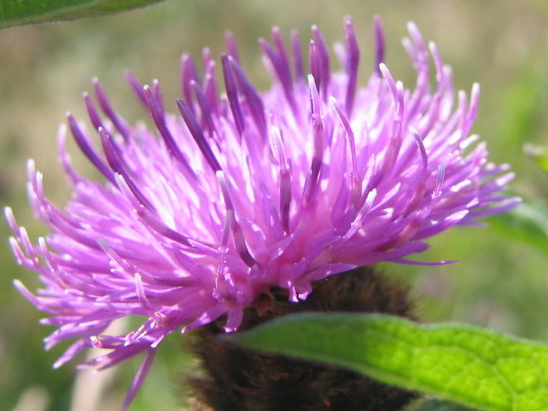
The weather's been very wet recently, and while it's been quite warm I've been working on the assumption that the crops and autmnal fruits will be taking a while yet to ripen, so I've decided to hold off on celebrations for a few weeks. The rowans are all pretty much ripe now but the blackberries have yet to even stop flowering, although I've seen some with berries that look like they're thinking about starting to ripen. Even the raspberries are still in season (I spotted some growing wild a week or so ago) and they're usually well on their way to getting past their best by now. Summer's definitely coming to an end, though, the thistles (and I'm not sure which type these are, if they are indeed thistles, but they're everywhere at the moment) are out in force:

Thistle


Last year I made a real effort to get into the festive spirit because of all the festivals, Lùnasdal is generally the one I feel the least connection with. I kept things low key and not too ambitious, contemplative and meditative and found that was a good approach. I was living in Bo'ness then, overlooking the Forth, so I made my bannocks (or pancakes that time, as it turned out, to share with everyone else), sained (cleansed/warded) the house, made the usual evening feast, and took myself off for an evening walk with Eddie to make offerings of blackberries to Lugh and Tailtiu at the vantage point I used to visit for my daily meditations. I felt a strong connection then and my offerings seemed to be well received. More offerings, made in general this time, followed in the evening before I went to bed and I remember feeling Badb's presence quite strongly as I sat outside in the garden and meditated some more. The next day I took the kids off on a woodland walk and we saw the first crops being harvested as we went (which was pure synchronicity rather than purposeful timing of my celebrations).

This year I'm planning on keeping to the same general outline - making the festival bannocks, saining the house, putting up some rowan and making a good feast for everyone. Last year I didn't really put much emphasis on the first fruits aspect of the festival, so this year I was hoping to find some bilberries growing wild so I could take the kids out to pick them, but I've yet to find any. I've not really seen it mentioned as a Scottish custom specific to this time of year/festival but I do know that bilberry-picking is a popular pastime when they're in season, so it seems appropriate. I might see if the raspberries are still out and pick some for the cream crowdie I'll make for pudding, instead - the bushes are on the way to the beach so I can pick them as I make my way to make some offerings.

Seeing as the rowans are heavy with lots of berries this year I've been thinking about collecting some so I can dry them and make a necklace out of them. McNeill mentions that they were worn by 'common' women for protection as an alternative to red coral or amber necklaces that upper class ladies often wore for the same purpose. I have some amber beads as well, so I might experiment with them both and see how it turns out. If anything, I'm hoping it will make a nice adornment to my little sacred space in the kitchen, and be a good focus for concentrating and meditating on the meaning of the day and so on.

The sweeter bannocks I made at Bealltainn worked well so I think I'll do them again, and dinner will probably be the usual roast lamb or pork or whatever. I decided against planting any fruit or veg in the garden this year, not wanting to be too overambitious, so I don't really have anything to harvest from the garden in that sense. I did put some herbs in, so I might use some rosemary for the roast or something, in the spirit of harvesting some sort of 'crop' for my celebrations, and I'll probably bring some flowers in to decorate the house as well. I've been busy weeding and tending to the flowerbeds in anticipation of the day (I like to get the house in order for my celebrations, so it's nice and welcoming for my special 'guests', so to speak) and I've been pleased and surprised to see how much of what I've planted seems to have flourished. The rowan I planted seems to have settled in well - not much growth, but what growth there has been seems to be very healthy so far.

I'm sure there'll be more I'll think of to be doing, but that's all that springs to mind...

Tuesday, 8 July 2008

Archive: Early Irish Farming - Fergus Kelly

Early Irish Farming
Fergus Kelly

Cor blimey, this took a while to get hold of. After several attempts at ordering it from various places, I finally received an actual copy of it and I was going to be seriously annoyed if it turned out to be a steaming pile a horse manure. Thankfully, it didn't disappoint.

This one arrived on my doorstep with a very firm and formidable thud: packing in just over 750 pages, its size alone shows that its a meaty volume (tastes a bit like pork....). Don't worry, though. Around 150 pages are the indexes, glossaries, bibliography and selected translations of passages referred to in the text...So yes. I wouldn't say this is particularly light reading. It's thoroughly academic reading. It's an oddly fascinating read, though - by which I mean the title doesn't inspire much in the way of 'I simply must read this!' and yet, for the most part, I found it fairly easy to get through. The book's well laid out and the subjects are dealt with in a fairly logical order and unlike many of the more modern academic books I've read recently there's very little repetition throughout, which I was grateful for.

Kelly starts off with a good introduction and then goes on to cover what we know of early Irish farming, primarily through the law-texts of the seventh or eighth centuries with a healthy smattering of archaeological evidence thrown in to support the literature. First of all he looks at livestock - the types of animals that were typically kept on the farm, how they were managed and looked after throughout the year and the economic value they would have had. Offences that might be committed against livestock are then looked at, followed by the types of diseases. Kelly's attention then turns to crops, hunting, diet and then matters affecting the farm, labour and tools.

In terms of CR it might not seem to be such a great book to read - it's not about myths or festivals, say - but it does give a good insight into the more mundane, everyday aspects of life that can help to flesh out your practices and understanding of early medieval society. It's a good source to get an idea of why certain animals - cows and pigs in particular - were so important for one, but it also gives an idea of the sorts of things they did with the animals and the types of food they made which might make good dishes for festival occasions (Kelly notes that pork in particular was a popular meat to serve at these times, for example) if you want something more traditional. There's also a good summary of the types of plants and herbs they cultivated for brewing, dyeing and (to a lesser extent) for medicine, though I'm sure there are better sources to look at for this, and throughout there are some interesting tidbits thrown in where Kelly mentions things like the veneration of certain trees (the bile), evidence of pre-Christian thought or practice in terms of food taboos and the tarb-feis (the bull feast rite performed to determine the next king), and so on.

Kelly writes in an engaging manner* (as he does in Early Irish Law, which makes a good companion to this book) - and even when I got to the chapters on subjects that really weren't all that interesting - my life doesn't exactly feel enriched now I know about the finer details of the different types rods and goads that were used on the farm, or the penalties for all the different types of offences that might be committed against livestock and so forth, it has to be said - the lurches into dullness were forgivable. Unlike some authors who write about such specialised areas of interest, he doesn't fall into the trap of using teh big wurdz and dazzle the reader with a ton of jargon so the information he presents is much easier to absorb. I can appreciate that his frequent use of Irish or Latin words might be off-putting or distracting to some people who don't necessarily have a good grounding in early Irish legal terminology, though, even though he always gives a translation.

As an academic tome, there's not much to find fault with it. While parts may be dated now (having been originally published over a decade ago), generally these are things that are going to be of little relevance to anyone approaching it from a CR perspective, unless they're really keen on the intricacies of early Irish farming practice and so forth, and the book is invaluable for its presentation and in-depth referencing of primary source material (if not in-depth analysis, at times)...

The translations given in the appendices include the original Old or Middle Irish and extensive commentary on how he came to translate something in a particular way, or what a particularly obscure turn of phrase might mean and so on. Kelly also gives extremely thorough references and commentary on many of the interpretations he comes to throughout the book, even offering counter-arguments to point out a possibly different perspective, and the bibliography alone is invaluable if you want ideas for further reading.

Given the broad scope of the book, some parts felt a little less indepth than I would have liked them to be, but this is understandable - I would have liked some more stuff on food taboos, for example, but Kelly tends to present most things in a fairly neutral manner, providing a springboard for further study into various topics rather than getting down to the nitty gritty let's-look-at-it-from-all-angles.

I would say this is probably more on the advanced side of intermediate in terms of relevance and interest, providing some good fodder for more in-depth research, although the indexing and the straight-forward style of writing and presentation makes it perfect for just dipping into as a quick reference if you're not the sort to sit down and chew on it at great length. I do think it's worth it, though, especially with Kelly's Early Irish Law. Though take that with as much salt as you like - if you're like me and are tickled by discovering little things like battle-cries of "Fennockabo!" (anglicised form of feannóg abú! - "Hurra for the hooded crow!", apparently), then you'll probably agree. Otherwise, perhaps pick something else up instead.


* With the usual qualifier of "For an academic book, that is..."