Tuesday, 5 October 2010

'Significant' find in Orkney

The archaeologist in me is quite excited:

Neolithic tomb found in garden

"WHEN Hamish Mowatt decided to investigate a mysterious mound as he tidied an Orkney garden, he had little idea he would uncover a hoard of bodies that had lain untouched for around 5,000 years. 
Archeologists believe the tomb he discovered under a boulder outside a bistro in South Ronaldsay could lead to new insights into how our neolithic ancestors lived and died.

But they face a race against time as water washing in and out of the newly
uncovered tomb could wash away its contents and dissolve any pottery and human remains inside."
(Says The Scotsman)


 I seriously need to save some pennies to visit Orkney.

Sunday, 3 October 2010

Samhainn preamble

Debate rages in the Seren household...Figuratively speaking.

First of all, there are lots of pretty, shiny and sparkly outfits lining the aisles of the supermarket marked 'seasonal', prompting Rosie to look at all the beautiful things and marvel at what her next dressing-up outift might be. The general consensus seems to be that she doesn't care, so long as it's shiny, sparkly, pretty, and comes with a broomstick. A hat would be good too, if it's pointy. Coincidentally, Nana has already bought her a witches' outfit (or two...depending on size, y'see), so we should be good for that. A broomstick shouldn't be hard to come by, and with enough glue and sparkly shite, we'll be set as far as Rosie's concerned.

Tom's quite set on dressing up as a 'skellington' again, as he did last year, but might be swayed to go as a Power Ranger now, after Nana passed on a birthday present that never got given in the end. Two years later, it's probably safe to say that the intended child has moved on from that stage in their life, and now Tom is more than happy to benefit. Tom has no idea what a Power Ranger is, really, but if it comes with a cool helmet that lights up, and a phone that flips out, it's all good as far as he's concerned. We're now into the realm of 'my friends will really like this', so he's a bit keener on the idea of dressing up than he used to be. And it's not Transformers, so that makes a refreshing change, personally speaking.

But all this commercialism has prompted a few questions - from Rosie, mainly - about what Hallowe'en's all about, really. These questions are mainly concerned with whether or not there'll be cake and/or sweeties involved, as well as sparkly outfits, and so far she's not been disappointed. But my explanations of things have sparked debate with Mr Seren, mainly because I told the kids (amongst other things) that they should dress up on Hallowe'en because lots of ghosties and fairies will be about, looking to cause mischief, and they need to blend in to make sure they don't get caught up in said mischief. This is called 'guising' I said, because you dress up in 'disguise'.

Ah, says Mr Seren. That's nothing to do with Hallowe'en, that's Bonfire Night - Guy Fawkes' Night. Because kids make an effigy of Guy Fawkes and go round asking for a 'penny for the Guy' - hence, 'Guy-sing'. Ah, but no, I said. Because guising is also found at New Year's/Hogmanay, which has a lot in common with Hallowe'en/Samhainn, and you also dress up in disguise. It's to do with Hallowe'en primarily, but quite a few of the customs have become conflated with Bonfire Night and Hogmanay in some ways. And it's spawned a lot of Hallowe'en customs that are seen as 'American', like trick or treating - originally you'd go round in your disguise and perform a skit, sing a song, or maybe tell a joke, for a donation, and if you weren't satisfied you'd play a trick on the household who offended you, but you'd do it anonymously. The disguise helped. Or they'd be targeted anyway, if they were just unpopular in the neighbourhood. But the main focus was that if you were stingy and inhospitable, you'd get yours. It was surreptitious, not blatant like it is today. Mr Seren comes from a time when kids still had to beg their bit, pre-trick-or-treating, and sees the modern take of trick or treating as an erosion of tradition. Erosion, or continuum? I ask. I'll have to think about that..., is the reply.

But in general, Mr Seren wasn't convinced with it all, so brought it up at dinner with the in-laws today. There was general agreement that yes, it was more to do with Bonfire Night these days, but in the good old days it was different. Maybe, in a half-remembered way...

My brother-in-law mentioned that Hallowe'en, for him, was the night of 'Going out in the galoshes', which rang a bell for Mr Seren, something he'd forgotten. Although he didn't remember actually going out in galoshes (a kind of wellington boot - probably quite plausible given the weather in these parts, at that time of year), it referred to the dressing up for Hallowe'en in general, and going out and performing for treats. And then trying to steal turnips from the farmer, who was well prepared for the occasion and turned a blind eye, really, so long as you didn't take the piss.

I mentioned that the 'galoshes' put me in mind of the mummers' play, The Goloshan, which was a Hogmanay tradition and also required dressing for the occasion as well. We're both intrigued by the possible connection, but Google has made me none the wiser, so far...

So there's that, our wee debate. Then there's the question of what the kids will be doing at Hallowe'en, seeing as it's a Sunday (possibly going to a Hallowe'en party at a friend's, then); along with our own traditions that we're building. Because it's something that's embraced more generally - by supermarkets, that is - there's more of a build-up for the kids than most of our festivals and they're more interested in it now that they're older and more aware of things. Tom remembers the tumshie lanterns and pumpkin from last year, but Rosie not so much. She just knows it's kind of exciting. I've told them that people will be coming to the door asking for sweeties, and we'll have to carve the lanterns to scare the ghosties away, and they seem quite enamoured by the idea. Also, that we'll have a proper good dinner with dessert and more sweeties...

Children; easily pleased. Me; quite chuffed at the kids being enthused.

Sunday, 26 September 2010

Day trip

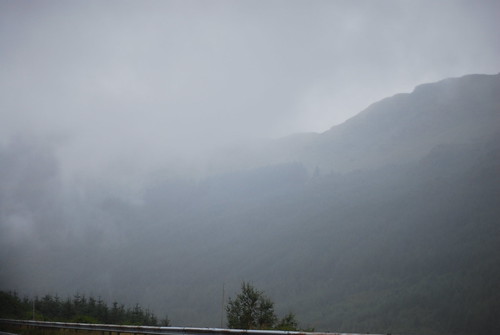
Not really a GP/CR oriented post, but I thought I'd post some pictures from our wee family day out yesterday, because we got to see some glorious scenery and thought it might be of interest to some of you. Living near the Highlands and Islands as I do, I don't get to see it anywhere near enough, except from afar, staring at it from the shores of the Clyde where I live, so we have some serious making up to do for that. Luckily for us, the weather was with us - sunny and warm, even if there was a little bit of an autumnal bite to it.

Last year when I travelled that way, it was kinda like this:


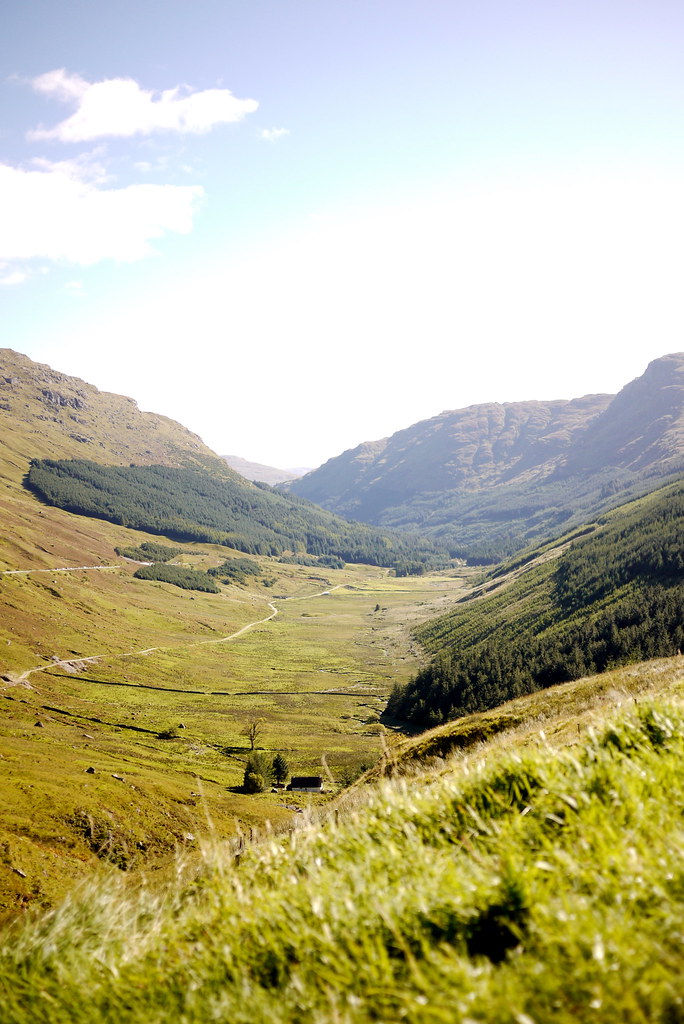
But this time, it was like this:


I'm fairly sure those two photos are from the same area, although not the exact same spot.

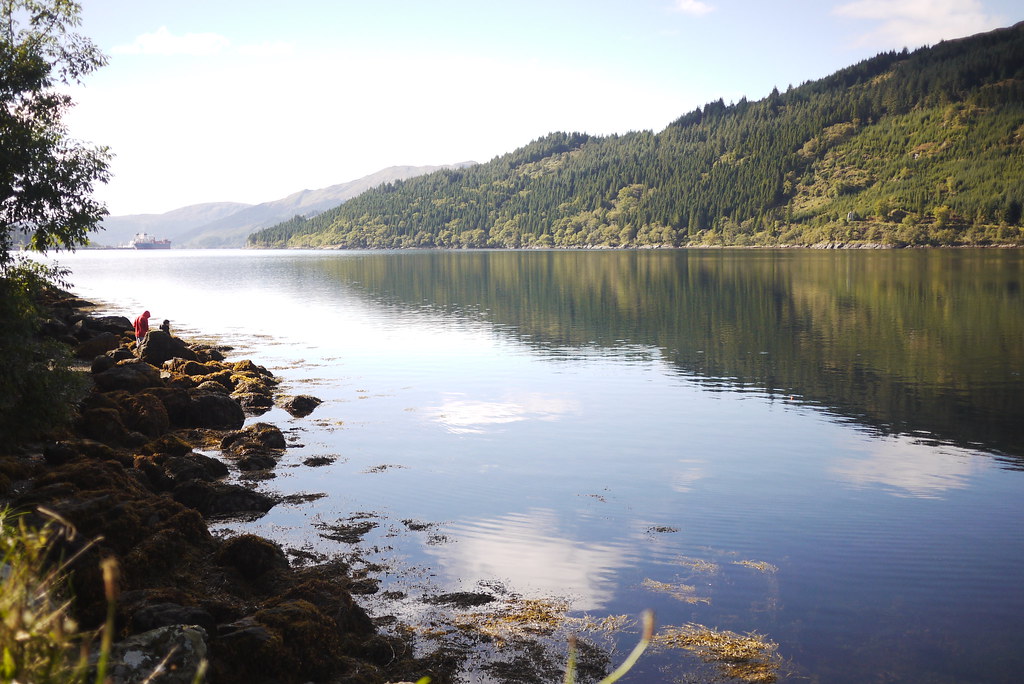
Our first stop, though, was Loch Long:


So peaceful and quiet - the Loch of the Ships (Loch Luing in Gàidhlig). And quite striking in that autumn seems to be lagging a few weeks behind us across the water - here where I am now, the trees are turning all kinds of yellows and oranges, reds and browns. But in Argyll - not more than 20 miles from me as the crow flies, but far more sheltered, I guess - the blackberries were still ripening and trees were still mostly green. It's an odd feeling, being somewhere that's really quite close, but so different.

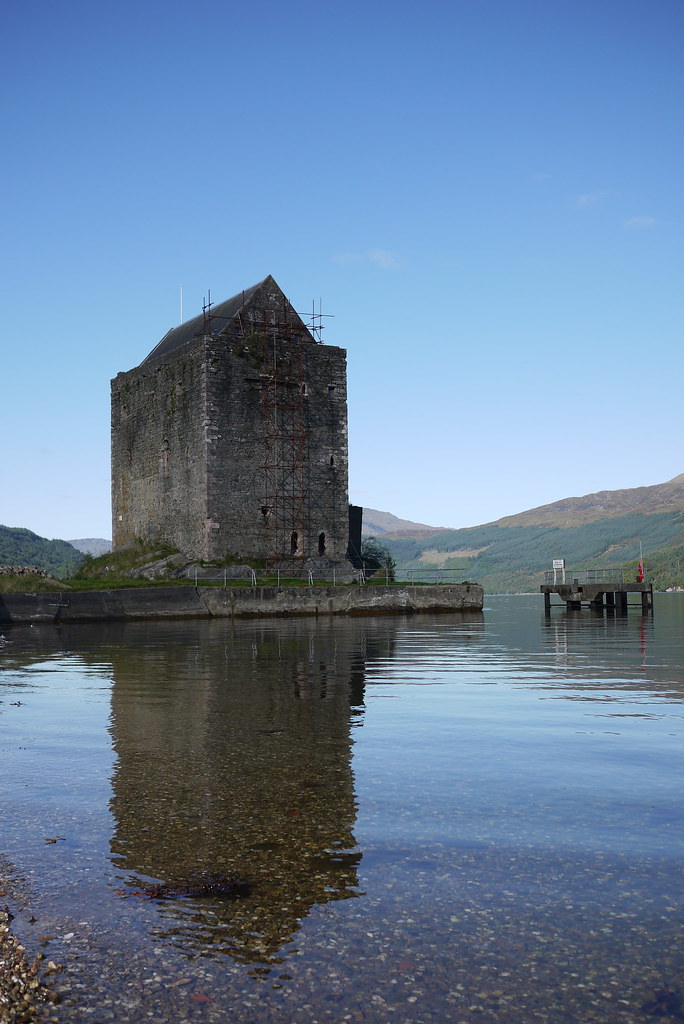
We managed to get a little lost on our travels (not for the first time) and ended up parked beside a fourteenth century castle - Carrick Castle:


Bits of it are fourteenth century, anyway. It's built right onto a rock (Gàidhlig - carraig, hence the name 'Carrick') so in spite of its imposing presence from a distance, it looks a little precarious close up. Mary Queen of Scots stayed there once, apparently.

Again, it was so peaceful and quiet. The castle is privately owned now so we couldn't go in, but the shores around it are accessible and the kids got thoroughly soaked having a paddle. Eddie, our older dog, impressed the locals with his obsession for rescuing sticks and pebbles from the loch, and seeing as that's the only way to keep him quiet, it was appreciated, too.

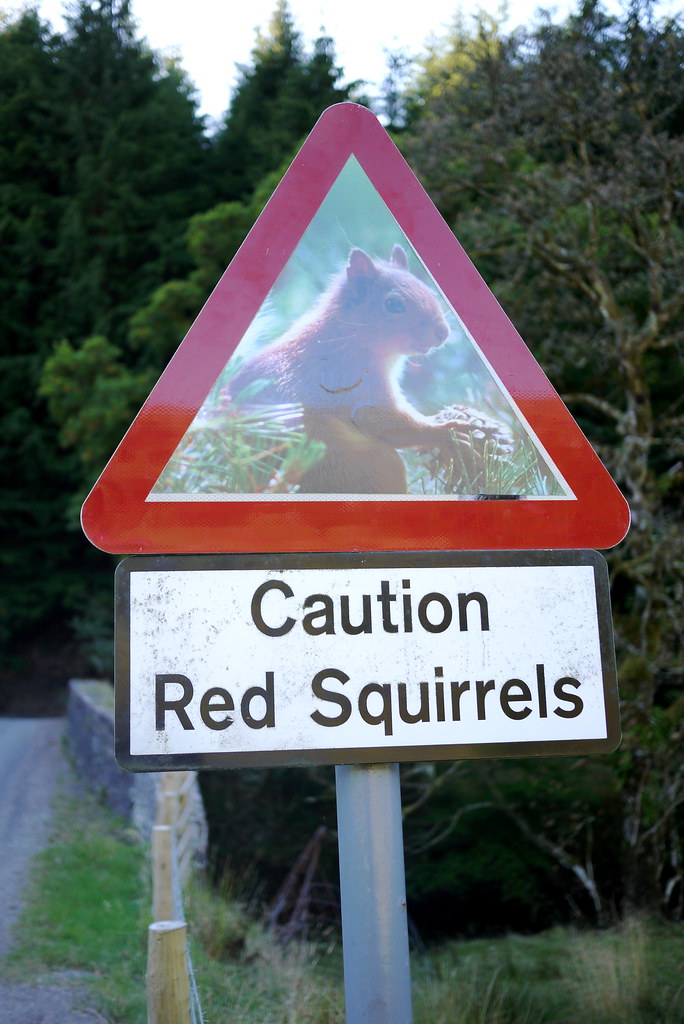
On our way back to the road we were supposed to be on, we went through a forest of suspicious and slightly annoyed-looking red squirrels from the looks of things:


We didn't see any, though, more's the pity, but there were plenty of sheep and Highland cattle as we made our way out of the woodland. Sadly, I didn't get any photos of them, either. 

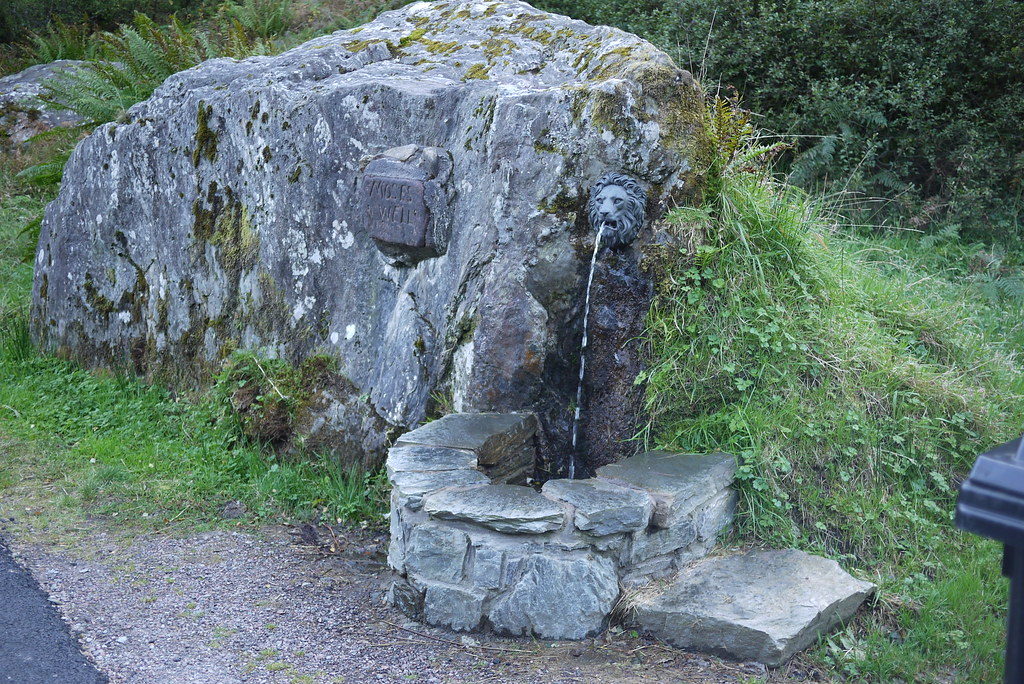
Getting back on the right road, we came across this:


In 'Hell's Glen'. The water was very cold and crisp, and I stopped to fill a flask of it in exchange for a silver penny (as had others before me). At the bottom of the road we were on there was supposed to be a "heart-shaped setting of white quartzite stones" in a field, where tinkers (itinerant travelling people) traditionally married. I didn't manage to spot that either, but it's not something I've ever heard of. Always good to find some new tidbits.

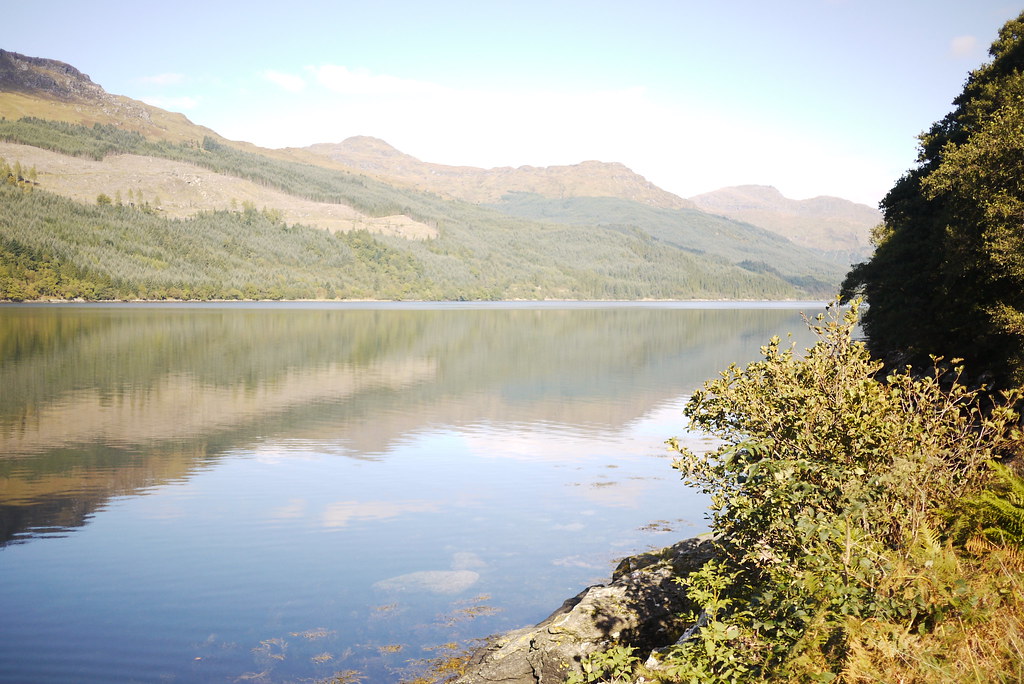
Flying past at 60mph I managed to get this:


And while I'm not sure which loch it is, it opens out onto the Clyde and the side of the coast that I live on. We took the ferry home and found that it's much cheaper than we thought, so hopefully there will be more exploring in the future. Argyll, to me, is really where my heart is.  

Saturday, 18 September 2010

Some Scots rhymes

Reading through a nice wee book on Scottish nursery rhymes, I found some seasonal ones for Hallowe'en I thought would be nice to share, especially if you've got kids or have the opportunity to go guising. Looking in my copy of McNeill's Hallowe'en, she gives them as well, and the music to go with them.

Here's one called Tell A Story, a reminder of what you should do when you go guising:

Tell a story,
Sing a sang;
Dae a dance,
Or oot ye gang.

And here's one about witches (although unsurprisingly, some versions have it as faeries):

Hey-how for Hallowe'en!
A' the witches tae be seen,
Some black, an some green.
Hey-how for Hallowe'en!

And finally, this one was for running around and making mischief, rattling neighbour's windows:

The nicht's Hallowe'en,
The morn's Hallowday;
Gin ye want a true love,
Ye hae nae time to stay.

Tally on the window-brod,
Tally on the green,
Tally on the window-brod,
The morn's Hallowe'en.

Oot ye gang = Out you go
Gin = if
Tally = Tally-wack, hit, strike
Window-brod = window shutters

From Chambers' Traditional Scottish Nursery Rhymes, and McNeill's Hallowe'en.

Wednesday, 15 September 2010

Review: Surviving in Symbols

There's only so much colouring in and drawing a parent can take of an afternoon, so yesterday I took my youngest off into Greenock after she finished nursery, to kill some time before we had to go and get the elder sibling from school. We had some books from the library that were long overdue so those got returned, and we took a nose around the library to see how good their history section was. The answer was not great, but I did pick up a few books to have a gander at when I got home. Hurrah.

My current in-teh-leck-choo-al reading is JP Mallory's Aspects of the Táin, which I got from my last trip to the university library, but it's slow going and a little dry so far, so some lighter reading is in order, I think. My brain can handle that. So from my trip to the local library yesterday, I got a book on modern Hogmanay celebrations, a book on Scottish Nursery Rhymes, and one of The Making of Scotland series that I haven't read yet. The latter is one of those short and glossy type of books with lots of pictures in it, so it's been a quick read, and as it deals with the Picts, it's been an enjoyable one. Time for a review, before I forget.


Surviving in Symbols: A Visit to the Pictish Nation
Martin Carver

As part of The Making of Scotland series, there are a few things I expected of this book: A straightforward, easy read, covering the basics; lots of pictures and illustrations; and a few problems with proof-reading here and there (but no biggy). And that was pretty much what I got...

Of the other books I've read in the series, I'm not sure this is one of the better ones - although I suspect my vague disappointment here is more because this is a subject I enjoy, so there was a lot of things I wanted to see being discussed. You can only fit so much in.

There is still a lot of good stuff packed in here, but there are a few bits and pieces in the book that I think could have been done better, on the whole. For one, I would have thought putting the Picts into context - who they were, when they were, where they were, and addressing or challenging some of the common misconceptions about them would have been a good thing to start with. But apparently not. As a result, I found the introduction a little dense, jumping straight into Columba and Adomnán, Bede and Northumbrians. Don't be put off, though.

The first illustration in the book is a tattooed artisan, carving Pictish symbols onto stone, with the accompanying blurb suggesting: "They may have carried their patterns in their heads, but here we speculate that some images at least were carried on their bodies, by one of the very oldest forms of picture-making - tattooing with natural dyes." I take this to be an oblique reference to woad tattoos (because everybody knows the Picts were covered head to toe in woad tattoos - Mel Gibson and Keira Knightly said so, so it must be true...), but at no other point in the book is the issue raised or even mentioned. It's pointed out that as 'Picti' they were known as 'the Painted People', but that's about it. It would have been nice to see some discussion of what this meant, and what other evidence there is, if any, for something that's now so ingrained in how people see them. In a way, though, maybe it's understandable in trying to lift the Picts out of their quagmire of woad.

Aside from that, the meat of the book is good. The author makes the point that the Picts were just like anyone else at the time; they were (to all intents and purposes) Britons, not some sort of pre-Celtic, non-Indo European, matriarchal, Bronze Age relics. They spoke a Celtic language, as far as we can ascertain, but one that had probably evolved differently to their Brythonic neighbours further south. Their material culture was distinctive, but not so different from anyone else. They drew heirs from matrilineal lines when needed, just like their contemporaries elsewhere did. They were not a different, separate race, but at some point, they could have been considered to be a nation.

Carver looks at the issue of the 'Pictish oghams', Pictish monuments, the conversion to Christianity, how they lived, and where, and for the most part it's well done. He gives a good introduction to the basics without being too biased in favour of one theory or another, but does point out what is most commonly accepted by academics. For someone who isn't so sure of the subject, this does a good job of building a solid foundation for further study.

To a degree, some of this is out of date now - there's no mention of the Pictish symbols possibly being a laguage, for example, since the book is now eleven years old. But there is some discussion of things I've not seen widely discussed elsewhere - like the issue of the 'Pictish' oghams being Pictish at all, as well as a good overview of Pictish burial practises. The author is certainly at his best when dealing with archaeology, as an archaeologist himself.

As a gentle introduction to the subject, it does a good job. It's short, but to the point, and the pictures and illustrations help to break it all up a little and give more detail in some of the most important areas that are covered. The book covers the main points, and throws in a good bit extra here and there, and gives a good list for further reading, and really, that's all you can ask for.

For the most part, if it falls short at certain points it's because there isn't enough space to go into more detail, rather than things being just plain inaccurate, but as far as this is concerned, I did feel the book was too focused on the Picts' relationship with their neighbours - Northumbrians especially - rather than their own internal politics and make up. I would liked to have seen more about that, but then again the focus does help to show that they weren't mythical blue wee people that nobody else in the early medieval world ever happened to mention...

References would have been nice, though. And an index.