Sunday, 11 May 2008

Archive: Hallowe'en - F Marian McNeill

Hallowe'en: Its Origin Rites and Ceremonies in the Scottish Tradition
F Marian McNeill

Erynn commented on one of the reviews I just did that it's good to go straight to the sources that record customs closer to the time that they were actually practiced, before they developed or degenerated into something different (and I agree). This book was kind of the other side of the coin, because it relates much more to the surviving Hallowe'en practices of the time that McNeill was writing, and within living memory, and that in itself is interesting too because in some ways it's easier to relate to the traditions that were recorded because they're by and large practiced in a more urban setting that's relevant to most people these days, rather than an agricultural or pastoral setting that's pretty much the preserve of big business, barring a few brave souls that homestead and aim for self-sufficiency.

McNeill covered Samhuinn and Hallowe'en traditions in volume three of The Silver Bough, so to a certain extent most of this little book covers much of the same material, with a few added anecdotes that you won't find elsewhere. It's very short, so it's less in depth than The Silver Bough but it still manages to give a good overview of the main elements associated with the festival.

The main aim of the book is to provide practical ideas to put on a good Hallowe'en party according to Scottish traditions, so it makes for a good read for anyone looking for ideas this coming Samhuinn if you're going to be in a group. McNeill gives instructions for carving turnips, recipes for traditional Hallowe'en foods, pranks, divination rites and games to play, and covers other customs like guising and 'thigging' for apples, nuts and pennies around the neighbourhood (from which trick-or-treating evolved, I'd guess). For the divination chapter, McNeill omits the outdoor divination rites, saying that they've now fallen out of use for the most part, but these can be found in The Silver Bough.

All in all, the book's very straightforward and not too heavy on the detail. There's not really much on offer that you can't find in The Silver Bough chapter or (for the recipes) using the power of Google, but it does make for a handy quick reference because of its short length and simplicity. The directions for the games and rites are clearly stated and more practical considerations are accounted for as well, whereas these things have to be figured out yourself if you're referring to The Silver Bough. It's not difficult, but some people might appreciate the overall structure and flow to the proceedings that McNeill gives here.

Ultimately, not an essential tome for the bookshelf, but it's one I like having because of the much more modern focus on the customs as a comparison to other books that deal with the older ones.

Friday, 9 May 2008

Archive: The British Celts and their Gods Under Rome - Graham Webster

The British Celts and their Gods Under Rome
Graham Webster

I'd been meaning to read this book for a while, hoping to see if there was anything useful about evidence of gods in Scotland, so I was pleased I finally remembered to look it up at the library.

I had a quick flick through while I was in the library and raised an eyebrow at a chapter called 'The Celtic Shangri-La', but decided it was worth investigating. I have to admit, though, there was a bit more eyebrow raising once I got stuck into it at home, and I was very disappointed with this book to the point where I almost gave up on it.

My main problem was in Webster's treatment of 'Celtic religion', where he mashed together Classical sources referring to Gaul along with evidence of Irish festivals and applied it to Britain in fairly unequivocal terms. This sort of approach was fine for scholars like Anne Ross, but things have come a long way these days and it's no longer considered 'the done thing' to approach things in such a pan-Celtic way. What applies to Ireland or Gaul (from different time periods, to boot) doesn't mean it automatically applies to Britain as a whole, just because they all happen to come under the Celtic umbrella.

To be fair, the book's over 20 years old so it predates the most recent revival of interest in Celtic Studies, and therefore the change in academic approach to the subject, but seeing as he was dealing with the Romano-British archaeological evidence I was kind of expecting more reliance on analysing what all this evidence means than there actually was. And I'm getting seriously bored with this obsession with 'the megalithic Great Mother' that scholars

I'm glad I did stick with it though, because once I got passed the introductory stuff and the book started to get into the real meat of the subject, there were enough interesting things to make it worth wading through. It's clear that Webster's an archaeologist and not a historian (I presume, anyway), and he seems to be good at what he does. There are fairly in depth analyses of some of the more common deities, and particular focus is given to the evidence of northern Britain. I'd hoped for some mention of archaeological evidence for religious practice in pre- or post-Roman Scotland (the parts affected, anyway), but I was disappointed, though not surprised, on this front. The overview of evidence of religious practice from pottery was interesting and different, though (or relatively interesting, because the archaeological analysis of pottery is rarely ever a scintillating subject)...

Generally, the book would be of interest to anyone wanting to learn more about British and Gaulish practices (it really should have included Gaul in the title), bearing in mind the problems with it. It's also in need of updating, because certain bits are very out of date (like the mention of there being only one inscription to Cernunnos, for example), but in spite of its problems it's still worth picking up. Just don't expect to be dazzled.

Archive: Folk Lore Or Superstitious Beliefs - James Napier

Folk Lore Or Superstitious Beliefs in the West of Scotland Within This Century
James Napier

This was first published in 1879 so it's no surprise that a lot of this book is out of date for one reason or another, but like MacKenzie's Scottish Folk-Lore and Folk-Life I really enjoyed it.

It's useful for a number of reasons: first, there are a few tidbits that I haven't seen anywhere else, so it's not just a rehashing of the same old stuff that tends to be trotted out elsewhere. The author draws from a lot of sources that I haven't seen used in more modern books, and adds in plenty of his own anecdotes and examples of folk-practice that he's seen himself, or even been involved in. Secondly, he's one of the sources that F Marian McNeill used in her Silver Bough series, so it's always good to go direct to the source and see for yourself.

Some of the more interesting things that caught my eye was the mention of the sunwise turn being performed before the start of anything important, like weddings, funerals and festive occasions. McNeill makes a vague mention of this in The Silver Bough (Volume 1) but doesn't give a source, so I assume this is where she got it from. There wasn't much in the way of festivals being covered (that you wouldn't find elsewhere), and there was no mention of Lùnasdal at all, but there were a few interesting things about how Hogmanay was celebrated when Napier was a child, for instance, that helped to offer something different.

Overall, Napier covers the usual areas like birth, death, marriage and childhood, but he also has a good look at types of charms and counter-charms, divination and witchcraft, and that was the stuff that interested me most. While The Gaelic Otherworld does a good job of covering pretty much anything and everything in that area, Napier comes up with plenty of extra stuff to supplement Campbell's works, but one thing to be said is that the details Napier provides aren't as useful in terms of practical application for a reconstructionist as Campbell is (or Ronald Black's editorial notes). Essentially, I suppose Napier's book help flesh things out a bit more, and the anecdotes help to give a better insight into the minds and culture of the people who observed the traditions than Campbell alone does.

The downside is that the book is very much a product of the time it was written in. The disapproval towards 'Romish' Christianity is amusing, as is his hasty attempt to assure the reader that superstitions are silly and evidence of a backward, primitive (and predominantly Catholic...) people, and that he views such things with a skeptical and professional eye, not a gullible one. This detachment is contradicted at times by his attitude towards some practices that make such things seem perfectly reasonable and not at all heathenish or 'superstitious', like when he talks about how a 'skilly' removed the evil eye from him as a child. It makes for an odd mix, and it's hard to tell whether the disclaimer is perfunctory and considered necessary by the publisher rather than author, or whether he really meant it and perhaps the things he experienced himself were familiar and therefore acceptable, whereas other things weren't so much...

Like MacKenzie (a good fifty years or so later), Napier attributes Celtic and especially druidical origins to the Phoenicians and Egyptians (presumably to give them a Biblical link, or something?). While it's easily read around, it might prove confusing for someone who's relatively new to the subject and hasn't yet got their head around a more up to date history of the Celts and knows for sure that Baal has nothing to do with Bealltuinn.

And one final thing: I laughed out loud, and then so did Mr Seren, when I read, "In Paisley, considered to be the most intelligent town in Scotland..." Oh, how times change. But for me this one is definitely a keeper.

Thursday, 8 May 2008

Archive: On mysticism

I've had this post rolling around in my head for a week or so, but haven't quite been sure about what I've been wanting to say, exactly, or how to say it...So bear with me. I'll try and make it coherent. Honest.

Often I'm quite leery of the more 'mystical' sides to spirituality. It's difficult to get a firm hold of. It's not something that has checks and balances, a firm reference that says "this is where I got it from." My logical brain doesn't like this so much. From past experiences I know there's a lot of bullshit that gets passed off as 'mysticism', straight from the gods' mouth sort of stuff, and really it's not god-talking but ego-talking; personal issues being passed off as spiritual pointers for all and sundry to listen to and follow. So, as I said, I'm leery.

That said, my logical brain has a fuzzy sort of logic to it anyway, so it's not always the same sort of logic that everyone else comes up with at times...So my illogical brain tends to happily co-exist with my logical brain for the most part, and all is well. The experiences I have in my spiritual practices are real to me, and personal, but I'm becoming increasingly aware that there's a small part of me that's being too logical and getting in the way of actually experiencing my religion properly (for wont of a better word). I've been concentrating on doing so much, I'm beginning to wonder if I'm neglecting the actual living...I need to stop analysing so much.

This has all been brought home to me in the past few weeks or so. With my illogical brain, I believe in the idea that at times certain signs are communicated to us, for one reason or another. Usually these are natural signs, whether it's to do with how the moon looks on a particular night, the way the wind is blowing on a particular day, or which birds happen to be in my garden or outside as I go for a walk...Birds in particular, for me, give me pause for thought on this front, but my logical brain balks at the idea because it seems so cliched in some respects. My logical brain says, "Do you really think you're that speshul....And the crow thing...I mean really, couldn't you be a little bit original?"

My illogical brain, however, takes note of the fact that in the run up to Bealltainn, it seemed significant that I saw not just a fox for the first time since we moved, thin and scraggly, but a deer and a falcon...Then there's the crow that I mentioned at Bealltuinn, followed by the magpie that followed me about at the graveyard with seeming purpose, more crows and magpies abounding and then I heard an owl hooting during the day (always a bad sign, according to my incredibly superstitious nan). It all seems to be adding up to something being afoot, but I don't know what...something that's perhaps both good and bad, depending on your perspective. It seems easy for me to see the signs, but not necessarily read them (hindsight is a wonderful thing, though). I'm pissing in the wind, in effect, and I know this is where I need to go, but I'm not quite sure how to get there.

For once this seems to be a learning process that doesn't require books, and I'm actually kind of glad.

Thursday, 1 May 2008

Archive: Bealltainn 2008

Last year's Bealltainn celebrations were a little unfocused thanks to having a one month old in the house, so I think pretty much anything I did this year would have been an improvement - and considering my similarly unfocused efforts for Là Fhèill Bhrìghde just gone, I was determined to make more of an effort this time round. I have no excuses now - we're all moved in, sorted out and life in general is a little bit more certain, so I don't have those distractions to take up all my spare energy. Now Rosie's had her first birthday I'm starting to wean her as well, so Baby Brain is also starting to recede and my brain is starting to feel a little less fuzzy compared with the fog I've become so accustomed to. Being able to drink actual caffeinated coffee again also helps considerably. Seriously. I missed my old friend.

I digress. Shocking, I know.

I started off taking the kids for a walk yesterday, hunting for some rowan which I found easily. It seems like a mild winter and living on the west coast and right in the path of the Gulf Stream makes a whole lot of difference because in previous years I've had a hard time being sure that what I think looks like rowan really is rowan, because without the leaves, I'm a little less confident on these matters. I'd brought some cheese along as an offering, so after asking I broke off some dead bits that seemed to be about the right size and gave thanks for it. I would have preferred to have taken the wood from a tree I'm more familiar with, so as not to risk offending the spirits so much, but the rowan I've planted in the garden is still basically a stick with leaves sprouting from it and I don't think I'll be able to touch it for a few years yet to allow it to establish itself properly.

It so happened that a young crow drew my attention to the rowan trees in the first place, so I took it as a good sign. I was heading for a different bunch of rowans that I was fairly sure were what I was looking for, but I followed the crow instead. Tom was mightily amused by its squawking and the way it scratched its scruffy feathers with a claw as if mimicking the dog (and so was I, I admit), so it was hard to ignore. Having got what I came for, I decided to explore the woods behind my house instead of heading down to the shore as I was intending, and I'm glad I did because I found a nice bit of woodland that was relatively untouched. The woods in the village, where we usually take our walks are nice but heavily overmanaged by a well-meaning group of people who've taken it upon themselves to 'improve' the woodland, and while the paths they've put through it are handy for me, with a pram, I'm not sure the flowerbeds of daffodils are entirely keeping with a 'wilderness'.

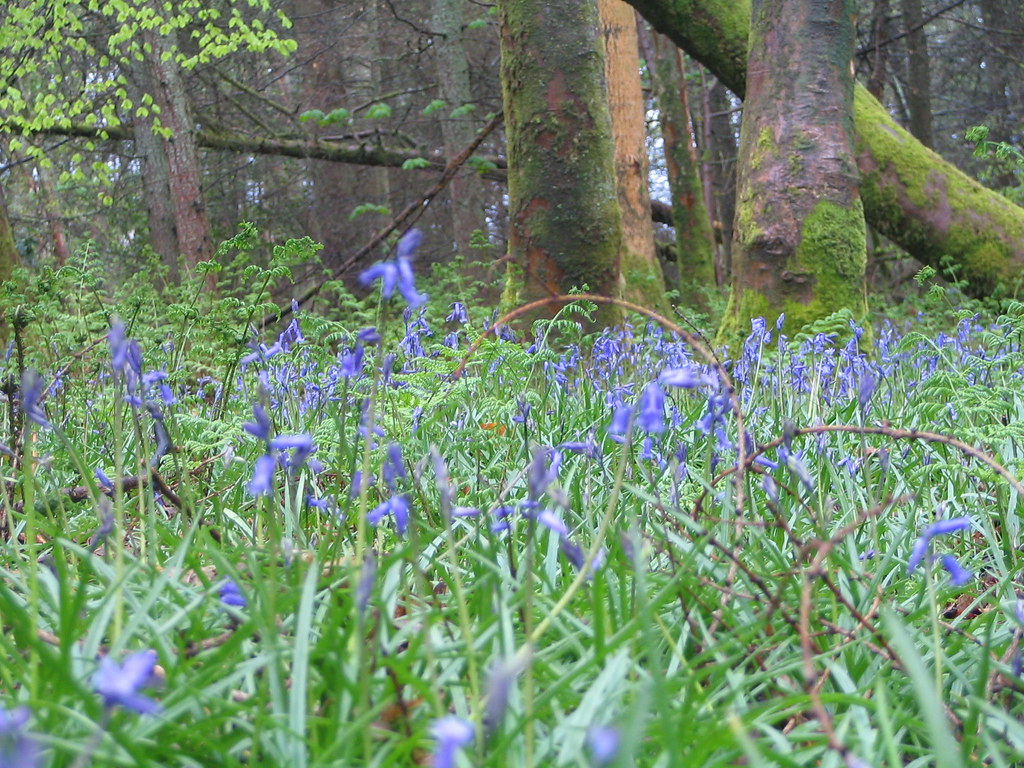
Anyway, this less-than-tamed woodland took us on something of an off-road adventure, which was very exciting given the torrential rain we've been having, given the resulting mud, combined with my complete lack of grace and agility. There were bluebells everywhere, which are very much a Bealltuinn thing to me because they're a sign that spring is progressing, summer's on its way, so I was pleased to see them and took it as a confirmation that it was time to celebrate.

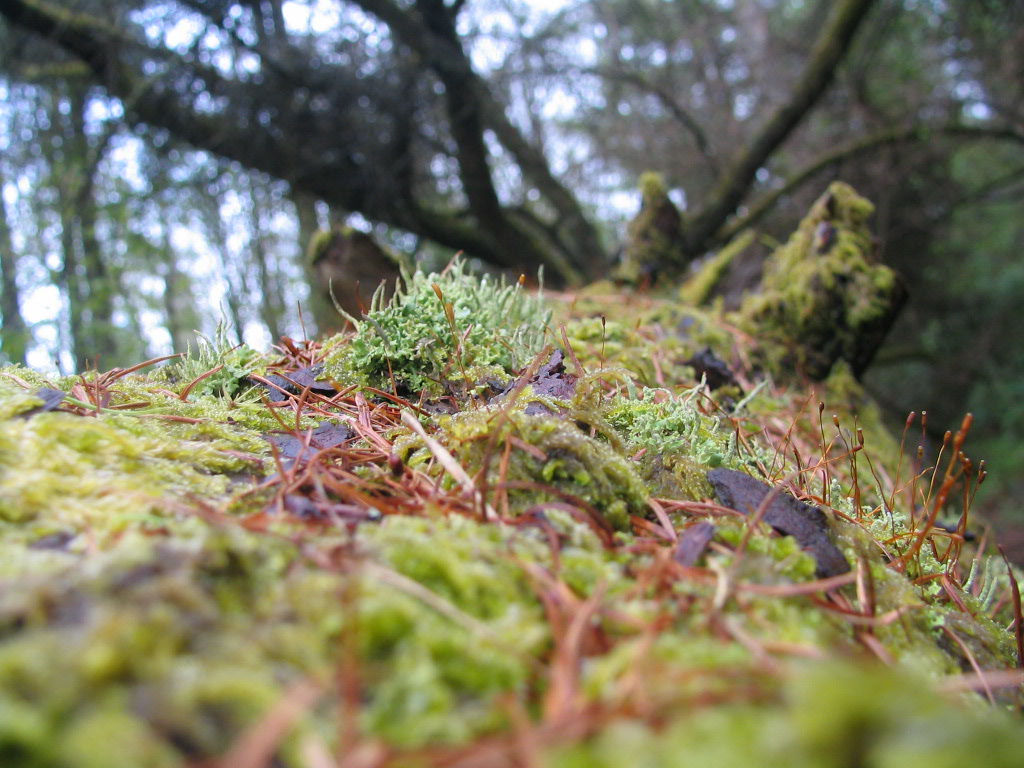
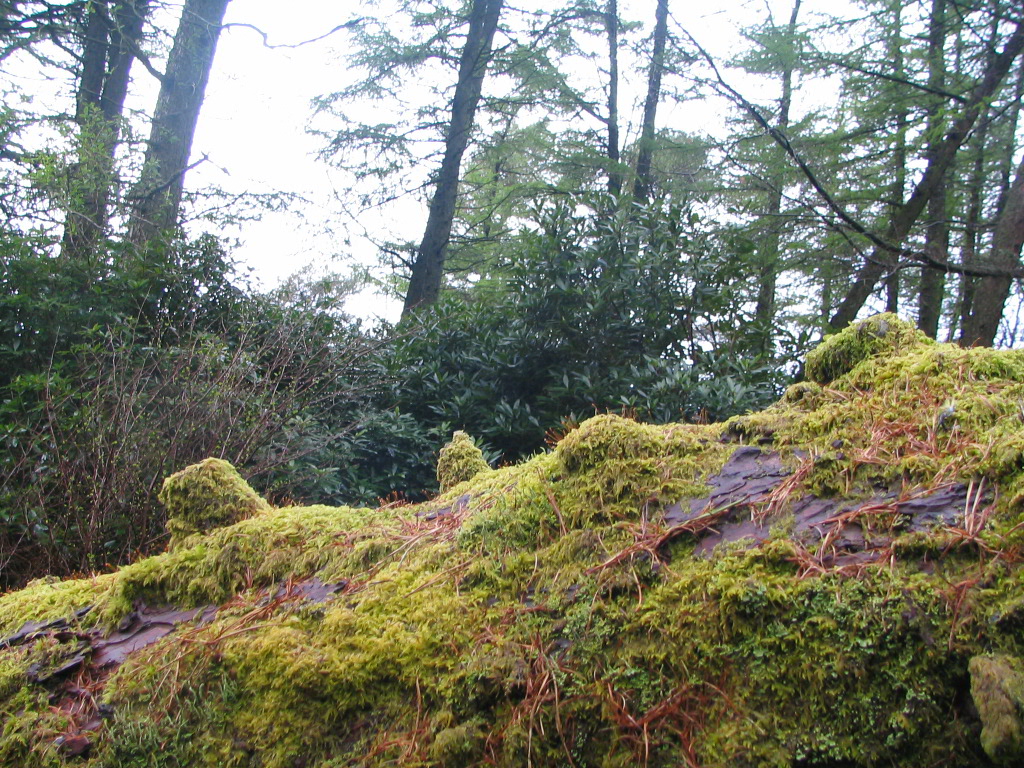
And the moss...One thing I love about this place we've moved to is the moss. It's everywhere, thick and soft, just glorying in the fact that it's moss. I'm tempted to prod it and poke it, but I don't think the wee beasties would appreciate it, and I prefer not to get so up close and personal with them...


Yeah, the pictures aren't great, but I thought I'd post them anyway. It somehow seemed appropriate to try and capture the spirit of the place.

We got home fairly late, so dinner was put on with haste and I cleaned and tidied the house. I'd meant to get some lamb but there wasn't any when I went shopping so we ended up with chicken instead. Mr Seren surprised me with some Belgian chocolates, which were greatly appreciated - I'd like to say I was restrained and savoured every last one, but sod that. Gorging is good (though my waistline disagrees)...

Anyway, with our chicken feast devoured, the kids eventually put to bed and Mr Seren surgically reattached to his computer for the evening, it was time to start things proper. I started with a right-hand turn and a Good Wish to bless the proceedings, followed by the extinguishing of the hearth flame, which I then ceremonially relit with blessings that I kind of made up on the spot, taking the songs from Carmina Gadelica as inspiration.

From that flame I lit nine candles (in a candle holder given to us by my sister-in-law that I've used before) that I could move outside for a 'bonfire' later on, and got out the rowan I'd collected earlier along with some red thread to make some protective charms, based on McNeill's description and pictures in The Silver Bough. I made the sticks of wood into equal-armed crosses, which I tied together with the red thread to hang above the front and back doors of my house (and here's a picture of my slightly lopsided efforts...).

As I hung them up, I said a charm for protection that I made up for the occasion:

I hang this charm
To ensure no harm
Comes to me or mine

Away away
Today today
Forever and all time

I'm not a poet, mind, but it seemed to help me focus and set them as proper wards for the year to come. It's something I haven't done since we moved so they're long overdue, aside from the plants and tree I put in the garden with a view towards protecting and warding. One of Mr Seren's friends, when she came to visit, commented on the rowan and said I should put it in the front garden for protective purposes ("because it guards against the wee nasties, y'know?"), so I might get another for the front garden because it looks like some of the plants there have died and there should be room now. I'll make new charms to hang up next year and transfer these to the loft (attic) to protect against fire. There wasn't enough rowan to collect to make one for the loft this time, or one for the car to ensure safe journeys as I'd initially intended, either, but that's something I can work on later on.

Next came the bannocks and caudle, which I make for festival occasions based on what Alexander Carmichael outlines in the Carmina Gadelica, along with the traditional lore that John Gregorson Campbell outlines in The Gaelic Otherworld. Each bannock I make, I ask for a blessing for the person it's meant for, and any meal (fallaid) that's leftover makes the bonnach fallaid, which is meant to be made with a hole through it to discourage the Good Folk from entering your house. For Bealltainn I make another, larger 'family' bannock with nine 'knobs' on, for offerings. Then I make the caudle (a custardish type drink with oatmeal) for drinking and libation. In previous years I've tried applying the caudle to the bannocks as a sort of glaze, which is attested to in certain parts of Scotland, but from my experiments I prefer making the caudle as a drink for a libation.

With the bannocks made (I added a little sugar and mixed spice this year, to try and make them a bit more tasty - sweet versions like the Selkirk bannock evolved over time from the plain, savoury, versions apparently - and I was very surprised and pleased with the results. I made them very thick and cooked them very slowly this time, which also worked well, my new pan helped spread the heat more evenly), and the caudle, I went outside with the nine candles I'd lit earlier to act as my 'bonfire'. I broke the family bannock into nine pieces, tossing each piece behind me as described by Carmichael, along with extra offerings to the gods, spirits and ancestors. The caudle (which I experimented with as well - it ended up very tasty, but a little too thick) was shared as a libation, and after spending some time just being outside and mulling things over, looking for any signs or messages that there might be for me, I jumped over the 'bonfire' for luck and went back inside.

First thing in the morning I collected some water and used it to perform the sop seille ('spittle wisp', also from Campbell) - water mixed with my own spittle, spread around the thresholds and house with a piece of straw to protect the household from harmful influences. Tom was up early so he followed me around as I did it, taking great interest and waking Rosie up...I thought hard about when I should do the sop seille. It seemed to make more sense to do it the night before, at the start, but given the fact that the first water of the morning holds so much significance and power, it seemed better to do it in the morning once I'd gathered it.

After doing our everyday stuff - breakfast, shower, toddler group, lunch, an unusual nap for Tom - we went off to the seaside with Eddie. I took the remaining caudle and bannocks, along with some cheese as an offering to the river and the sea, the gods and the spirits of this place that I'm now calling home (and is becoming home to me, too). It seemed like a good way to round off the day, making my offering in such an inbetween place (on the shore, neither land nor sea, at the Firth, both sea and river in some respects) on such an inbetween day as Bealltuinn is...

Before I took the kids and the dog out, I picked an ogam to see what was what, and whether my efforts have been well received this year. First off I picked h-úath, which concerned me. Overall it's not a good sign, but then there seemed to be a certain ambiguity because of its associations with hawthorn, its protective qualities and generally more positive associations with Bealltainn that suggested luck and protection for the coming year (as I was aiming for with everything I've been doing). I picked another few to try and clarify, and got ruis, reinforcing the protective aspects from h-úath with its association with elder, but still otherwise generally negative. Either I've done the right thing with putting more emphasis than I usually do on warding and saining, or I'm being squeamish about the more overtly negative meanings associated with the two. Still not sure, I picked another one and got coll, which seemed to be saying that I should trust in my initial judgement...That's what my gut instinct was telling me, but I think I'll sit on it.

So that's pretty much it...It's late and I need sleep, so anything more that even borders on being coherent will have to wait, for now. Night night.