Saturday, 26 September 2015

Links and things for Là Fhèill Mìcheil

I accidentally typed "kinks" and things in the title there, which would put an altogether different tone on the rest of this post...

But anyway, as usual, let's start off with a video from Gaol Naofa's Youtube channel:


Which gives a short introduction to the festival as well as some ideas for things to do. I've done a more in-depth article over on Tairis, along with a short piece going over some practical ways of celebrating:
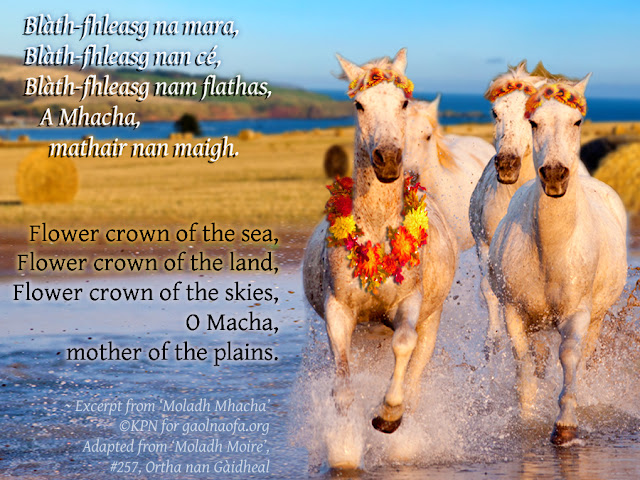
Given the associations of St Michael and horses and the sea, along with the harvest theme, there are a number of deities that could be connected with the festival, and Kathryn wrote a bit about that on her blog. She also did the meme we posted on the GN Facebook page on Monday:

Photo collage from original images by efilpera (horses) and Duarte JH (field)
Along with the adaptation of the prayer, which you can find in full on the Gaol Naofa website's new meme page.

As far as things to do go, the big one is making a Strùthan Mhìcheil, or Michaelmas struan, which is a specially made bannock that's coated with a kind of caudle. I've posted a recipe for it on Tairis, which is taken from Margaret Shaw's Folksongs and Folklore of Uist. The Ceolas website has a more scone-like version, which I'm going to try tomorrow, hopefully (I prefer to use golden syrup as opposed to treacle, personally, though). An offering can be made of some of the strùthan, perhaps as you "beat the bounds" of your property, if you're able.

In the run up to the festival you could also try going out to look for some wild carrots (also known as Queen Anne's Lace), which are traditionally gathered at this time of year, although they may not grow in your area (and they're considered a problem in some parts of the US so it's probably not a good idea to grow them yourself). If you do go looking for them, it's important to be cautious because they're easily confused with poison hemlock (conium maculatum) and a couple of other plants. If you'd rather play it safe then the more usual orange variety of domesticated carrots (or more specialist variants, like purple or white ones) could be harvested (or obtained by other means) instead.

Of course, a good party is always a great way to celebrate any festival, and as Carmichael notes (two links up) there's a traditional dance that's done to the tune of Cailleach an Dùdain ('The Old Woman of the Mill-Dust'). Here's an example of the tune with a peurt-a-beul accompanying it:


The Carmichael Watson Project Blog has some interesting commentary on it, and also notes that the last sheaf of the harvest is often woven into a doll called the Cailleach. As winter approaches, she's certainly making her presence felt as she prepares to resume her wintry reign, and let's not forget that she also has associations with the equinox in Ireland, at Sliabh na Caillighe (Loughcrew), where Cairn T is oriented to the equinox sunrise.

That's about all I can think of at the minute, but check back on the Gaol Naofa Facebook page for another related meme on Monday...

Friday, 18 September 2015

New page and lead mines...

First off, a quick note about a new page on the Gaol Naofa website...

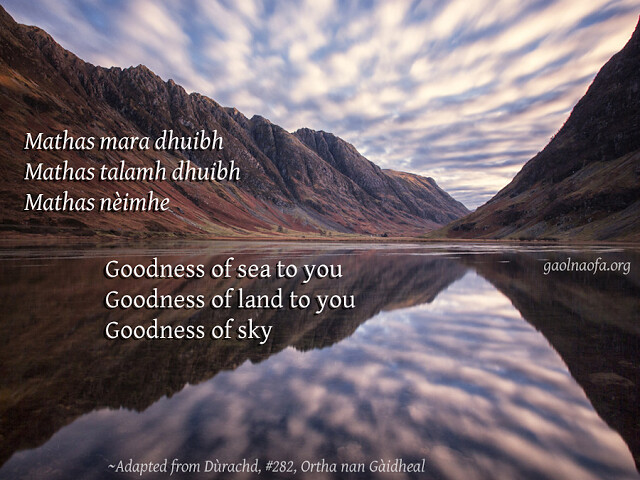
If you're following us on Facebook then you'll have noticed that we've been putting out a number of memes on proverbs, prayers, triads, and so on. Our latest meme is a prayer to the moon:

Gaol Naofa meme – Moon
Original image: Dawn Perry
And now that we have quite a few of them we've created a page to host (and archive them) in the library section of the site. If you'd like to share any of them feel free, but please make sure you credit the original photographer, as per the terms of the Creative Commons licence. (Thanks).

Anyway, at the weekend the kids and I went on a fieldtrip with my mother-in-law and the archaeological society she's involved with. It was a long day with a few stops arranged (plenty of opportunity for my mother-in-law to show off her grandkids), the first one being to a lead mine situated in the highest village in Scotland. It's maybe not the most typical thing I'd be blogging about here, but the mine was really interesting and also involved a visit to a cottage that's been laid out in three sections, each section showing what living there would've been like during that period. It brought home a lot of things, for me, that I want to waffle on about here.

The mines date back to around the eighteenth century and it first started off with men setting up camp in the area and mining – rather haphazardly – whatever they could find. They lived in makeshift tents during the summer and worked as much as they could, then returned home in the winter. The conditions in the winter were too harsh to survive comfortably in tents, and being so high up it was pretty uncomfortable at other times of the year as it was.

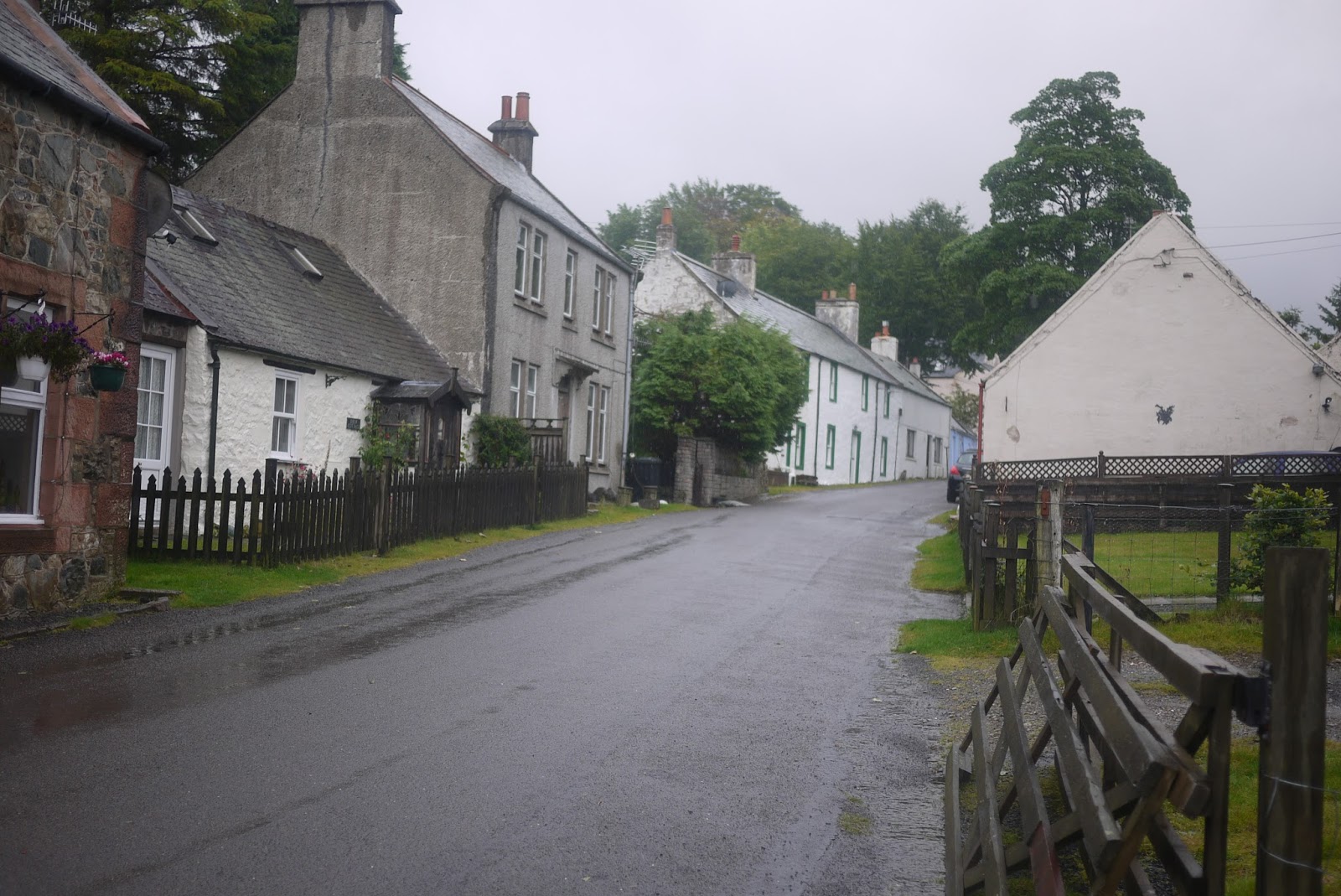
Then a company moved in and advertised jobs that came with a real home. Men flocked to the area, bringing their families, encouraged by the prospect of a roof over their heads and a regular income; being able to settle permanently in the area meant that a regular income from mining was possible. As far as the houses go, what the company really meant was that they'd give the workers a small plot of land and then – along with working in the mine all day – they'd have to build the house themselves. Which wasn't exactly what was advertised, but people made do, and a village began to flourish... This is one of the streets today:


If I recall correctly, things like water mains, sewers, gas, and electricity were still being installed in parts of the village in the 70s.

The men would go to work in the mines for ten or twelve hour shifts during the summer, going down to around six hours in the winter. They got double the wages in the summer, given the longer hours. Boys from around eight years of age were employed to wash the galena that was mined out of the hills, before it was sent for smelting. In the summer they'd spend ten or twelve hours standing barefoot in the stream. In winter they'd often have to smash through the ice before they could begin washing – again, spending the whole shift barefoot in the water. The mining company would advertise the positions as "healthy outdoor work" for boys.

At the age of twelve the boys who worked in the stream would be allowed to move up in the world, being promoted to work in the mine. They wouldn't do the mining itself – not yet. Instead, they'd spend their shift dragging the lead out from where the miners were working, to pass their load on to the boys washing the galena in the stream and then trudge back in for more.

Of course, using the stream tainted the water with lead and other minerals, but it was the smelting that was the most dangerous job: A by-product of the smelting was arsenic, which was freely inhaled. To begin with, the furnace was situated near the village to cut down on the time it took to get the ore there, but it soon became obvious that the fumes hanging over the village weren't doing anyone any good. Eventually the furnace was moved further out, and built into the hillside. Boys would be employed to clean out the flues of all the soot and sediment – men were too big to climb up there – exposing them to the arsenic, too. The average life expectancy in the village – in the 1750s – was 35, although the high rate of infant mortality is the main factor in giving such a low figure. The age group with the highest mortality rate was between 0-2.

As new shafts were opened, the miners would leave the first piece of galena that alerted them to a potential seam they could mine. The rest of the galena would be taken, but that first piece was left, for luck; take it, and the mine would take you. So there it stayed. Each day as the miners entered the shaft they'd walk pass that piece of galena and rub it for luck. At the end of the shift they'd rub it again as they made their way out. The mine deserved this respect.

The tour guide showed us the piece in the mine we explored:


You can see how worn it is. The moss is from the damp and the spotlight they use to show it off – the tunnels are otherwise too dark for anything to grow ordinarily, but it's just as damp as it ever was.

Once they were in the mine they'd stay there until the end off the shift – in the dank and dimness. They'd eat where they worked and they'd piss and shit there too, so the mines were full of rats. The miners would tie their trouser legs at the knee so the rats couldn't run up inside them. They didn't have any specialist clothing, they just wore everyday clothing that they covered in melted wax so help give some waterproofing. It was always damp in the mines, but especially so in the rainy seasons when the rain water would filter down through the hills and drip into the mine shafts.

While the galena was dragged out by the older boys, the rest of the rock was usually stacked up on the wooden props used to shore up the shaft walls – it was a waste of time dragging out rock that wasn't going to make any money, because less ore meant less pay. The piles of rock added weight to the props, and with the damp in the mines it meant that the wood could rot quickly and there would often be collapses. Conditions left a lot to be desired...

The lead that was produced from the mines was only shipped off once a year – perhaps two years if the mines weren't especially fruitful. They wouldn't be shipped off until the load could fill up a ship, which meant the miners wouldn't get paid until a whole load was ready to go. Each miner would have to buy their own tools, pay for their own candles to light their way, and so they relied on the mining company to provide a store where the families could get food and any other supplies they needed, on tab. The miners worked in groups called "bargains," because the head of the group would haggle and bargain with the mining company to agree a rate of pay for the group. When the miners were finally paid they'd have to settle their tab and hope they had money left over; in a bad year, sometimes the miners would find that they owed the mining company more than they'd been paid, and would need to work another year and hope that this time they'd earn enough. Families would try to supplement their incomes by panning for gold in the streams that ran through the village, and the miners would carefully cultivate stalagtites of hematite that would form from the shaft ceilings from the minerals that leeched out of the rock. When the stalagtite was big enough, the miner would break it off and take it home to polish it up, and then sell it on to travelling merchants.

So conditions were hard. On top of the long hours and demanding physical work, the earliest houses built by the miners had to be erected using the cheapest materials available. Rock wasn't hard to come by for the walls, but the roofs were often little more than thatches of bracken and heather – not always completely waterproof, but slate or proper thatching cost money that most workers didn't have. The glass tax of the eighteenth century meant that most families couldn't afford windows either, so they just had small holes in the wall, with wooden shutters that were kept closed in winter. The floor of the house was little more than earth (or mud at times, because the thatch wasn't exactly water-tight).

The hearth was roughly in the middle of the room; there was no chimney, so the smoke would just have to work its way out through the thatch. The furniture – a chest, a few stools, and probably not much more – were low down to help keep people out of the worst of the smoke. The beds were little more than piles of heather and bracken to provide a mattress, covered over with warm blankets. Cottages typically housed between 8-10 family members:


The weather was pretty miserable on the day we visited, and even though it's only September the damp and cold really brought home how it important it would have been to keep the hearth alight day and night. The fire was smoored each night – smothered over to keep it at a steady, slow smoulder rather than a roaring blaze, to conserve fuel and so it wouldn't need constant attention throughout the night, and so it could be easily raised up again in the morning without having to start from scratch. Allowing the fire to go out completely could mean freezing conditions. I can't help but think of all the feeling that was put into the smooring prayer as those words were said each night. In the face of such uncertainty, routines of daily prayers like that could provide a sense of comfort and consistency.

Within a hundred years things had improved some. Slate became more widely available and affordable for roofing, and the window tax had been abolished so people had the luxury of natural daylight. The central hearth was becoming a thing of the past, being replaced by a cast iron fireplace off to one side of the room, with a chimney to take away the smoke. A bed was built into a cosy nook near the stove, and wood panelling on the walls provided extra insulation:


(A bit blurry but the light was crap, sorry). The nook was the prime spot for sleeping, especially in the winter.

Life was a little more comfortable and dry, although the slate roofing could still be a bit leaky. The average life expectancy in the village had risen to 55 by the mid-nineteenth century. By 1910, housing had improved once more:


People had warmer housing and better access to education and health care. Life expectancy had risen even further, hence baldy granddad in the corner there. One of the major changes was that the mining company recognised the benefit of a healthier workforce, so they'd begun to offer subsidies to the workers so they could buy seeds to grow vegetables. A healthier diet was a major improvement.

So that's the museum. The little tidbits of folklore – like preserving the first bit of galena – were really striking, for me. I doubt the miners thought of the mine as having a spirit, as such, but all the same they behaved as if the mine had a life of its own, and they worked to appease it just as they did with their offerings of milk to the Good Folk, the smooring and setting the house in order each night to make sure that the spirits couldn't come in and interfere... Life may not be so precarious as it was then – for most of us – but our concerns remain much the same. And respect to those we share our space with is always due.

Wednesday, 2 September 2015

Review: Studies in Irish Mythology

Before I get into the review of Grigory Bondarenko's book (AKA my new favourite book, ever), I'll just make a note of the new page I've created where all the book reviews I've done here on the blog are listed and linked to, arranged by subject matter.

Studies in Irish Mythology
Grigory Bondarenko

As I noted when I blogged about my trip to the library, where I picked this book up along with a bunch of others, this one is a compilation of sixteen articles and essays written by Bondarenko over the course of around ten years. You can find some of the articles compiled in this volume freely available online, so if you want a taster of what you'll be getting, here they are:
I'm going to assume that most people who find this review don't read Russian, but I'll link to the first chapter as well, and note that the version given in the book is most definitely in English, unlike that version online. And as a bonus, here's a preview of the book.

But don't let the availability of these articles put you off from investing in getting the book for your probably overcrowded shelves; it's well worth it, and I'll definitely be adding it to mine on a permanent basis. You'll have to buy directly from the publisher, from the looks of it, but it's reasonably priced compared to a lot of academic books these days.

Although focusing on Irish mythology, most of the chapters take a rather comparative approach, making comparisons with Slavic or Russian myth in some places, or drawing on Indo-European, Gaulish or Welsh evidence to help support an argument in others. It's something that's easy to over-do (see, for example, the Rees brothers' Celtic Heritage) but I think here, for the most part, the comparative approach genuinely complements what Bondarenko is trying to do, rather than detracts from it. Many of the chapters deal with various aspects of cosmology and attempt to dig out evidence of pre-Christian ritual or belief, so a comparative approach can be helpful in figuring out what we should be looking for, for one.

It's this cosmological and pre-Christian stuff that I'm most interested in (in case you hadn't guessed), and I found a number of the chapters to be extremely illuminating. There's an article on 'The migration of the soul in Early Irish tales,' (link above) which is especially good, and I think it will definitely be of interest to anyone looking for a rundown of the evidence and the different ways that the evidence has been approached and interpreted. There's also a bit of a tangent about the word carddes, which can be interpreted as being 'a friendly agreement,' and which is found in relation to the agreement of peace between the Milesians and the Tuatha Dé Danann mentioned in De Gabail in t-Sida. That's also touched on in an earlier chapter, which is also worth a read.

The final chapter, 'Fintan mac Bóchra: Irish synthetic history revisited,' makes a good companion piece to the article on the migration of souls, since it deals with Fintan and Tuán mac Cairell, both of whom are said to have transformed into different kinds of animals as a way of surviving many thousands of years, and who are often cited as examples for supporting evidence of the belief in metempsychosis (the transmigration of the soul, which can include and encompass reincarnation). Fintan is said to have been the only person to have survived the Flood, who then lived for thousands of years until he related the history of Ireland to an audience (and then died), and Bondarenko gives an overview of the possible meanings of his name and the various interpretations academics have made over the years in terms of who, or what, Fintan is – a god, an example of a "primordial man," and so on. All of this is especially interesting if you have a thing for cosmogony/creation myths, and if that's not enough there's also some meaty stuff on the concept of silence or "dumbness" in relation to revelation and obtaining hidden knowledge, and possible hints of its use in ritual.

Some of the earlier chapters deal with various aspects of the tale Airne Fíngein ('Fíngen's Vigil'), which relates the events surrounding the birth of Conn Cétchatach, one of Ireland's most reknowned legendary kings. Here again we have some good stuff to mull over – aspects of "ideal kingship" in Ireland, the possible meaning of Conn's name and his epithet "Cétchathach," usually interpreted as "Conn of the Hundred Battles," but, as Bondarenko notes, the epithet could mean "a hundred treaties," or perhaps even "first-warlike." Conn, meanwhile, can have connotations of "protuberance, boss, chief, head," or "sense, reason." At Conn's birth, Airne Fíngein mentions the spontaneous appearance of the five royal roads of Ireland, and the meaning and symbolism of these are explored in a chapter of their own, which also appears in the Celtic Cosmology book I reviewed not too long ago.

As the article on 'The Case of Five Directions' notes, fives are a common grouping in Irish myth – five royal roads, five directions, five sacred trees (bile), and so on. A couple of chapters look at various aspects relating to the sacred trees of Ireland, including one on 'The alliterative poem Eó Rossa from the Dindshenchas.' This is a poem that describes the tree (possibly a yew), and it includes some intriguing lines, including one that calls the tree "dor nime/door of heaven," which has been interpreted in some CR circles as being evidence that the bile spans the three realms. Bondarenko gives a detailed and fascinating analysis of many of the lines from the poem, including this one (noting the possible Biblical references it makes), and it makes for a thought-provoking read.

One of the later chapters, 'Goidelic Hydronyms in Ptolemy's Geography: Myth Behind the Name,' is an article that puts the comaparative approach that Bondarenko favours to particular good use. This one was of especial interest for the discussion of Boann and her relation to a river name Ptolemy notes that's likely to correspond with the Boyne river, and Bondarenko brings in the comparative evidence to explore the meaning of the name, mentioning Indo-European theories, Gaulish evidence of similar names, as well as the Dindshenchas stories relating to Boann (and similar tales, like that of Shannon/Sinann), in discussing the possibilities. Although Bondarenko makes his own views clear, he makes an effort to cover different angles and other approaches, so it's easy to make your own mind up or hunt up those other academics while you chew on it.

I'll finish off with mentioning one final article that stood out for me – another one on a Dindshenchas poem, but this time it's a translation of a rosc poem that hasn't been translated before. Both Edward Gwynn and Whitley Stokes, who translated the bulk of the Dindshenchas between them, left this one out, apparently because of the difficult and obscure nature of the language, and they didn't even mention it (except for a brief reference to it by Stokes in his own privately printed compilation of his translations). This fact in itself is interesting to me, and Bondarenko goes on to offer a translation and analysis of the poem, which centres around five heroes who must defend themselves from "phantoms, ancient armies" from the Otherworld, who come out to attack them during the Feast of Tara at Samhain. Again, it links in with a number of details described in Airne Fíngein, starting with mention of the five royal roads that appeared at the birth of Conn.  

There's so much more here besides the few tidbits I've covered so far, and it really does make for a good read. I can't say I don't have my disagreements, or questions, here or there, and I can't say every single chapter was of as much interest to me as the ones I've mentioned above, but there's nothing here that makes me want to throw the book at the nearest wall and then stomp on it (I do quibble and grumble over the questionable use of "shaman/shamanism" in the first few chapters, though). Even where I wasn't so interested in the subject being discussed, I can say that at least I learned something new.

This isn't a book that I'd recommend for a total noob; it's certainly a hefty and dense read that isn't aimed at a general, populist audience, and I think it would really benefit from being approached with an already decent foundation of knowledge with regards to Irish mythology and the study of it. As academic works go, the language used is fairly accessible – I don't think you'll be overwhelmed by jargon – but it's the nature of the beast that these things can be rather dry, especially if it's not your usual kind of bedtime reading.

If you feel like you've read all the 101 books you can stomach and you're looking for something with more depth to it, then I'd say definitely add this to your wish list. If you're interested in all things Irish cosmology then I'd suggest you have done with it and just order a copy now...  And if you take my advice then I hope you enjoy it as much as I did!
Tuesday, 1 September 2015

Welcoming in the autumn

Usually my festival preparations start with a good clean and tidy up so everything's in order and everything else follows from there. It's not the most glamorous thing to do (or fantsatically scintillating thing to write about) but I like to start the new season with everything as it should be – start things afresh. Inasmuch as I can and according to my abilities at the time.

This time around, though, our Lùnastal-related celebrations were a little more spread out and kind of more disordered than usual, in a way, mostly because we had a mini "staycation" in the week leading up to August 1st and it took some time to recover from Actually Doing Stuff before I was physically up to much again. Much as I would've liked to have done Ireland again this year (and so would we all), we weren't able to book anything because Mr Seren got confirmation of having some time off too late for that, and seeing as he's been working so hard lately he didn't want to have to do too much driving hither and thither, so a week of outings was a good compromise.

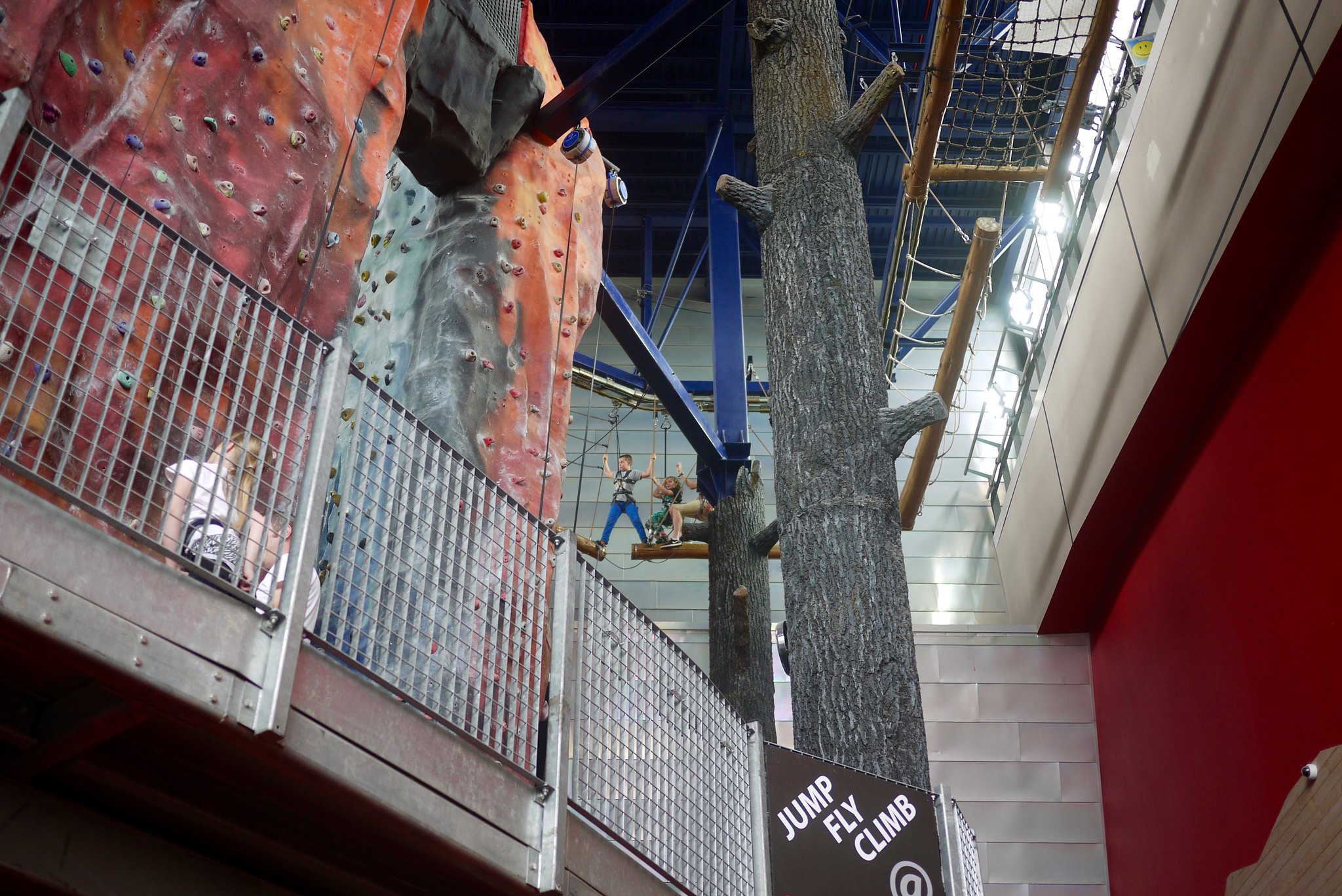
We did a water park, a safari park, the Sea Life Centre (otters!), the Science Centre, and, on the day before Lùnastal itself, a we went to an adventure centre where the kids braved a "sky park:"


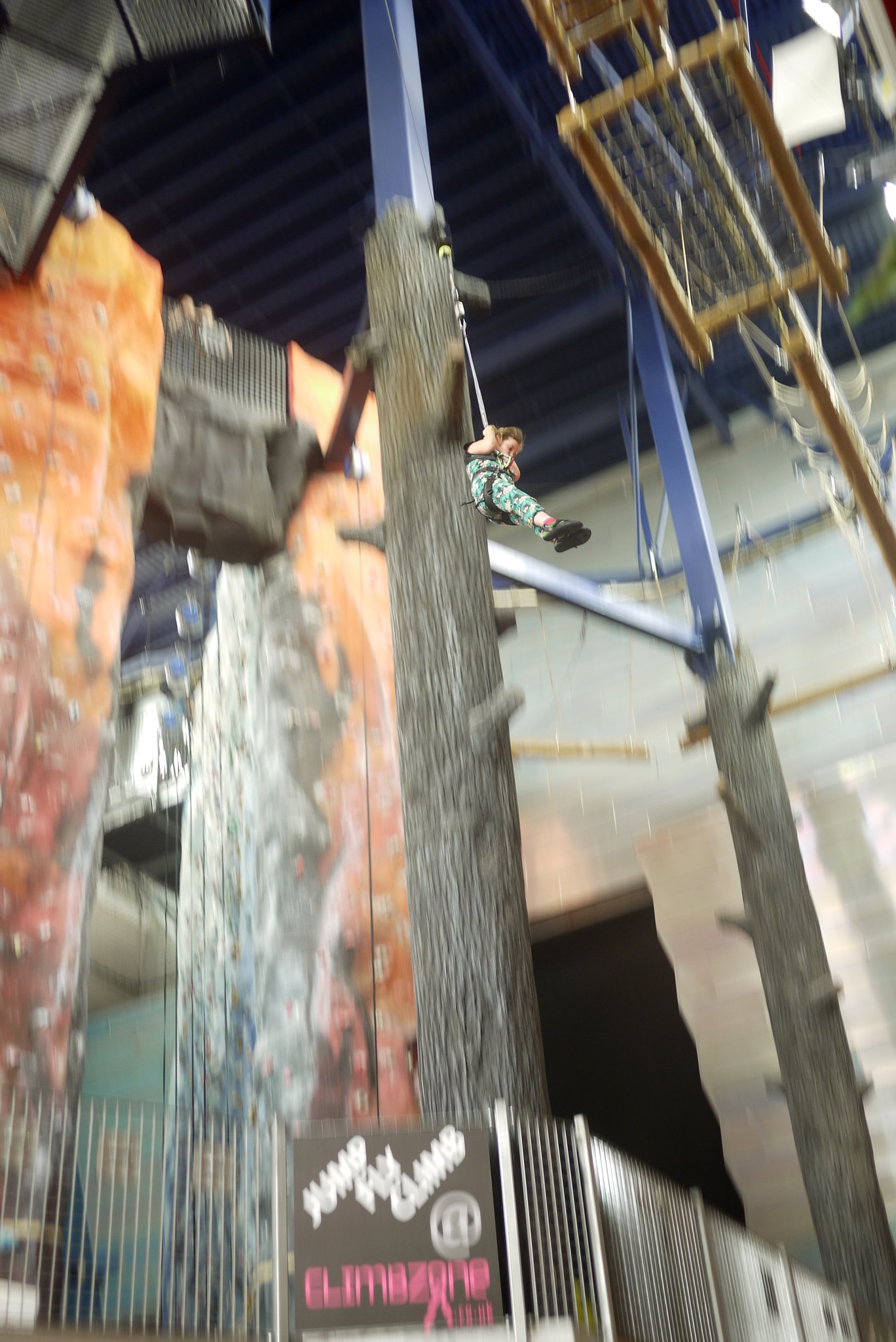
Rosie was terrified but insisted on doing it anyway, and then being attached to little more than a rope meant that she got so far and then reality sank in and she refused to move because what the hell are we doing we're going to die. The instructor stuck with her and helped her along, and then it was time for the drop:


Which I'm amazed she did, really, because she could've easily walked down the stairs instead. By that point it was a matter of principle, though. Tom loved it and went back eight times until the time slot was up.

They were both very brave and I think such displays of courage were very apt for the festival occasion. The next day we all had a well-earned rest...

Eventually, though, it came time to celebrate, so the house was set in order, and the feast was prepared. I like to try something new every now and then for the festivals, even if it's just simple, so this time I decided to try making a gooseberry fool, which is gooseberries:


That are stewed with a little sugar to sweeten and mixed with lightly whipped cream to give a yummy dessert (fools are a type of syllabub, a ye olde dessert, and so it's related to cranachan, too). They might look like slightly hairy grapes, but don't be fooled (arf), gooseberries are extremely tart on their own. The sugar and cream helps take the edge off:


It doesn't look like much but it really does taste good (you can strain the lumps out if you like but I didn't because it's healthier, dammit).

Aside from bilberries, gooseberries are also traditional to pick for the festival, and seeing as my blueberries never ripen until September in my garden I was tempted to buy a gooseberry bush or two during the summer so I'd have something to harvest (they're supposed to be harvested wild, admittedly, but I've yet to find any gooseberries or bilberries growing wild round here). I held back this year because I want to see how all the potted stuff does before I get too ambitious (it's going OK, so far – no casualties yet), so these ones I bought from the supermarket. I ordered two punnets and got the red ones as well as the green as a surprise, so I ended up making two separate fools to see if there was much of a difference. I've never seen red gooseberries before and apparently they're sweeter, but we all agreed the green variety was much tastier.

Our feast went down very well, over all, and in the evening I sained the house, made my offerings and devotions, and all the usual. It was too cloudy to see any meteors zipping by, but I spent some time outside, just enjoying the quiet and the cool nip in the air.

The next day the kids and I took a day trip to Largs for ice cream and a trip to what the kids call "the seaside park" as an end of summer holidays treat – these ice creams are a very rare treat because they're huge and probably amount to the average weekly calorific intake...


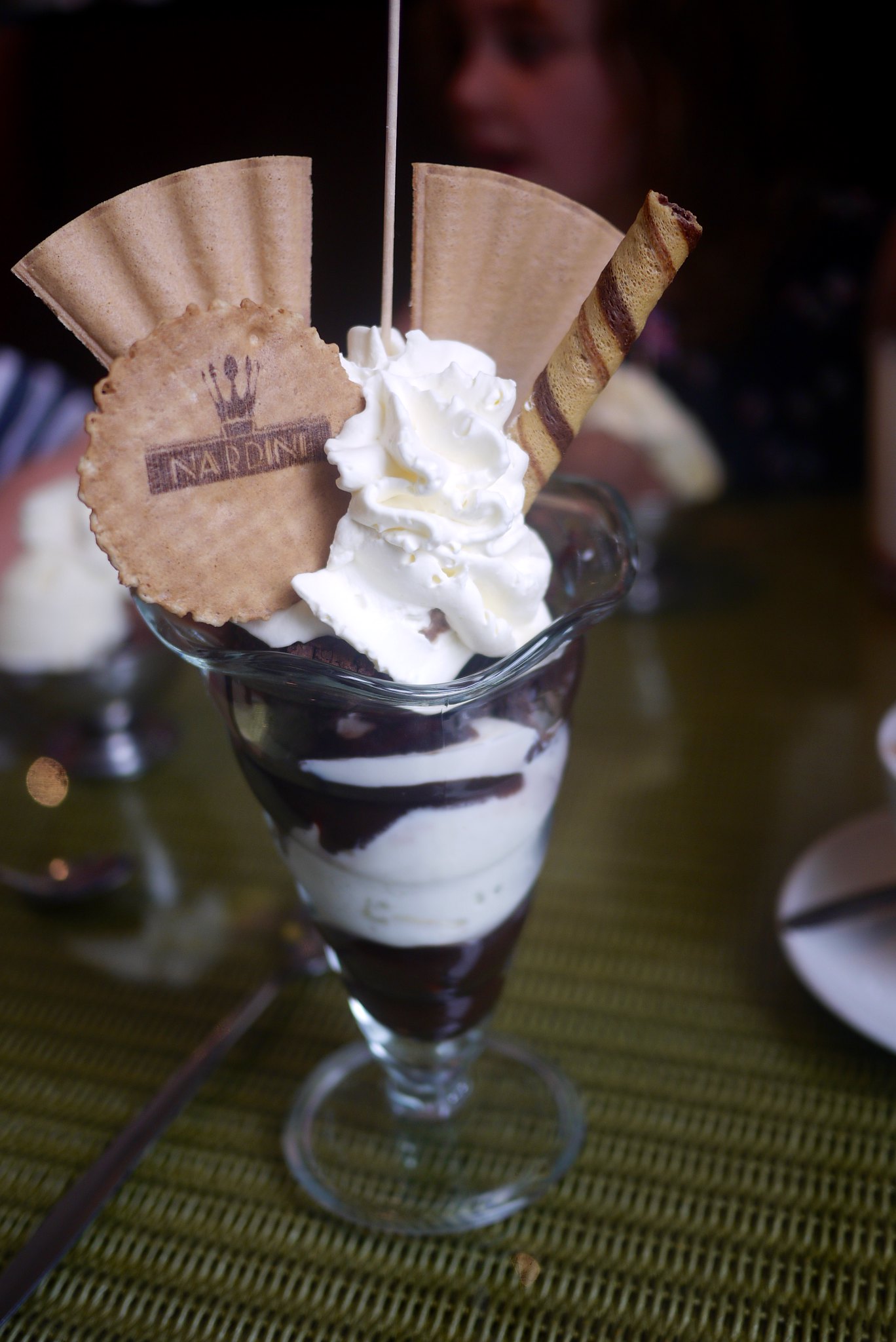
But who the hell cares? I had a hot fudge brownie sundae, and yes. I ate the whole damn lot (and felt rather sick afterwards). Tom and Rosie's sundaes came with British and German flags, respectively, for some reason, so the kids re-enacted World War I by way of flags while demolishing their sundaes. Naturally...

And then, with a bit of time to myself later on, I took the dogs for a walk up to the high point in the village I usually go to for Là Lùnastal, and made some offerings and took the time to contemplate things. Along the way I discovered some raspberries growing wild – they're usually way past their best by August, but the weather has delayed a lot of fruits – so I picked some of those to add to my offerings as well.

It was another quiet celebration for us but it was just what was needed, I think, and the gooseberry fool seemed to go down well as an offering. The kids are now obsessing about when we can go and pick the blackberries...

Tuesday, 25 August 2015

New video from Gaol Naofa

It's been a good six since months since our last video so we decided it was high time for another one...

This time we decided to focus on offerings, and while it's something we've written about a lot, and at length, it's also something we get questions about frequently. Like our other videos, this latest one is intended to be a brief introduction to the subject, and here we cover a little bit of background about the history and archaeological evidence for offerings, what kind of things can be offered, and how they can be offered:


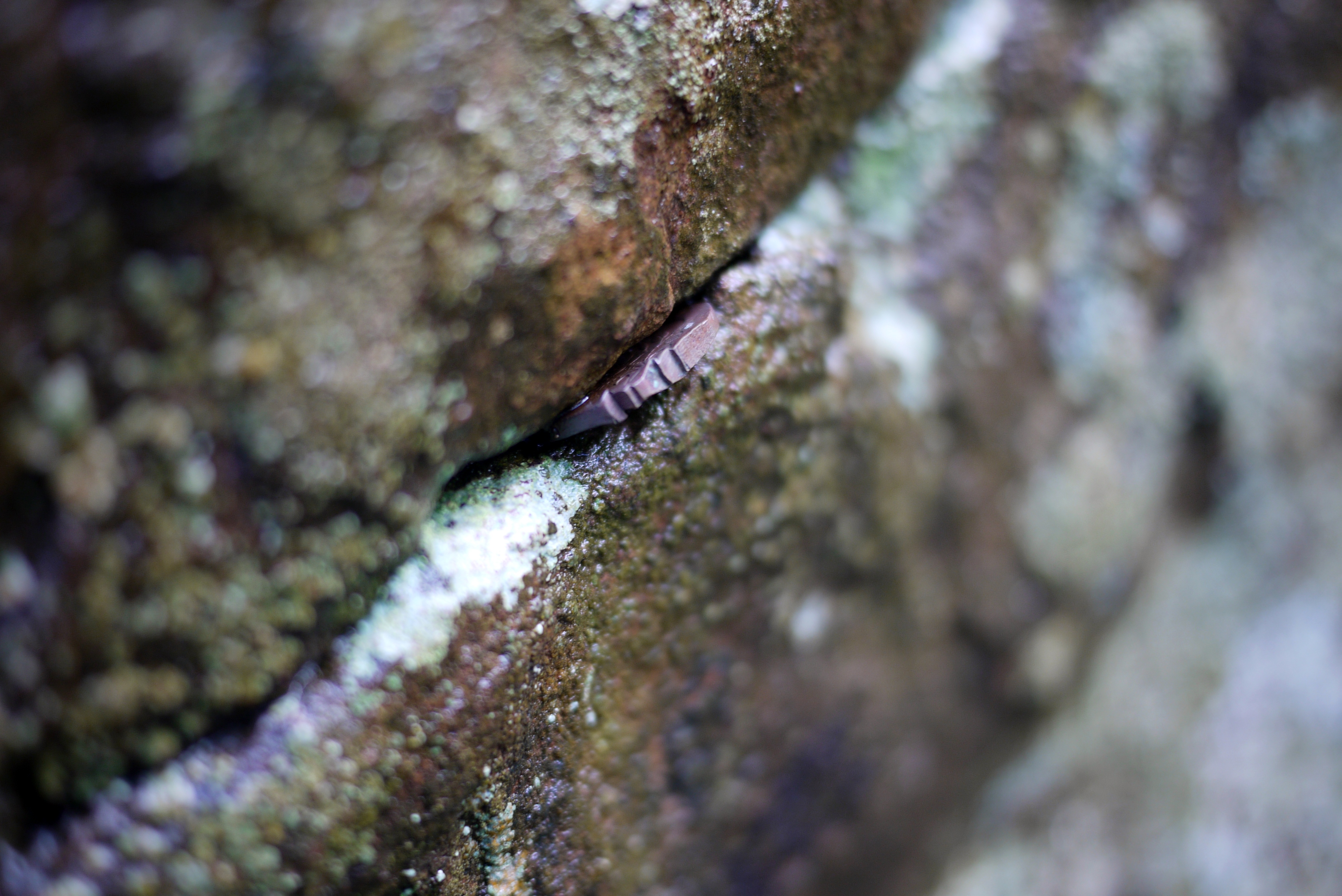
One thing we didn't really have time to focus on in as much detail as we wanted to was the kind of consideration that needs to be taken when it comes to the potential impact that our offerings might have on the environment, and on local wildlife. An offering that poisons or damages the wildlife is hardly a good offering, right? So as we note in the announcement over on the Gaol Naofa website, it's best to make sure that certain types of food offerings are made well out of reach of wildlife who might take the opportunity for an easy snack and end up getting poisoned. Offerings that can damage the environment – non-biodegradable things attached to trees, which can strangle or stunt the tree's growth, or pennies worked into tree trunks or cracks in stone – should be avoided completely. It may be traditional, but offerings like this:


Only damage the stone. This is a penny worked into a crack in a stone from a Neolithic stone circle on the Isle of Bute (which I took Marsaili to in April when she came over for a visit); the stone itself has now almost cracked into two and things like this will only serve to weaken something that's stood for around five thousand years... Things like this don't honour a place, or the spirits of that place. 

If you want to do some more reading on offerings in Gaelic Polytheism, then I think Gaol Naofa's article on the subject is a good place to start: Offerings in Gaelic Polytheism. This is one of Gaol Naofa's oldest publications, which has been substantially revised and updated over the years. You might also find our Children and Family in Gaelic Polytheism article useful, since it covers the basics of practice broken down into simple terms, and it gives an idea of some prayers you might want to use (one of which we included in the video). For more of an idea on the historical practices involving the making of offerings, there's an article over on Tairis that covers the subject in more detail, and you can also find a breakdown of the kinds of offerings that can be made as well. Finally, over on the Paganachd site, there's KILLYOUANDEATYOU, which is a must read for tips and ideas on how to go about your practice while keeping the spirits of the place happy – especially for Gaelic Polytheists who live outside of Ireland, Scotland, and the Isle of Man.


Image by John McSporran, used under Creative Commons licence.