Wednesday, 2 September 2015

Review: Studies in Irish Mythology

Before I get into the review of Grigory Bondarenko's book (AKA my new favourite book, ever), I'll just make a note of the new page I've created where all the book reviews I've done here on the blog are listed and linked to, arranged by subject matter.

Studies in Irish Mythology
Grigory Bondarenko

As I noted when I blogged about my trip to the library, where I picked this book up along with a bunch of others, this one is a compilation of sixteen articles and essays written by Bondarenko over the course of around ten years. You can find some of the articles compiled in this volume freely available online, so if you want a taster of what you'll be getting, here they are:
I'm going to assume that most people who find this review don't read Russian, but I'll link to the first chapter as well, and note that the version given in the book is most definitely in English, unlike that version online. And as a bonus, here's a preview of the book.

But don't let the availability of these articles put you off from investing in getting the book for your probably overcrowded shelves; it's well worth it, and I'll definitely be adding it to mine on a permanent basis. You'll have to buy directly from the publisher, from the looks of it, but it's reasonably priced compared to a lot of academic books these days.

Although focusing on Irish mythology, most of the chapters take a rather comparative approach, making comparisons with Slavic or Russian myth in some places, or drawing on Indo-European, Gaulish or Welsh evidence to help support an argument in others. It's something that's easy to over-do (see, for example, the Rees brothers' Celtic Heritage) but I think here, for the most part, the comparative approach genuinely complements what Bondarenko is trying to do, rather than detracts from it. Many of the chapters deal with various aspects of cosmology and attempt to dig out evidence of pre-Christian ritual or belief, so a comparative approach can be helpful in figuring out what we should be looking for, for one.

It's this cosmological and pre-Christian stuff that I'm most interested in (in case you hadn't guessed), and I found a number of the chapters to be extremely illuminating. There's an article on 'The migration of the soul in Early Irish tales,' (link above) which is especially good, and I think it will definitely be of interest to anyone looking for a rundown of the evidence and the different ways that the evidence has been approached and interpreted. There's also a bit of a tangent about the word carddes, which can be interpreted as being 'a friendly agreement,' and which is found in relation to the agreement of peace between the Milesians and the Tuatha Dé Danann mentioned in De Gabail in t-Sida. That's also touched on in an earlier chapter, which is also worth a read.

The final chapter, 'Fintan mac Bóchra: Irish synthetic history revisited,' makes a good companion piece to the article on the migration of souls, since it deals with Fintan and Tuán mac Cairell, both of whom are said to have transformed into different kinds of animals as a way of surviving many thousands of years, and who are often cited as examples for supporting evidence of the belief in metempsychosis (the transmigration of the soul, which can include and encompass reincarnation). Fintan is said to have been the only person to have survived the Flood, who then lived for thousands of years until he related the history of Ireland to an audience (and then died), and Bondarenko gives an overview of the possible meanings of his name and the various interpretations academics have made over the years in terms of who, or what, Fintan is – a god, an example of a "primordial man," and so on. All of this is especially interesting if you have a thing for cosmogony/creation myths, and if that's not enough there's also some meaty stuff on the concept of silence or "dumbness" in relation to revelation and obtaining hidden knowledge, and possible hints of its use in ritual.

Some of the earlier chapters deal with various aspects of the tale Airne Fíngein ('Fíngen's Vigil'), which relates the events surrounding the birth of Conn Cétchatach, one of Ireland's most reknowned legendary kings. Here again we have some good stuff to mull over – aspects of "ideal kingship" in Ireland, the possible meaning of Conn's name and his epithet "Cétchathach," usually interpreted as "Conn of the Hundred Battles," but, as Bondarenko notes, the epithet could mean "a hundred treaties," or perhaps even "first-warlike." Conn, meanwhile, can have connotations of "protuberance, boss, chief, head," or "sense, reason." At Conn's birth, Airne Fíngein mentions the spontaneous appearance of the five royal roads of Ireland, and the meaning and symbolism of these are explored in a chapter of their own, which also appears in the Celtic Cosmology book I reviewed not too long ago.

As the article on 'The Case of Five Directions' notes, fives are a common grouping in Irish myth – five royal roads, five directions, five sacred trees (bile), and so on. A couple of chapters look at various aspects relating to the sacred trees of Ireland, including one on 'The alliterative poem Eó Rossa from the Dindshenchas.' This is a poem that describes the tree (possibly a yew), and it includes some intriguing lines, including one that calls the tree "dor nime/door of heaven," which has been interpreted in some CR circles as being evidence that the bile spans the three realms. Bondarenko gives a detailed and fascinating analysis of many of the lines from the poem, including this one (noting the possible Biblical references it makes), and it makes for a thought-provoking read.

One of the later chapters, 'Goidelic Hydronyms in Ptolemy's Geography: Myth Behind the Name,' is an article that puts the comaparative approach that Bondarenko favours to particular good use. This one was of especial interest for the discussion of Boann and her relation to a river name Ptolemy notes that's likely to correspond with the Boyne river, and Bondarenko brings in the comparative evidence to explore the meaning of the name, mentioning Indo-European theories, Gaulish evidence of similar names, as well as the Dindshenchas stories relating to Boann (and similar tales, like that of Shannon/Sinann), in discussing the possibilities. Although Bondarenko makes his own views clear, he makes an effort to cover different angles and other approaches, so it's easy to make your own mind up or hunt up those other academics while you chew on it.

I'll finish off with mentioning one final article that stood out for me – another one on a Dindshenchas poem, but this time it's a translation of a rosc poem that hasn't been translated before. Both Edward Gwynn and Whitley Stokes, who translated the bulk of the Dindshenchas between them, left this one out, apparently because of the difficult and obscure nature of the language, and they didn't even mention it (except for a brief reference to it by Stokes in his own privately printed compilation of his translations). This fact in itself is interesting to me, and Bondarenko goes on to offer a translation and analysis of the poem, which centres around five heroes who must defend themselves from "phantoms, ancient armies" from the Otherworld, who come out to attack them during the Feast of Tara at Samhain. Again, it links in with a number of details described in Airne Fíngein, starting with mention of the five royal roads that appeared at the birth of Conn.  

There's so much more here besides the few tidbits I've covered so far, and it really does make for a good read. I can't say I don't have my disagreements, or questions, here or there, and I can't say every single chapter was of as much interest to me as the ones I've mentioned above, but there's nothing here that makes me want to throw the book at the nearest wall and then stomp on it (I do quibble and grumble over the questionable use of "shaman/shamanism" in the first few chapters, though). Even where I wasn't so interested in the subject being discussed, I can say that at least I learned something new.

This isn't a book that I'd recommend for a total noob; it's certainly a hefty and dense read that isn't aimed at a general, populist audience, and I think it would really benefit from being approached with an already decent foundation of knowledge with regards to Irish mythology and the study of it. As academic works go, the language used is fairly accessible – I don't think you'll be overwhelmed by jargon – but it's the nature of the beast that these things can be rather dry, especially if it's not your usual kind of bedtime reading.

If you feel like you've read all the 101 books you can stomach and you're looking for something with more depth to it, then I'd say definitely add this to your wish list. If you're interested in all things Irish cosmology then I'd suggest you have done with it and just order a copy now...  And if you take my advice then I hope you enjoy it as much as I did!

Tuesday, 1 September 2015

Welcoming in the autumn

Usually my festival preparations start with a good clean and tidy up so everything's in order and everything else follows from there. It's not the most glamorous thing to do (or fantsatically scintillating thing to write about) but I like to start the new season with everything as it should be – start things afresh. Inasmuch as I can and according to my abilities at the time.

This time around, though, our Lùnastal-related celebrations were a little more spread out and kind of more disordered than usual, in a way, mostly because we had a mini "staycation" in the week leading up to August 1st and it took some time to recover from Actually Doing Stuff before I was physically up to much again. Much as I would've liked to have done Ireland again this year (and so would we all), we weren't able to book anything because Mr Seren got confirmation of having some time off too late for that, and seeing as he's been working so hard lately he didn't want to have to do too much driving hither and thither, so a week of outings was a good compromise.

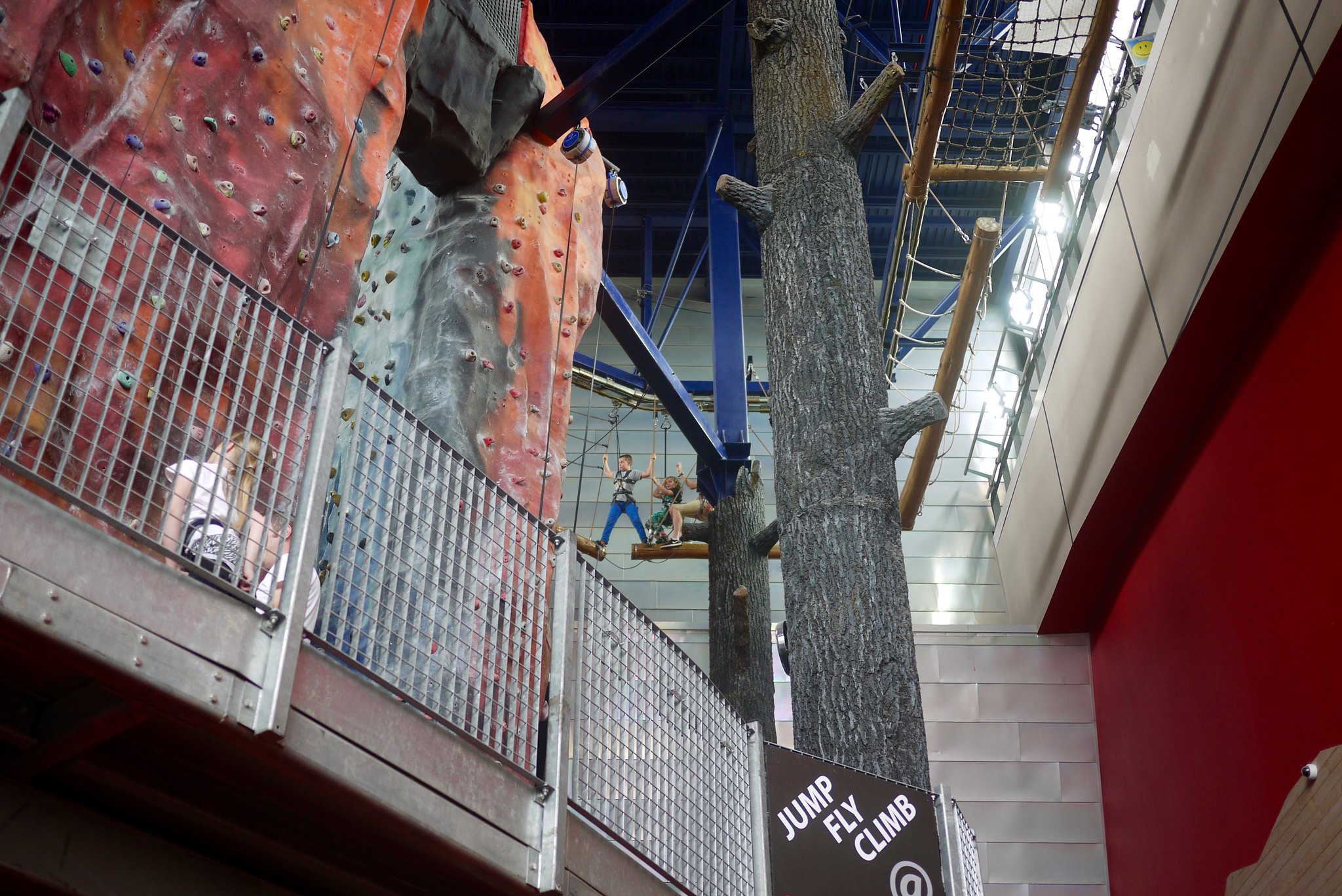
We did a water park, a safari park, the Sea Life Centre (otters!), the Science Centre, and, on the day before Lùnastal itself, a we went to an adventure centre where the kids braved a "sky park:"


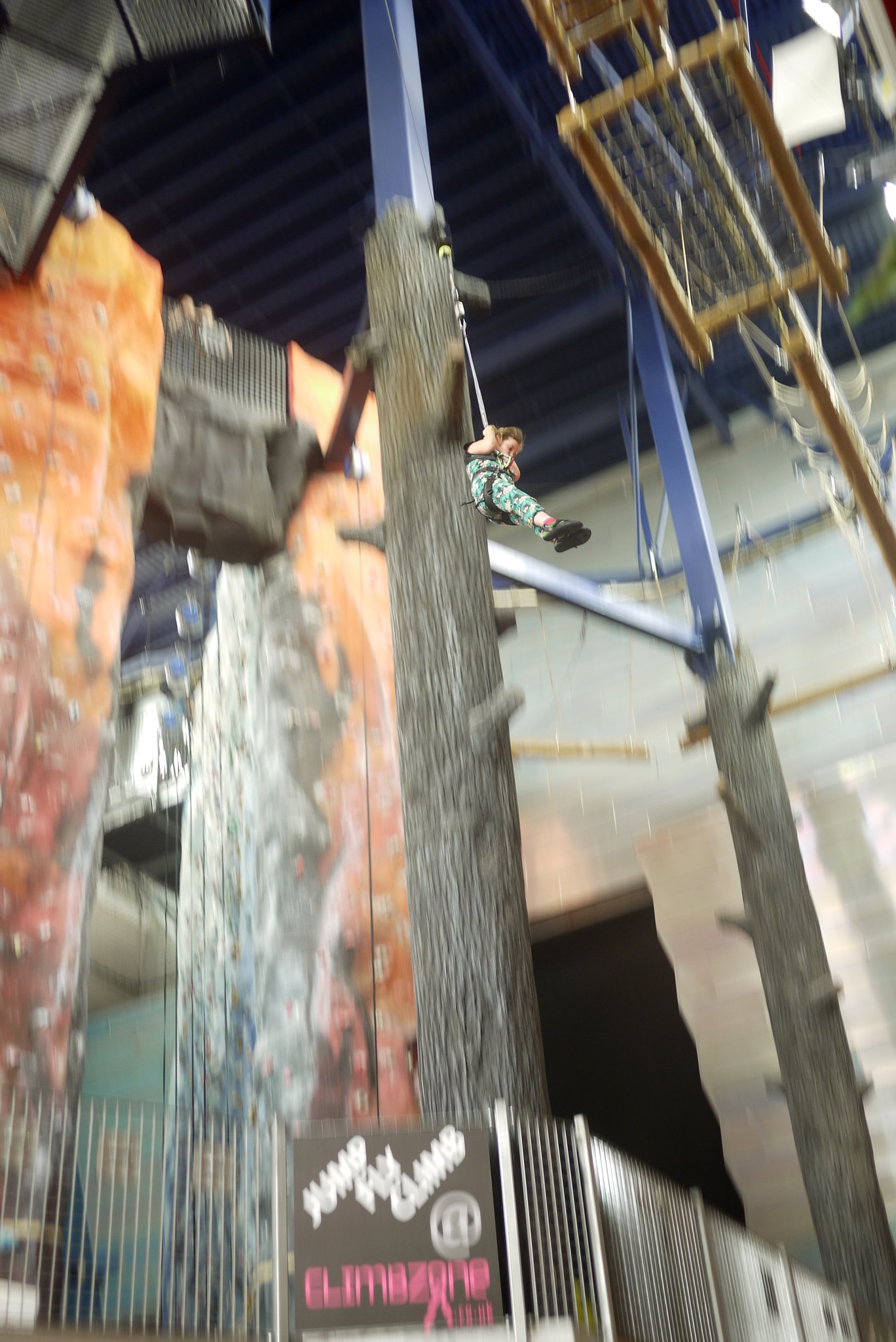
Rosie was terrified but insisted on doing it anyway, and then being attached to little more than a rope meant that she got so far and then reality sank in and she refused to move because what the hell are we doing we're going to die. The instructor stuck with her and helped her along, and then it was time for the drop:


Which I'm amazed she did, really, because she could've easily walked down the stairs instead. By that point it was a matter of principle, though. Tom loved it and went back eight times until the time slot was up.

They were both very brave and I think such displays of courage were very apt for the festival occasion. The next day we all had a well-earned rest...

Eventually, though, it came time to celebrate, so the house was set in order, and the feast was prepared. I like to try something new every now and then for the festivals, even if it's just simple, so this time I decided to try making a gooseberry fool, which is gooseberries:


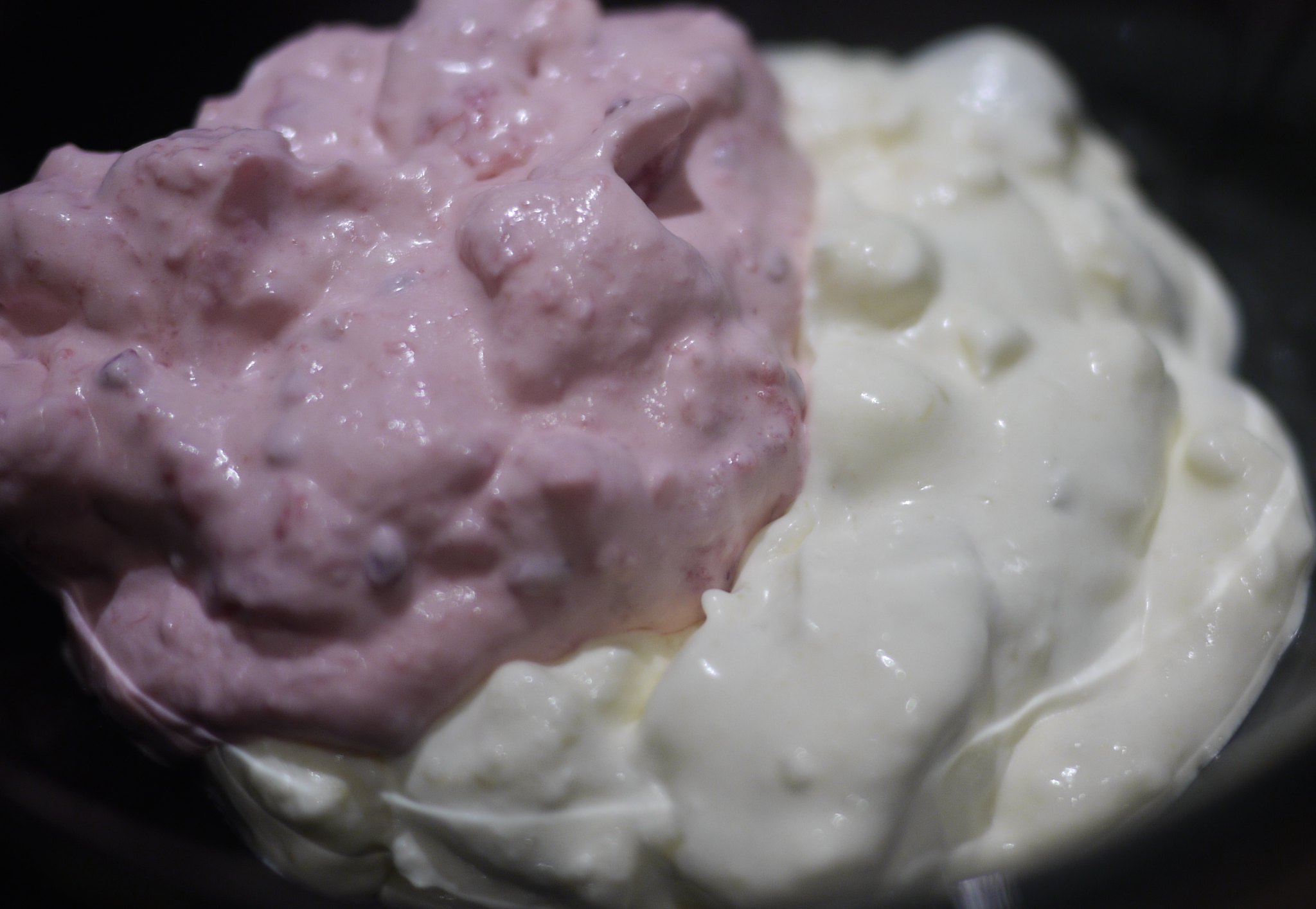
That are stewed with a little sugar to sweeten and mixed with lightly whipped cream to give a yummy dessert (fools are a type of syllabub, a ye olde dessert, and so it's related to cranachan, too). They might look like slightly hairy grapes, but don't be fooled (arf), gooseberries are extremely tart on their own. The sugar and cream helps take the edge off:


It doesn't look like much but it really does taste good (you can strain the lumps out if you like but I didn't because it's healthier, dammit).

Aside from bilberries, gooseberries are also traditional to pick for the festival, and seeing as my blueberries never ripen until September in my garden I was tempted to buy a gooseberry bush or two during the summer so I'd have something to harvest (they're supposed to be harvested wild, admittedly, but I've yet to find any gooseberries or bilberries growing wild round here). I held back this year because I want to see how all the potted stuff does before I get too ambitious (it's going OK, so far – no casualties yet), so these ones I bought from the supermarket. I ordered two punnets and got the red ones as well as the green as a surprise, so I ended up making two separate fools to see if there was much of a difference. I've never seen red gooseberries before and apparently they're sweeter, but we all agreed the green variety was much tastier.

Our feast went down very well, over all, and in the evening I sained the house, made my offerings and devotions, and all the usual. It was too cloudy to see any meteors zipping by, but I spent some time outside, just enjoying the quiet and the cool nip in the air.

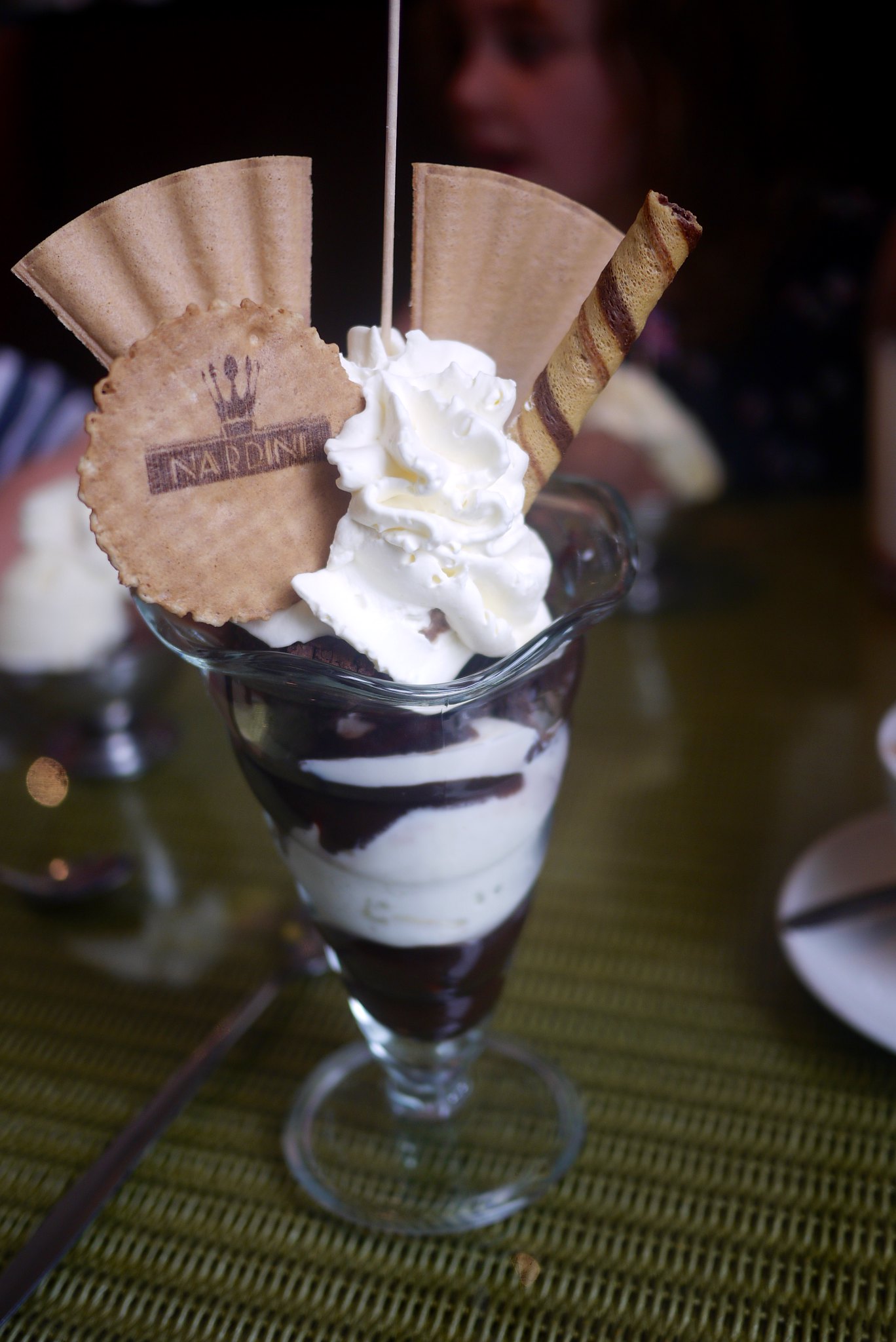
The next day the kids and I took a day trip to Largs for ice cream and a trip to what the kids call "the seaside park" as an end of summer holidays treat – these ice creams are a very rare treat because they're huge and probably amount to the average weekly calorific intake...


But who the hell cares? I had a hot fudge brownie sundae, and yes. I ate the whole damn lot (and felt rather sick afterwards). Tom and Rosie's sundaes came with British and German flags, respectively, for some reason, so the kids re-enacted World War I by way of flags while demolishing their sundaes. Naturally...

And then, with a bit of time to myself later on, I took the dogs for a walk up to the high point in the village I usually go to for Là Lùnastal, and made some offerings and took the time to contemplate things. Along the way I discovered some raspberries growing wild – they're usually way past their best by August, but the weather has delayed a lot of fruits – so I picked some of those to add to my offerings as well.

It was another quiet celebration for us but it was just what was needed, I think, and the gooseberry fool seemed to go down well as an offering. The kids are now obsessing about when we can go and pick the blackberries...

Tuesday, 25 August 2015

New video from Gaol Naofa

It's been a good six since months since our last video so we decided it was high time for another one...

This time we decided to focus on offerings, and while it's something we've written about a lot, and at length, it's also something we get questions about frequently. Like our other videos, this latest one is intended to be a brief introduction to the subject, and here we cover a little bit of background about the history and archaeological evidence for offerings, what kind of things can be offered, and how they can be offered:


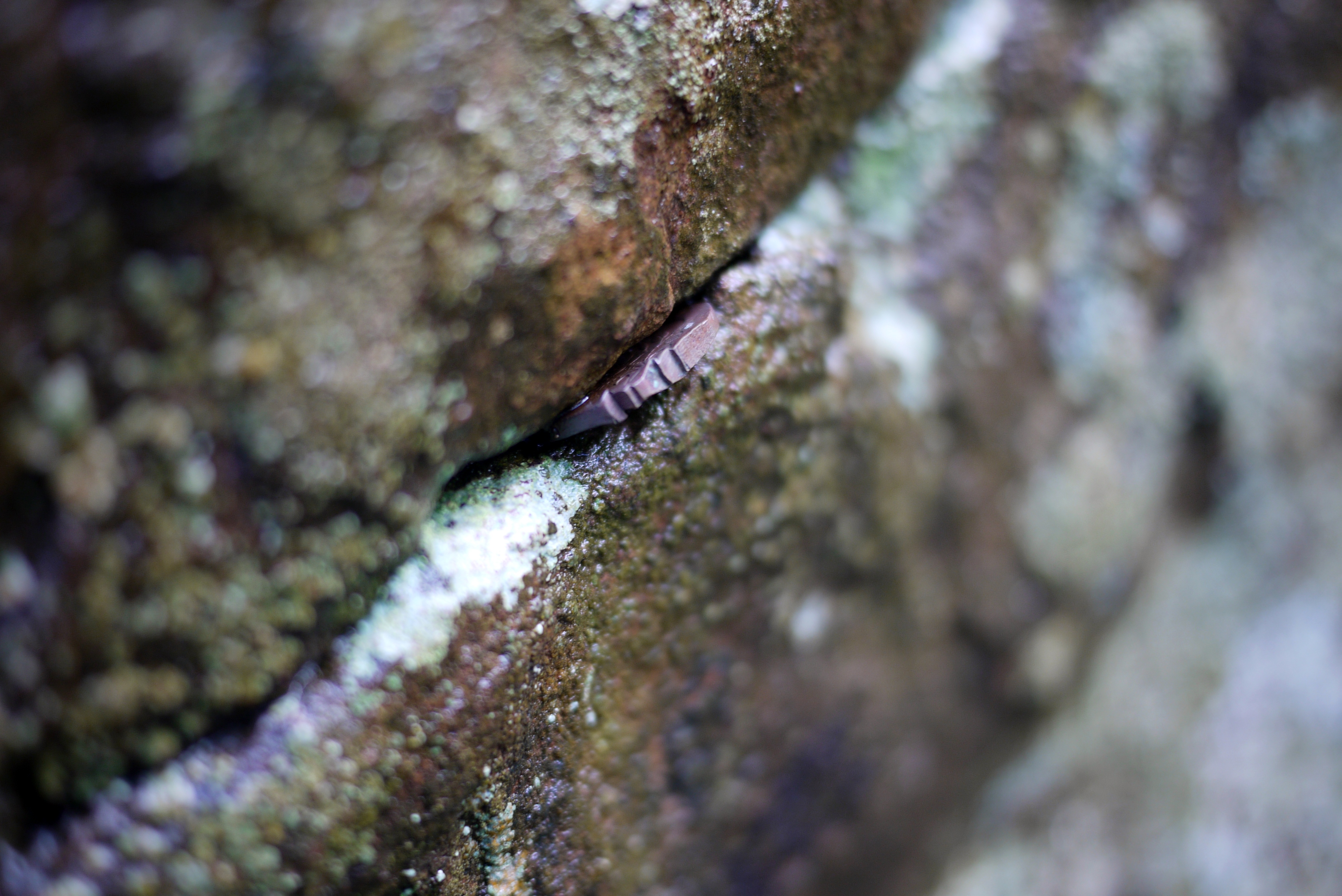
One thing we didn't really have time to focus on in as much detail as we wanted to was the kind of consideration that needs to be taken when it comes to the potential impact that our offerings might have on the environment, and on local wildlife. An offering that poisons or damages the wildlife is hardly a good offering, right? So as we note in the announcement over on the Gaol Naofa website, it's best to make sure that certain types of food offerings are made well out of reach of wildlife who might take the opportunity for an easy snack and end up getting poisoned. Offerings that can damage the environment – non-biodegradable things attached to trees, which can strangle or stunt the tree's growth, or pennies worked into tree trunks or cracks in stone – should be avoided completely. It may be traditional, but offerings like this:


Only damage the stone. This is a penny worked into a crack in a stone from a Neolithic stone circle on the Isle of Bute (which I took Marsaili to in April when she came over for a visit); the stone itself has now almost cracked into two and things like this will only serve to weaken something that's stood for around five thousand years... Things like this don't honour a place, or the spirits of that place. 

If you want to do some more reading on offerings in Gaelic Polytheism, then I think Gaol Naofa's article on the subject is a good place to start: Offerings in Gaelic Polytheism. This is one of Gaol Naofa's oldest publications, which has been substantially revised and updated over the years. You might also find our Children and Family in Gaelic Polytheism article useful, since it covers the basics of practice broken down into simple terms, and it gives an idea of some prayers you might want to use (one of which we included in the video). For more of an idea on the historical practices involving the making of offerings, there's an article over on Tairis that covers the subject in more detail, and you can also find a breakdown of the kinds of offerings that can be made as well. Finally, over on the Paganachd site, there's KILLYOUANDEATYOU, which is a must read for tips and ideas on how to go about your practice while keeping the spirits of the place happy – especially for Gaelic Polytheists who live outside of Ireland, Scotland, and the Isle of Man.


Image by John McSporran, used under Creative Commons licence.

Thursday, 16 July 2015

Book Review: Singing with Blackbirds

This isn't one of the books I got from the library recently (still working through those), but I decided it's worth a review... I Have Notes.


Singing with Blackbirds: The Survival of Primal Celtic Shamanism in Later Folk-Tradition
Stuart A. Harris-Logan

Let's start with the blurb on the back of the book:
Singing with Blackbirds is an investigation of the survival of primal Celtic Shamanism in later folk-traditions of Gaelic speaking peoples. This is an insightful and intelligent work that brings together areas of study not normally combined.
Going by this alone, it's obvious that this book has clear and lofty aims. I'll say right out, though, once you get into the nitty gritty of it all, those aims will probably end up leaving you with more questions than answers (and not in a good way). It certainly did me...

I'll admit that I have something of a bias against anything that claims to be "Celtic Shamanism," and to be fair to the author, he's well aware of some of the criticisms that are aimed towards the use of the label (or "shamanism" in general). So perhaps I'm predisposed to be skeptical of books like this, but I'd like to think that even if I'm not keen on principle I can at least give valid reasons for any criticisms I might have beyond some kind of knee-jerk reaction. I hope so. Harris-Logan mentions "encountering a lot of hostility from a number of groups which took exception to my research," so I'm sure it will come as no surprise to the author himself that there are those who might be critical (though I wouldn't say I'm especially hostile, personally...). Because of this, at the back of the book there's a section called "Apologia," where Harris-Logan gives a very useful outline of his reasons for using the term, and the crux of it boils down to this:
"Arguments against the use of 'shaman' and shamanism' as ethnological terms appear to be founded on the notion that they are not derived from a Celtic language. If we were to retrict its use merely to it's [sic] native culture, then only Tungusic shamans could be defined as such... 
"Restricting our vocabulary in this way makes an exercise in intercultural comparison both awkward and limited. Without an umbrella term, how are we able to hold one technique up against the other? ...I need a term to compare the practices of the Kwakiutl hamatsa and the Irish gelta. I need a term to compare the Buryat shaman's and Cú Chulainn's visionary experiences. I need a term to compare the spirit dance with rituals found to be taking place in latter day Coll and Uist. In short, I need 'shamanism'." (p133)
But I want to be clear that it's not simply the principle of using a loanword that I object to here. It's the fact that such a word describes a specific set of practices of a specific people, and I feel it's impossible to separate the original word from its culture and specific meaning within that culture. I feel it's wrong to try. Co-opting that word, adapting and generalising it to assume that the ritual practices of disparate are all one homogenous thing does a disservice to all of those practices, to my mind, especially when there are more accurate words from those cultures languages to describe them better.

On top of that, there's the fact that "shamanism" (in the popular sense) has been used to apply to a set of beliefs and practices that are highly problematic (see links, above). Not just "problematic," but mired in racism and rampant appropriation. It's unfortunate that Harris-Logan uses the very author responsible for kicking that all off – Michael Harner – along with at least one of Harner's students in order to try to prove the points he makes throughout the book, and this is something that certainly casts a negative over the whole book for me.

So there's the principle of the thing that I object to, yes. But it's also the fact that such an approach just doesn't hold up under any kind of academic scrutiny, and Harris-Logan himself is keen to emphasise that Celtic Studies has a lot to offer this kind of subject. The very problems I have with "core shamanism's" (as Harner himself calls it) approach in general underpin the approach Harris-Logan takes throughout the whole volume, as well: context is ignored, and comparative evidence is relied on heavily, even though the evidence comes from completely unrelated cultures and so have only limited bearing upon one another (more often than not). For instance, we're told that the Celts had totems and power animals, just like Native Americans do, even though he doesn't really define what these actually mean to Native Americans (or if they're even universal or exactly the same between tribes). The logic goes that totems are a thing somewhere in the world, therefore it follows that the exact same concept exists amongst the Celts because animals appear in a spiritual, similar-seeming context, too. Ergo, shamanism. And so it goes. What the evidence amongst the Celts – and amongst the different Celtic cultures themselves – suggests isn't considered.

In general, no matter which culture is being referenced, they're all treated as if they're talking about the same thing. On a very basic, broadly generalised level, there are similarities between many cultures, even those who never came into direct contact with one another, to be sure – we're all human, after all. But here, Harris-Logan draws on evidence from all over the world to show that shamanism is found in Celtic cultures, and at times it feels like he focuses more on non-Celtic cultures to prove a point than he does the actual Celtic cultures that we're supposed to be looking at.

Where there are clear relationships between cultures, they're treated as though they're one and the same, to the point where I'm not really sure if this book is supposed to be about "Celtic" Shamanism or "Gaelic" Shamanism. One of the people who contributed a glowing endorsement for the back cover seems to be similarly confused (referring only to "Gaelic Shamanism" despite the book's title), and I can only assume that this is presumably because it doesn't matter, because it all goes back to a primal (which seems to mean "universal") set of practices, anyway. (Which makes me wonder... why bother with slapping on a cultural label at all?)

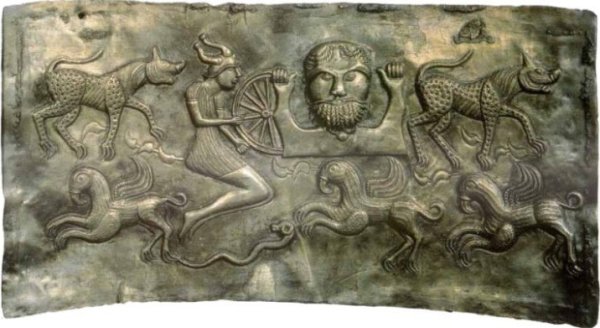
But let's get down to the nuts and bolts, not just the general approach. The evidence is often twisted to fit the point the author's trying to make, even when the evidence is very obviously lacking, and one of the worst examples of this is in Harris-Logan's attempt to prove that drumming – as an element of shamanic practice that's "a crucial technique to most shamanic cultures, a catalyst for the spirit journey..." (p27) was also a thing for the pre-Christian Celts. He acknowledges that there isn't any overt evidence for this – no archaeological evidence, nothing in iconography or myth that outright describes or shows ritualistic drumming – but he goes on to argue that the "wheel" iconography found in Gaulish depictions of religious art, like this one shown on the Gundestrup cauldron:

Interior plate 'C' of the Gundestrup Cauldron. Source: Wikipedia

Is really a drum (in spite of the fact that these wheels consistently have way more spokes than the "shamanic drums" he compares them to, which only have four – rather like some bodhrán designs, which are relatively modern in origin as instruments go). Obviously this leaves something of a hurdle for the Gaels, because the Gaulish evidence doesn't apply and drumming is never mentioned in any of the myths, so here he argues that drumming was such an obvious part of practice that it wasn't necessary to reference it overtly, and also points to examples where he argues that an oblique reference to a drum is being made – interpreting passages and names from Irish myth that refer to wheels as secretly referring to the shamanic drum (though why not just say it outright if it's something that's so obvious and pervasive a practice? If it's no great secret, why the secrecy?). The significance of all this, Harris-Logan argues, is that, "This may be suggestive of a shamanic spirit journey." (p31)

Ultimately, Harris-Logan concludes:
"With the weight of this evidence it is impossible to discount the theory that the early Celts possessed drums. I agree with Trevarthen's note that the drum is a very primitive instrument possessed by most cultures across the globe (whether operating within a shamanic mode of perception or not), and it would be surprising if early Celtic tribes did not possess this basic instrument." (p33)
I find this whole argument to be extremely tenuous at best.

The meaning and etymology of certain words are discussed at several points, but actual meanings are often ignored in favour of personal interpretations that have no factual basis. Take "imbas" for example, which eDIL defines as "great knowledge; poetic talent, inspiration; fore-knowledge; magic lore," and breaks it down as coming from two words, "imb-ḟiuss or imb-ḟess." (Note: the wee dots above the 'f' in both examples there indicates lenition, which effectively kills the 'f' sound altogether). Harris-Logan, on the other hand, asserts that:
"The etymology of the term imbas (often translated as 'inspired' or 'poetic knowledge') is commonly given as 'in the hands' im (in) + bas (hands). It is also possible, though, that bás may have been intended instead of bas. If this is true, then a more correct translation would be 'in death' – supporting the shamanic mode of perception surviving in the modern Scots Gaelic language." (p48)
Although I'd still disagree with his conclusions here, I wouldn't have as much of a problem with assertions like this if the author was clear that this was either his own opinion, or could back it up with citations and a discussion of why he feels the eDIL etymology is wrong and why he discounts it. Phrases like "commonly given" don't help here, either, in trying to suggest this is a firm and accepted fact when it isn't.

In some cases, to be fair, he does make his linguistic speculations (or acceptance of other authors' speculations) more clear – such as the speculation that dán may be more accurately translated as "co-creative power" or even "shamanism" rather than "skill, art, gift, fate," (though I still disagree with his argument here). Elsewhere, however, he makes more spurious claims, like his mention of the dance called "cailleach an dùdain" (described by Carmichael in the Carmina Gadelica, in reference to a Michaelmas tradition) as evidence of birds having ritual significance in Gaelic "shamanic" practice. This is based on his translating the phrase to mean 'dance of the smoky owl,' which I can only assume is his own interpretation because it really means 'The Old Woman of the Mill-Dust.' Cailleach-oidhche means "owl," which is probably where he's coming from, but there's absolutely no supporting evidence for his interpretation here, and again he's stating something as fact when it's far from being the case. Things like this undermines any actual points that are being made because he's simply stretching the evidence to fit the picture as he wants it to.

The book is split into three main sections, the first section being titled "Druids and Drums: The Instruments of Ecstasy," and the second "Gaining Possession of a Sacrality." These two sections are primarily devoted to illustrating Harris-Logan's view of how the Celts were obviously a "shamanic" culture, based on comparative sources from all over the world. In the third section of the book – which is titled "A Shaman in the Gàidhealtachd?" – the majority of evidence is drawn from the Carmina Gadelica, with various prayers being given to support Harris-Logan's assertion that shamanism is evidenced in later folklore. My problem here is that no consideration is given to the context of the prayers – who said them, why, how – or how old they might be, what influences there might be evident in them, or whether or not Carmichael might have helped to "improve" the verses, to support or detract from the point that's being made. A prayer for justice (Ora Ceartas) is given, for example (along with several other prayers of varying purpose), but after the previous two sections, which go to great lengths to show that shamans were specialists of their arts – it wasn't something that everyone did, or was open to anyone who wanted to know more; the rituals and arts of the shaman were the purview and privilege of the shamans alone – the third chapter leaves me wondering how prayers like this (which were said by anyone in a situation where such a prayer was needed) are evidence of shamanism? If the rituals and specialist knowledge of shamans was known only to initiates, how and why did shamanism become more "public" in the Gàidhealtachd? This isn't addressed by Harris-Logan at all.

None of the prayers, or the myths that are discussed throughout the book, are viewed critically at all. At several points in the book the druid Mug Ruith is used to illustrate evidence of "shamanism," but the fact that the stories involve Mug Ruith are quite late, and Mug Ruith himself is presented as a "druid" through a very Christian lens, is ignored (see, for example, the discussion of Mug Ruith in Fiery Shapes). Harris-Logan himself argues for a more academic approach in dealing with the material, but over all I can't help but feel that he fails to illustrate one.

I can't say I found everything to be a total negative, though, and I don't want to sound like I'm totally hating on the book. In spite of my total disagreement with the majority of his interpretations and the over all point of the book, some of it was interesting and he draws on a diverse amount of evidence to support his arguments. As a fluent Gaelic speaker, he also gives his own translations of some of the prayers given in the Carmina Gadelica, and while they don't seem to be wildly different from Carmichael's own translations – just a few tweaks here and there – they do at least seem reliable (though I'll note that I'm not a fluent-speaker, by any stretch!) and are a little more up to date in language.

I also appreciated his discussion of how Gaelic works – the way only things that are integral to us, like family, or body parts, are spoken of with "possessive" phrases. To say "my hand" you say "mo lamh," which is literally "my" (mo) "hand" (lamh), but to say "my husband," or "my wife" you say "an duine agam," which literally means "the man (husband) that is at me." This isn't the first time I've seen such a thing discussed, but I've not really seen it discussed in any detail, and it's refreshing to read about this stuff from fluent speaker.

Again, however, there's a problem with some of the stuff that interested me because it's unreferenced and so I'm not sure how reliable it is. In particular, there's a note that tells the reader that the phrase ri traghadh 's ri lionadh, "With the ebb and with the flow" is "the name given to a traditional form of Gaelic singing." I recognise the phrase from a prayer that Carmichael gives in Volume II of the Carmina Gadelica (it's a prayer that we outlined in our Children and Family in Gaelic Polytheism article on the Gaol Naofa website, and expanded on as well), but I've never heard of it being applied to a form of singing and can't find anything to back this up. But if this is the case I'd certainly be interested to know more, especially if it sheds light on the prayer Carmichael gave, which is simply titled "Fuigheal/Fragment."

Ultimately, there just aren't enough interesting tidbits to make up for all of the problems I find with the book over all, and I couldn't recommend it. I think you're better off going straight to the source, so to speak, getting hold of the Carmina Gadelica and reading the myths yourself. Learn about the hisory and society these things come from, as much as you can. Context is important.


Saturday, 11 July 2015

Links and things for Lùnastal

I was a little remiss in getting around to doing a links post for Midsummer, but the ones I've done for other festivals so far this year seem to have been quite popular, so I might as well pick it back up again.

First off, last year I did a video for the Gaol Naofa Youtube channel, which takes a look at what Lùnastal's all about and how it can be celebrated:


The first song on the video is a reaping song – that would have been sung as the harvest was being brought in (the rhythm helping people to get into a groove while they cut the crops, as much helping to pass the time) – that's sung by the Scottish folklorist Margaret Bennett, and the music was composed by her son Martyn Bennett. It's a very modern take on an old traditional song, and a sample of a 1920s threshing machine has been used to give the beat that complements the lyrics. The second song is the same again, this time sung with a more traditional arrangement.

Following on from that, since a major theme of Lùnastal is peace, Kathryn's video on the Prophecy of the Morrígan (or Badb's Prayer for Peace) is also worth a watch:


Which could be incorporated into celebrations if you so wish...

For a more in-depth background on Lùnastal/Lúnasa, and some practical ideas, there are some articles I've done over on Tairis that might be worth a read:
If you'd prefer something a little (a lot) shorter, the Festivals page on the Gaol Naofa site might be more to your taste. One of the things on our to do list is to expand the music section, as can be seen by the number of songs that don't yet have a link; quite a few of these are apt for the harvest, though, so they're worth hunting up (you can find them all on Youtube, I think). The craft section also has some useful stuff if you're looking for things to do, and the links include a video showing you how to make a harvest knot (I've yet to try one myself...).

Games and competitive sports are a big part of the celebrations, and there's a big crossover with the kind of games and amusements that were played during wakes – very apt given the roots of Lùnastal as a funeral games, perhaps – so the Death and Burial article back over at Tairis might be useful too.

If you're looking for something nommy then try some cranachan or fraughan cakes... Going fruit picking up on the hills (or shore) is traditional, especially for bilberries (aka fraughans), but you can just use blueberries if you can't find bilberries in the wild... Gooseberries are another fruit that might be collected for the festival, and they can be used to make a delicious gooseberry fool, which is a kind of syllabub dessert (as is cranachan). For those in warmer climes, brambles (or blackberries) might be available by the beginning of August, which can make a good substitute in the absence of bilberries or gooseberries; they're only very rarely ripe so early over here (in my neck of the woods, anyway) in the wild, but supermarkets often start selling them by this point.

Going by the archaeological evidence, it appears that pork is especially appropriate for feasting on, so a good bit of roast pork, or a stew, with some seasonal vegetables – fresh from the garden, if you grow your own, or else locally sourced if you can afford it – could form the main part of your celebratory feast. For savoury treats, cheese-making is traditional, especially a simple soft cheese like crowdie, which is easy to make (in theory! I've yet to master the art myself because I keep managing to overheat the curds). The smell takes a bit of getting used to while you're heating the milk, and that can be a litle off-putting, but the end result really is quite tasty; try rolling the cheese in toasted oatmeal or crushed black pepper to add more flavour. The leftover whey can be used to make some oatmeal bannocks – also traditional to make for the festival (from a Scots persecptive, at least) – to serve with the cheese, or else there are a number of other traditional recipes you might want to hunt up so it doesn't go to waste (F. Marian McNeill's The Scots Kitchen and The Scots Cellar will be useful).

Story-telling is also an appropriate part of the celebrations, along with music and song, which can help set a very convivial atmosphere if you're celebrating as part of a group or with family. You could tell the story of Tailltiu's sacrifice, for example, or take a look at some of the other Dindshenchas tales like the ones for Nás and Carmun. Maire MacNeill records a huge amount of tales in her massive book, The Festival of Lughnasa, and some of them involve Lugh or Crom Cruach, so it's absolutely well-worth getting a hold of if you can. Failing that, why not compose your own stories or poetry?