Sunday, 20 July 2014

Here we go... Newgrange Heritage Centre

When you arrive at the heritage centre - which is pretty far from the monuments - you have the choice of just going around the centre itself, or paying extra to go and see Knowth and/or Newgrange. We chose to do the whole lot, seeing as we'd come so far and all, and were given stickers so we could get on the buses that would take us up to the sites. Knowth was the first bus for us, but we had some time before we needed to get to the stop so we took in the heritage centre first.

If you decide not to take in the sites themselves then the heritage centre gives you a pretty good idea of the background and what the most important bits look like (and there are some things aimed at kids as you go round, so they won't be too bored). There's a reconstruction of a late Neolithic/Early Bronze Age house:
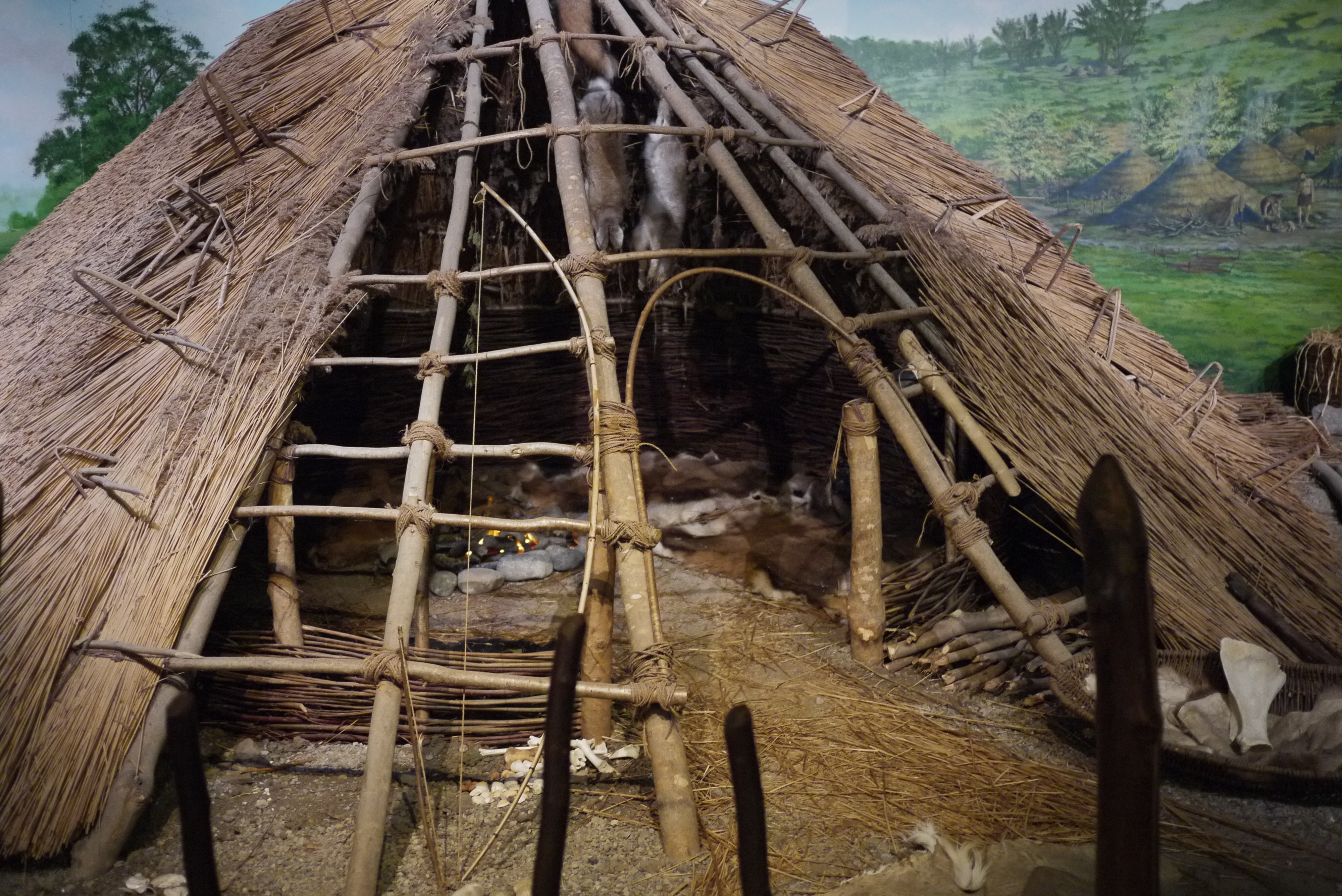

Which I think shows just how much work was done outside. There's not much space to stand up comfortably in the house, especially with the smoke from the fire, so really this is a place to sleep and eat. This kind of house would have been situated in a small settlement, like this (with Newgrange in the distance, there):
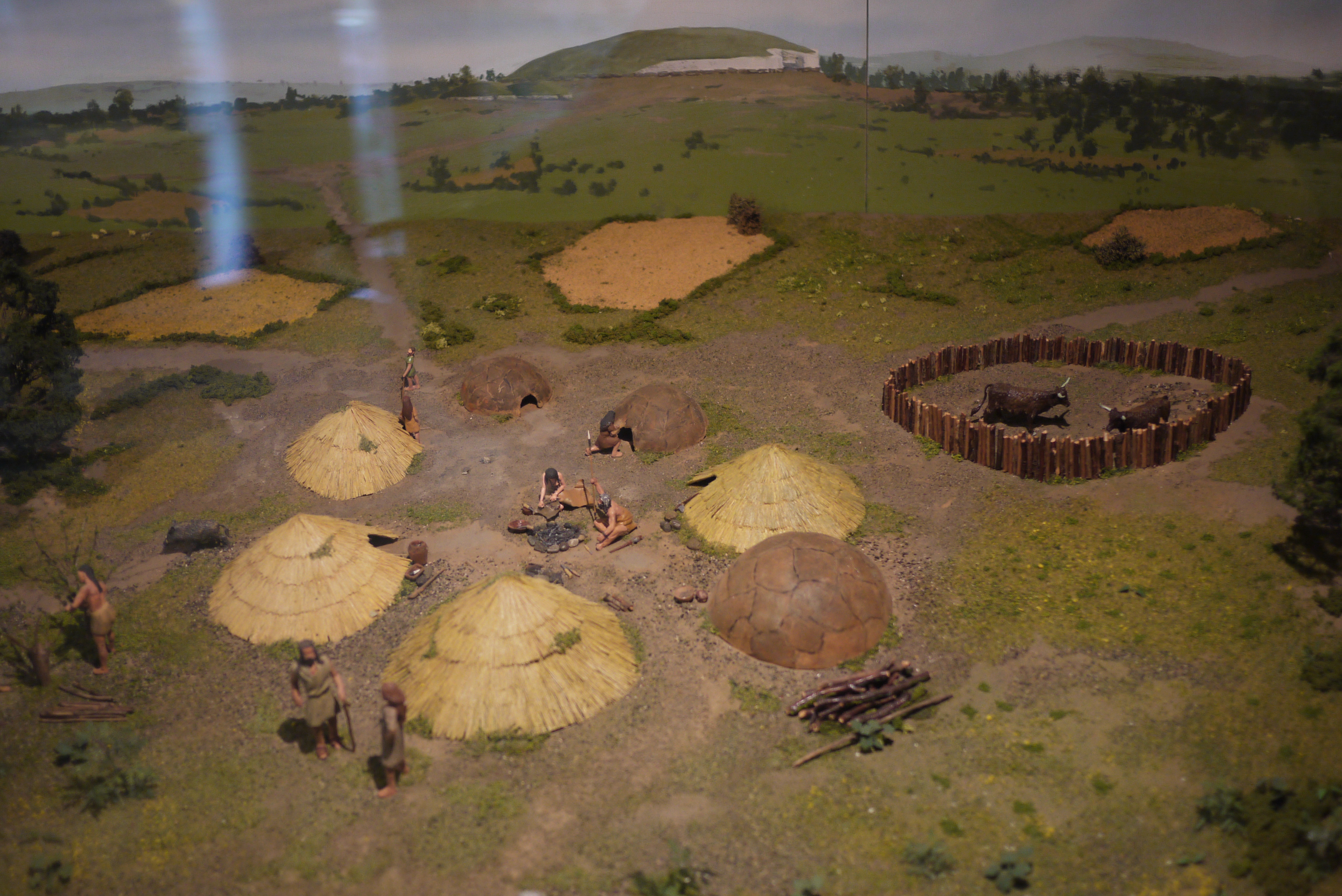

The Neolithic is the period when people began to work the land, and moved away from a hunter-gatherer sort of existence. They domesticated grains to grow crops, and domesticated animals to keep herds of meat and milk more handy. This allowed a more more settled existence - they didn't have to keep moving around so much, to follow herds of wild animals for meat, or gather wild fruits as they became available, and so on. This new way of life also meant that new kinds of tools were needed, to help grind the corn, or store it, for example, so this is the kind of background and context that we can consider the huge passage tombs that began to be built in this period. It took serious organisation, effort, and there was inevitably a reason for these passage tombs and the way people were interred inside them, on a religious, symbolic and spiritual level. 

There are examples of what people might have worn at the heritage centre:


Although the direct evidence for this clothing is sparse, so take it with a grain of salt, perhaps. This example is based on the kind of tools, like scrapers, that are often found at Neolithic or Bronze Age sites, which tell us that leather was a common material that was used. There are also lots of decorative items, like bone pins and things like that, which would have been used as fasteners for clothes, or as decorative hair pieces. 

Here's some pottery, with an example of a friction tool lurking at the back, to help start a fire. It's a rod of wood looped through a piece of sinew that's attached to a "bow," which could be used to spin the rod quickly and cause enough friction to light the kindling pretty quickly and without too much effort:
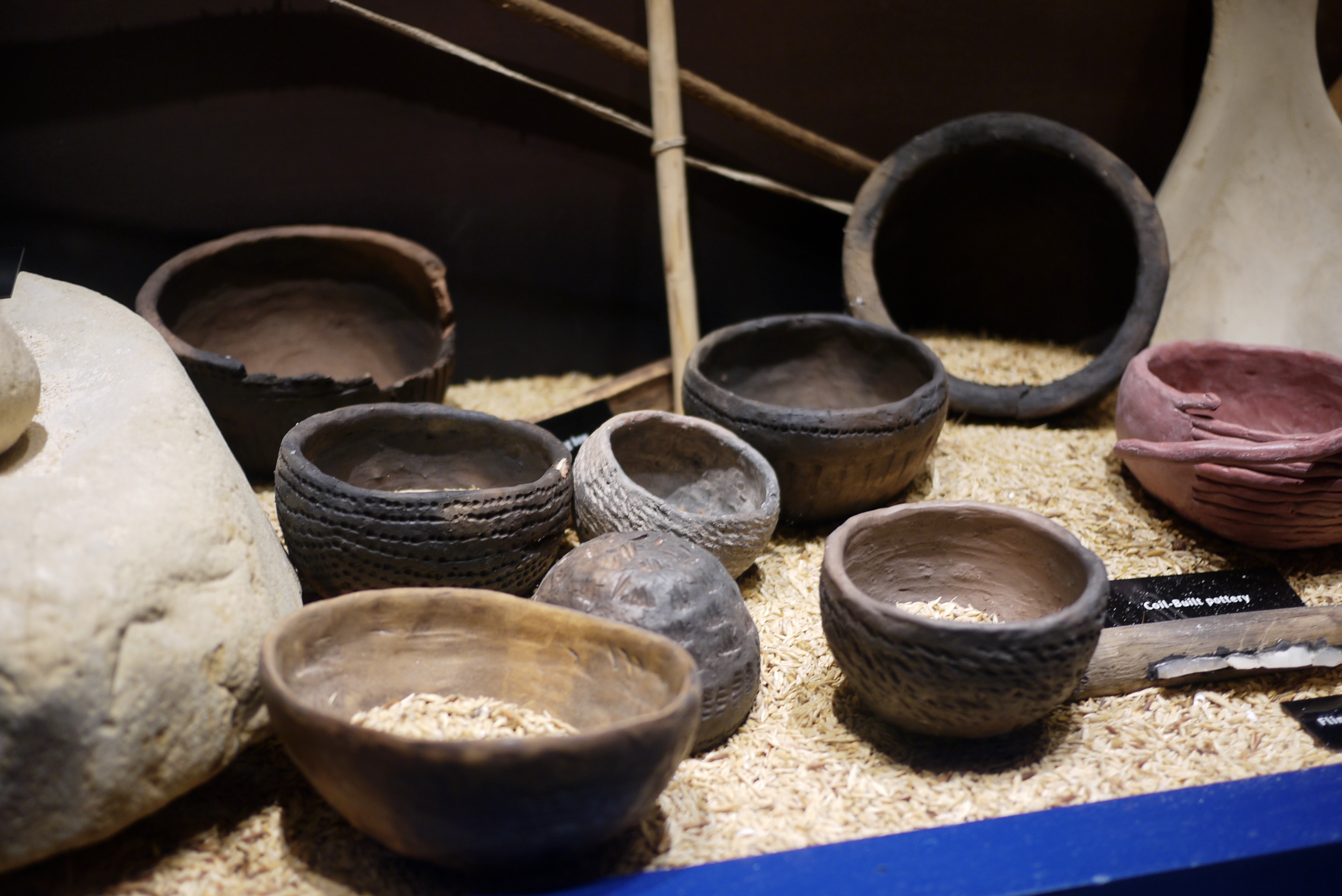

Some of the pottery here is pretty similar to pottery you find in England from the same period - I couldn't say for sure about Wales or Scotland, off the top of my head, but when I worked for a rescue archaeology unit down in England I saw a lot of this kind of pottery, and there's certainly evidence of contact between England and Ireland at this point in time (like beads and jewellery from the Wessex area, which is a pretty important area at this time period). Just to the left in this picture there's a saddle quern - a large stone with a slight depression in the middle where the grain would be placed, then ground down by rubbing a stone back and forth over it to make a rough flour. It's hard work, and this kind of quern was eventually replaced by the larger "wheel" types, which can grind a bit more grain, and do it quicker.

There are a number of artefacts from the passage tombs on display as well, like this decorated "basin":


The decoration is pretty typical of the period, and a stone like this is often found inside the passage tomb's chamber, set into a recess off to one side. Because most of the tombs have been disturbed by the time archaeologists get to them, it's difficult to know exactly what they were used for, but the general idea is that they held the cremated remains of the people interred into the chamber. Not just the remains of one person, but several mixed together, usually, and sometimes there's evidence of animal bones too. These might have been burned with the individual as they were cremated, or else they might be evidence of ritual feasting at the site. 

Around the basin there are some artefacts on display, one of which is a decorated flint mace-head:
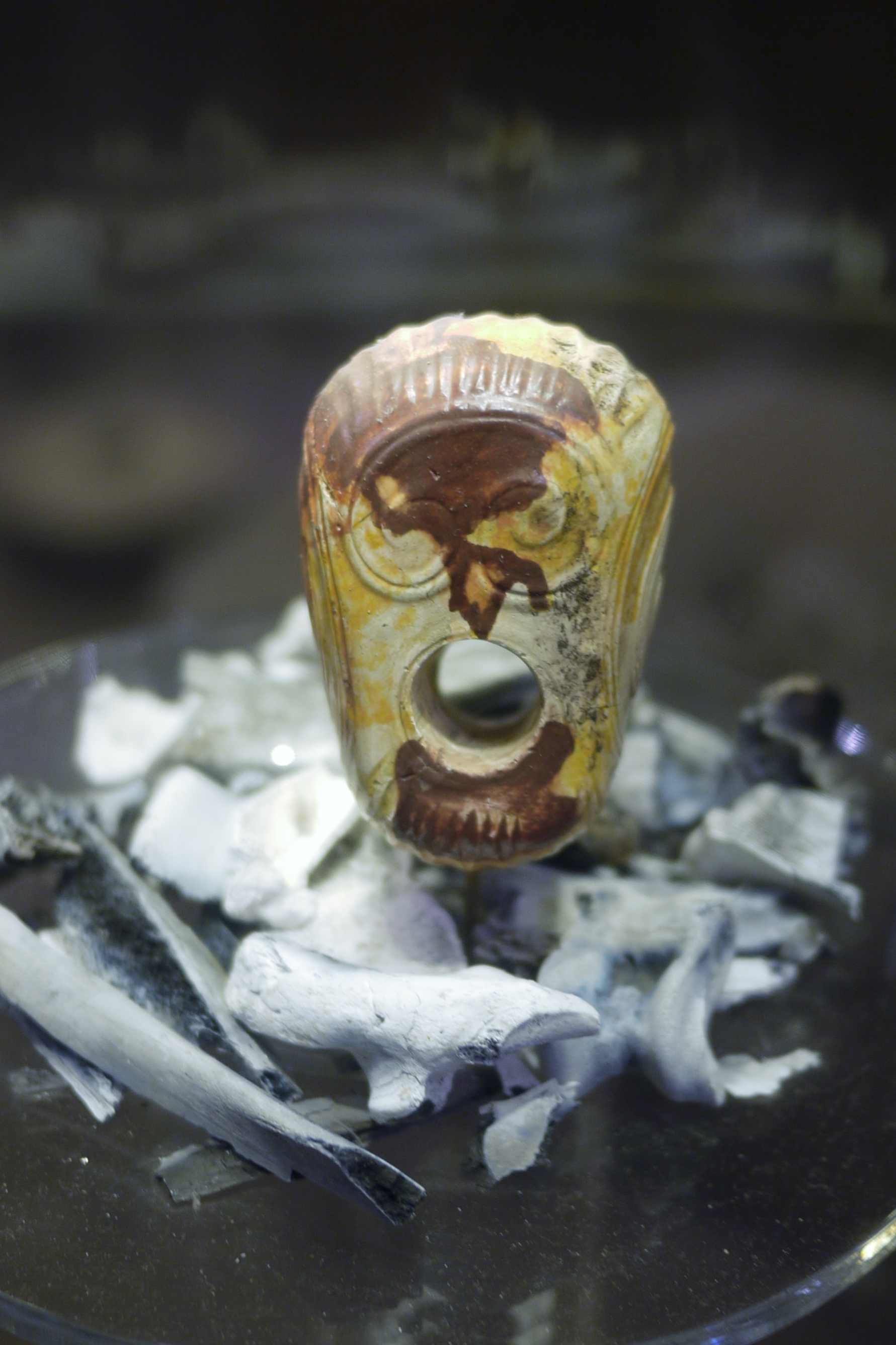

The decoration looks like a face - you can see the eyes, the suggestions of hair, a beard, and stylised "ears." Working flint like this - smoothing it, and putting a hole through it so the handle can be slid through it and fixed in place - is a laborious process, and it might have involved the use of a drill that was highly advanced technology for this time period. The flint would have to be worked carefully so as not to crack or break it, and whoever made it would have been extremely skilled. 

The mace head was found in the chamber of the main passage tomb at Knowth, and given the amount of disturbance in the tomb - people breaking in to look for goodies over the centuries and millennia - it's a wonder it managed to stay undiscovered until archaeologists got there.

Finally, there's an object on display that's simply described as "phallic," and I'm not sure if this one's from Knowth or Newgrange (examples have been found at both, and elsewhere, though):
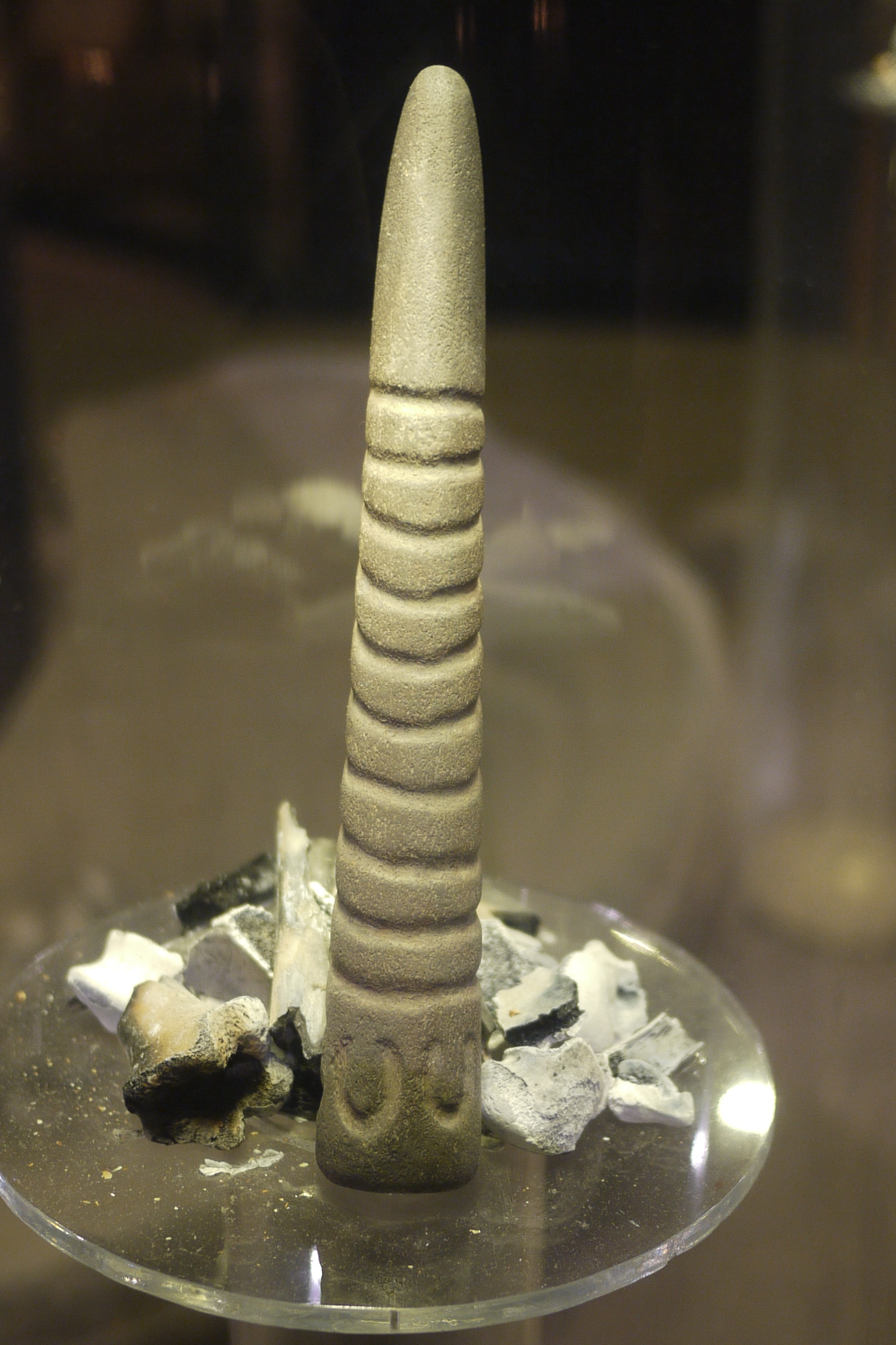

One thing to note about this is the "horseshoe" symbols carved at the bottom - these can be seen on a lot of the decorated stone slabs at Knowth, which we'll be looking at next... 

Saturday, 19 July 2014

Brace yourself...

Pictures are coming (with plenty of waffle, too).

Last Sunday we dropped the dogs off with the in-laws in preparation for a short(ish) family holiday over to Ireland, and then on Monday morning at 4am we got up and got in the car half an hour later to make our way to the ferry port. Two hours later we arrived there, an hour later we were off on our way, and then after another two hours we arrived in Belfast. Then followed a glorious five days of trekking around an enthralling series of lumps and small walls, as Mr Seren refers archaeological sites.

Our original plan was to spend a few days around Dublin, then head over to Galway, up to Donegal, before heading home again, but we had to reduce our plans to spend a full week there down to five days, due to work constraints. So eventually Galway and Donegal were abandoned, and we ended up basing ourselves in Dublin for the whole time (which was much easier, really - especially when kids are involved).

On Monday we stopped off at the heritage centre at Newgrange and took a tour round the Knowth complex and then Newgrange itself. After being up so early in the day, that was about all we could manage - we'd planned on doing the Hill of Tara as well, but Newgrange took up the whole afternoon - so we put that off for another day. Tuesday was the Dublin museum, taking in all the archaeology, then Wednesday was Kildare. We took in the cathedral, the fire temple and round tower, and had lunch in the town centre, then spent the afternoon at Brigid's well before heading home via Glendalough (which was beautiful). Thursday was a days for the kids, at a waterpark, and Friday we headed home via the Hill of Tara and a leisurely drive through Navan, Kells, a few other towns, and a semi-accidental trip up the Falls Road in Belfast on our way to the docks.

One thing I learned on our travels is that Irish drivers are fucking terrifying. No, seriously. Terrifying.

Anyway, over the next few posts (probably more than a few, to be fair...) I'll be waffling on about all the sites I saw, once I've sorted through all the photos and uploaded them (and picked up the dogs from the in-laws). And slept a little...

Tuesday, 8 July 2014

New videos!

Back in March, my colleagues and I at Gaol Naofa worked on producing some videos for our new Youtube channel. Those first two that we did focused on St Patrick's Day, and our intention from the start was to continue on with videos for other festivals in the Gaelic year - ones that are ancient in origin like the quarters days, as well as the more modern ones like Hogmanay and Là na Caillich.

Yesterday, on Tynwald Day - the Isle of Man's national holiday (which is usually on July 5th, but it moves to the following Monday when it falls at the weekend), and we released a bunch of new videos to go with the two St Patrick's videos we've already done. These are (and forgive me for regurgitating the list I already gave on the Gaol Naofa website...):

Lá Fhéile Bríde:


Detailing the lore and traditions associated with the festival that marks the first flourish of Spring.

Là na Caillich:


The Day of the Cailleach in Scotland, which falls on March 25th and marks the beginning of the Cailleach’s rest period, until she reawakens in winter.

Bealtaine:


Focusing on the traditions and customs of the festival of Summer.

Midsummer: Áine and Grian:


Introducing the Midsummer traditions in Ireland, and the issue of solar deities in Gaelic tradition.

Midsummer: Manannán mac Lir:


Taking a look at the Midsummer tradition of “paying the rent to Manannán mac Lir, which originates on the Isle of Man.
What we want to do with these videos is give a short introduction to each of the festivals, and hopefully articulate a sense of some of things that we can't always do with words alone. We're working on some other videos for another bunch of the festivals, which will hopefully be ready for release soon, and then we'll work on finishing the rest of the festival year as and when we can. And I'm sure we'll find plenty of things to talk about after that! 

Before I finish, I'd like to take the opportunity to thank everyone who helped me and Kathryn while we were putting these videos together - helping us source pictures or giving us permission to use their own, helping us find music we could use, offering feedback, and generally being wonderful and supportive. Mòran taing!

Sunday, 22 June 2014

Feed the beach

Somehow the solstice managed to sneak up on me almost unawares, so plans ended up being a little impromptu, to say the least. I had a vague idea that I'd go to the beach and do...stuff. Like I usually do. But beyond that my brain hadn't really got much further.

So it happened that the solstice was at the weekend this year, and seeing as Mr Seren was working, any plans would have to include the kids. I usually like to go to the beach around sunset, if I can, but that would be too late for the kids. In the end, after I explained to them that what "solstice" means, we decided that an early evening picnic would be just the thing. We prepared a wee feast (and offerings) to take with us, and set off with the dogs for a long walk.

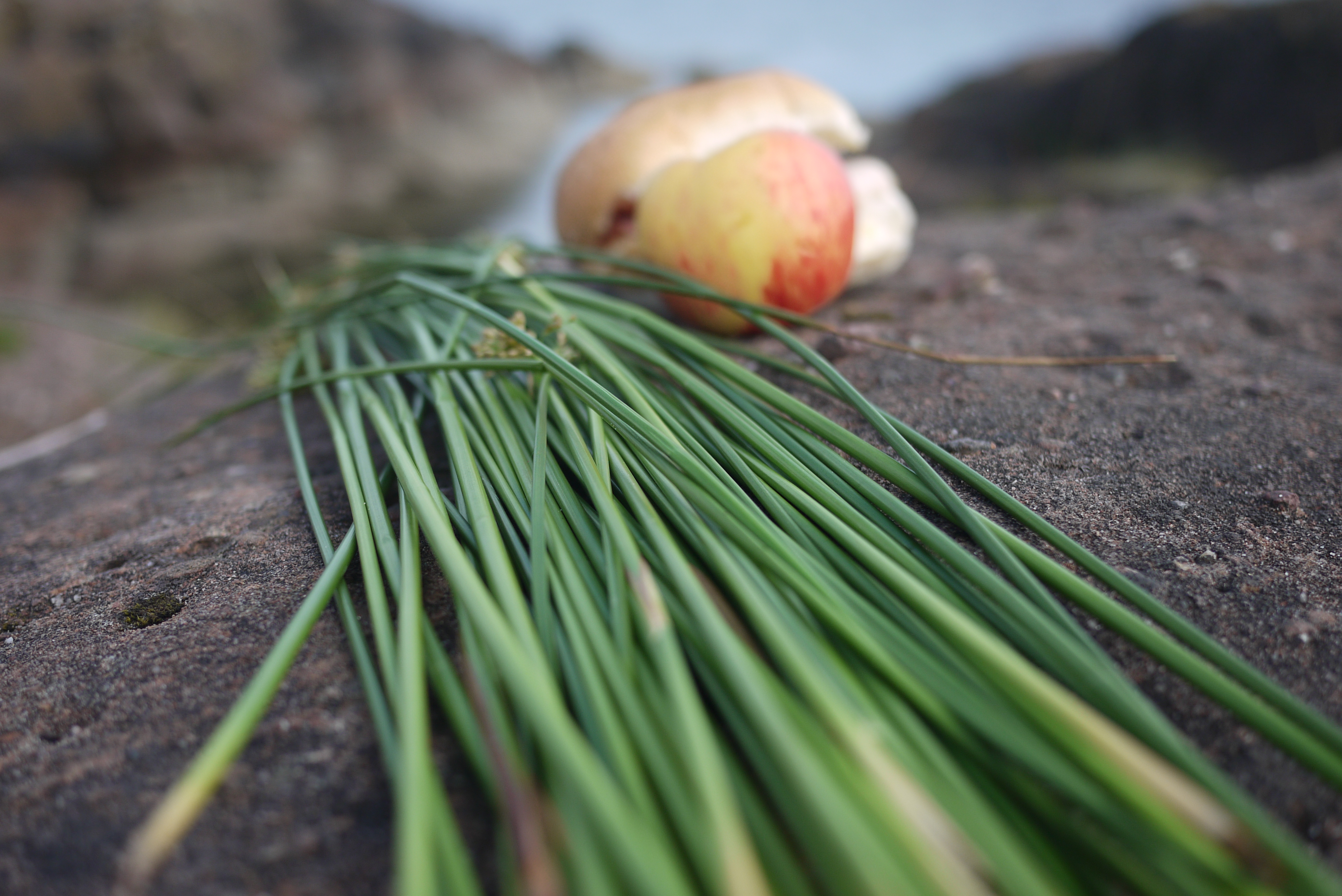
This year I've pretty much given up on gardening - not for lack of enthusiasm, but because I know it's just too much for me to able to handle. Although I'm doing a lot better these days, my back is still a delicate and temperamental beastie, and overdoing things doesn't go well for me. A lot of the containers I've been using are pretty much done for now, and replacing them will involve too much heavy work, so I haven't planted any veg this year. Instead, I'm just concentrating on the fruits that are happily chugging along left to their own devices, but a side effect of my general gardening neglect is realising that what I had thought was a weed that was trying to propagate itself all over my flower beds is actually a type of rush. Which is very timely, considering.

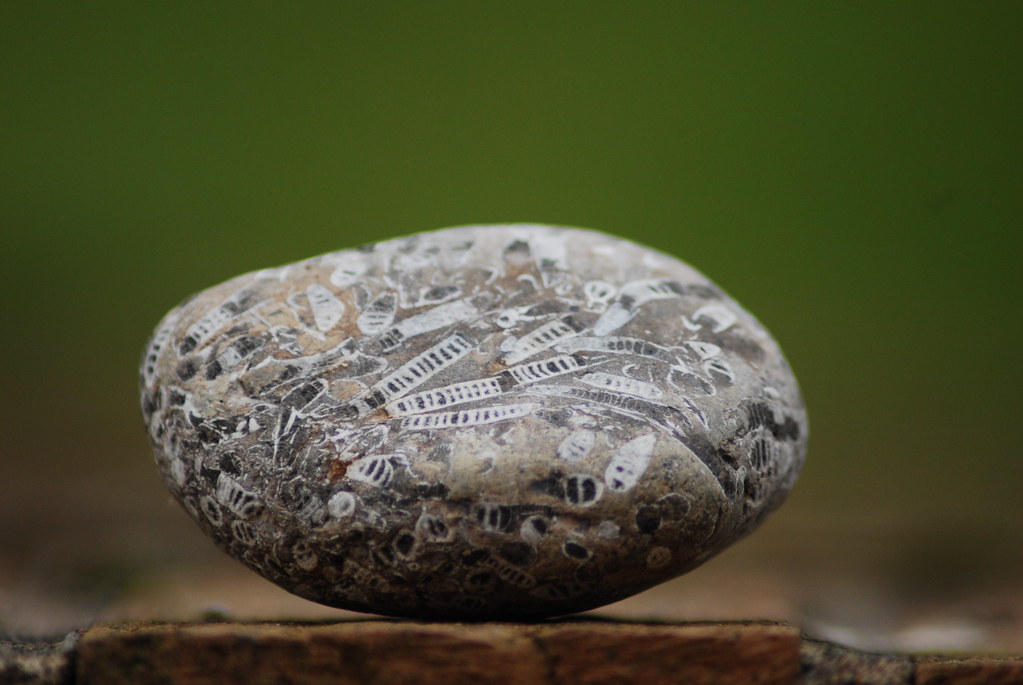
The first Midsummer after moving here I took a long walk through the village, down to the beach where I made my offerings. That time I found a rock covered in tiny fossils:


I took it home with me, interpreting it a sign of some sort of gift of acknowledgement (as I noted in a long and rambly post here), and it lives on my shrine now.

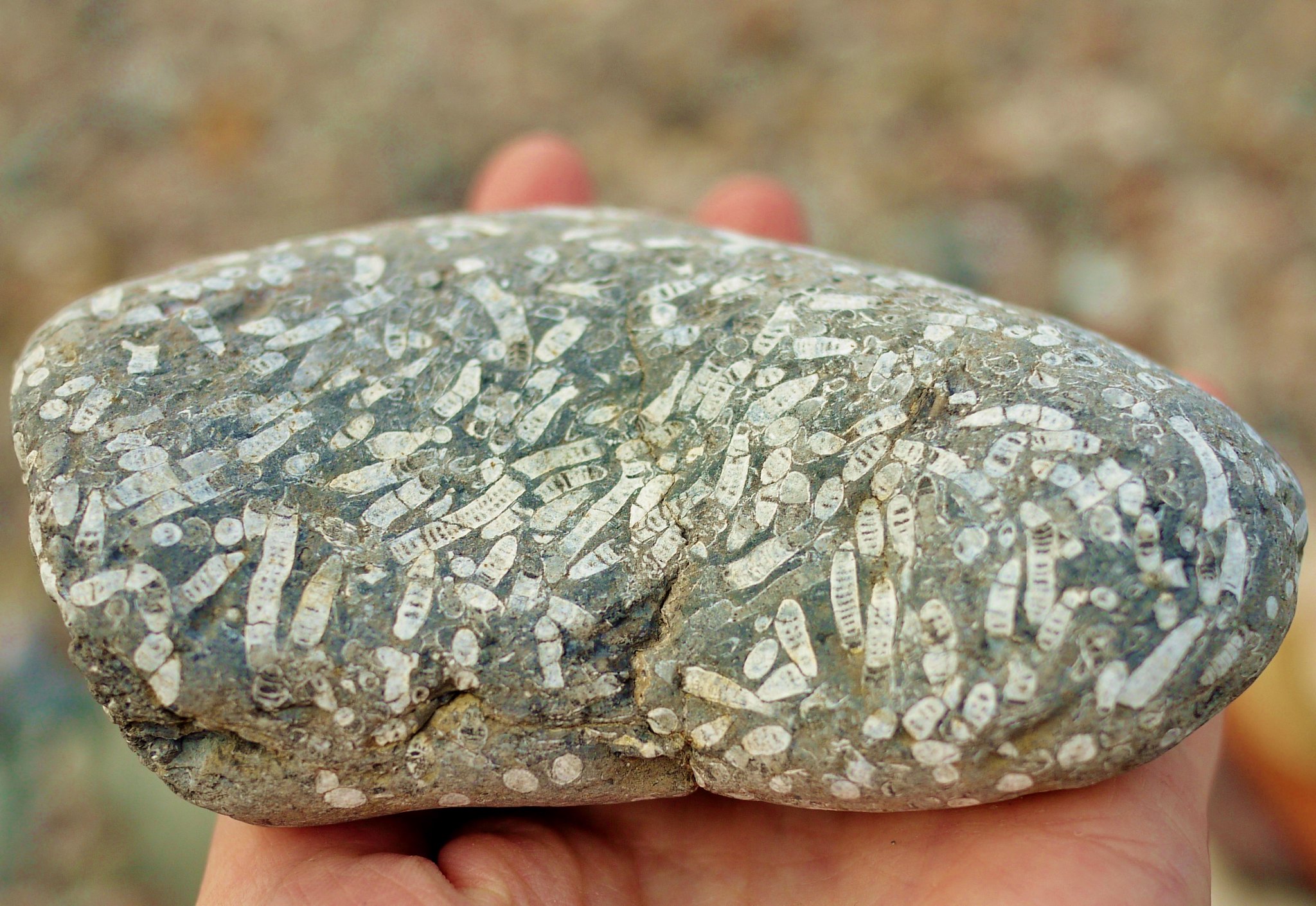
And like I said in that post, it's not a fossily beach. Since finding that fossil, I've not found another one at all, in spite of keeping a lookout for them whenever I go. Except yesterday, while we were having our picnic, Rosie found an even bigger rock that's covered in the exact same fossils - right where we were sitting:


I suggested to Rosie that she should ask the beach if it would be OK to take it home; we mustn't take things without asking. So Rosie asked, and cocked an ear briefly, and then said yes, the beach said we could take it home. But we had to give something back in return. We had to feed the beach as a thank you.

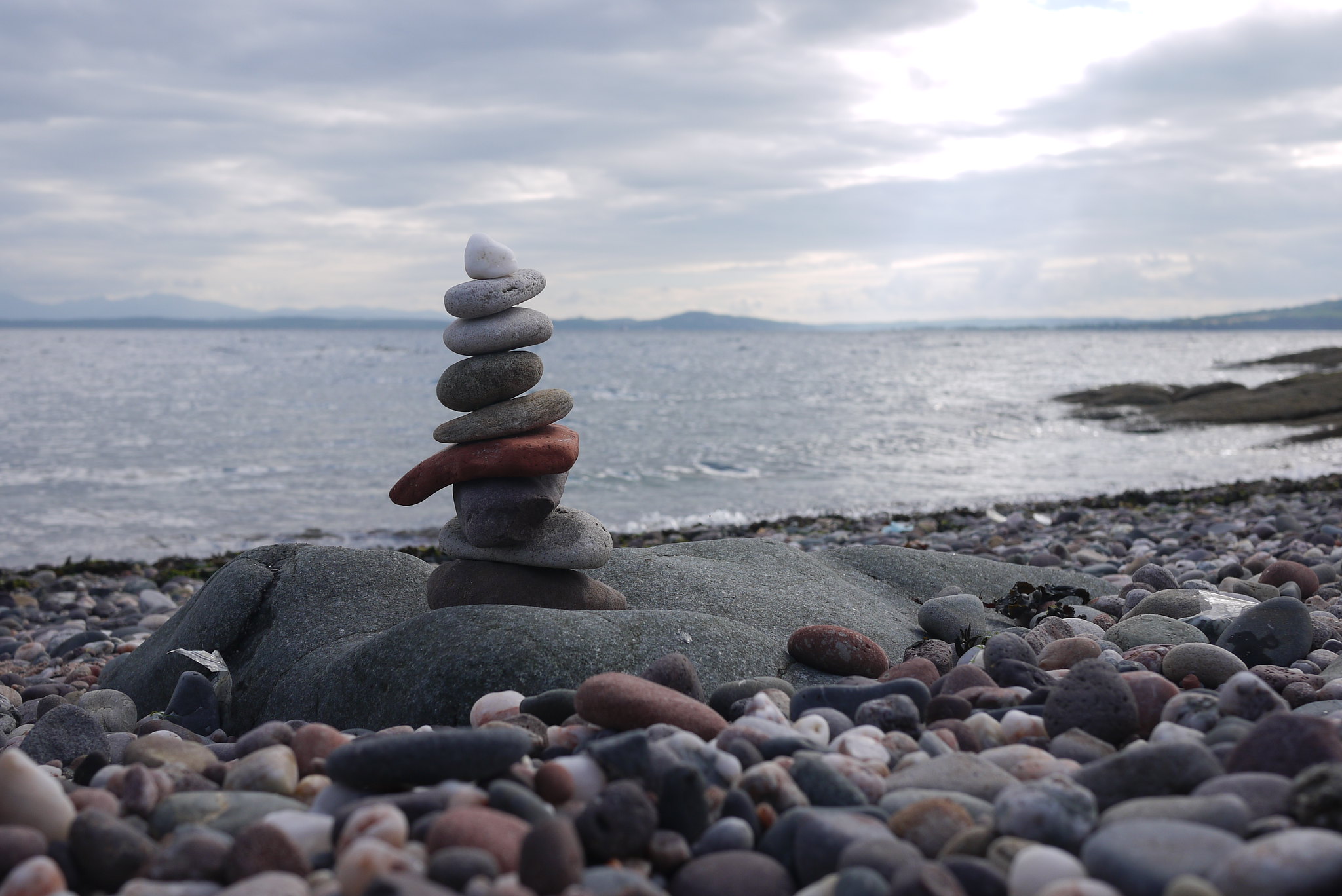
Luckily I'd come prepared, with some things as an offering to Manannán to "pay the rent," along with some offerings to the spirits of the beach. We built a wee cairn right by where we'd had our picnic, like we usually do, and picked up some of the litter that had been left by previous parties:


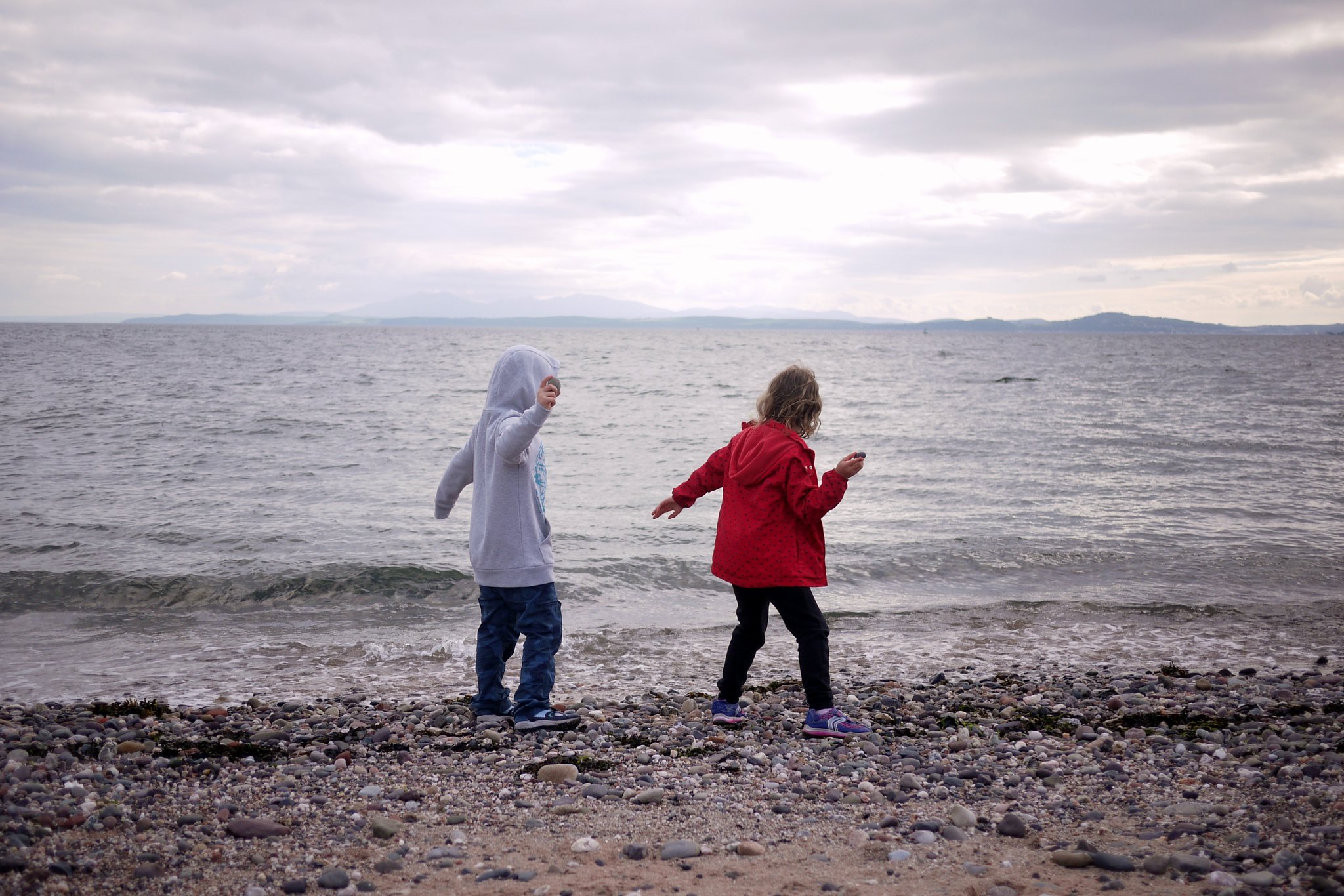
And after the dogs had had a good run around and a swim, and Tom had given Rosie some lessons in skimming stones:


We headed up to the rocks where I usually make my offerings. First we made our offerings to "feed the beach," and both Rosie and Tom insisted that they should do it themselves, so I gave them some of the food I'd brought and left them to it while I prepared the offerings for Manannán:


It's the first time that Tom's asked to take an active role in anything related to our celebrations - I'll invite them to watch and join in with the words if they want to, and sometimes he does, but Rosie's always been much more interested in taking an active role than her brother has so far. So this was the first time he's really done anything by himself. He asked about all the different kinds of ways he could say thank you (in Gaelic - they've been learning a bit. Slowly), and I gave him a few ideas of what to say and he put them together into his own prayer.

When the kids were done, I climbed down into a wee cove to pay the rents while the kids watched the dogs and made sure Eddie didn't decide to take a dive down to join me. Tom started singing a random song as he wandered about on the rocks, and Rosie clambered down to be with me while I prayed and made my offerings. Once I was done, I climbed back up on to the rocks and made a libation (I don't like to pour drinks into the sea, in case it upsets the sealife), and the kids followed suit with some of the juice they'd brought with them. Tom wanted to know if Manannán has a trident like Poseidon does, and was very disappointed to hear that he doesn't. He suggested that we should make him one, while Rosie suggested that we could make a small boat and put messages in it that we could send to Manannán out at sea.

Just as we were chatting, the sea suddenly began to make a roar - the waves picked up and the acoustics in the cove must have amplified the sound, and the sudden noise was startling. The waves rose and lapped at the offerings I'd laid down, and they started to drift away. The kids gasped and got really excited and Tom decided it was awesome. We all agreed that our offerings had been well-received.

Rosie's resolve to make a boat for Manannán was cemented, and as we made our way home it was all she could talk about. By the time we got home we were all pretty tired from the long walk and the excitement, and we all just collapsed for an hour or so before the kids had to go and get ready for bed. I even had a short nap.

All in all, it's one of those times when I'm reminded that even the most impromptu kinds of observances can make for pretty powerful experiences, and being able to share it with the kids puts a whole new perspective on things; thinking about what it all means to them. Thinking about how it will shape their outlook as they grow older, and the kinds of things they'll look back on as being meaningful moments. In a way, it makes it all the more meaningful to me, as well; it adds layers.

But for now, the days are growing shorter and the summer holidays are looming. Six glorious weeks of no homework, as far as the kids are concerned. We'll hopefully manage a family holiday away at some point, and the kids are going away with their cousins and Nana for a while, too. One thing's for sure is that there'll definitely be a few trips to the beach again, if the kids have anything to say about it.

Tuesday, 10 June 2014

Onwards to Bute


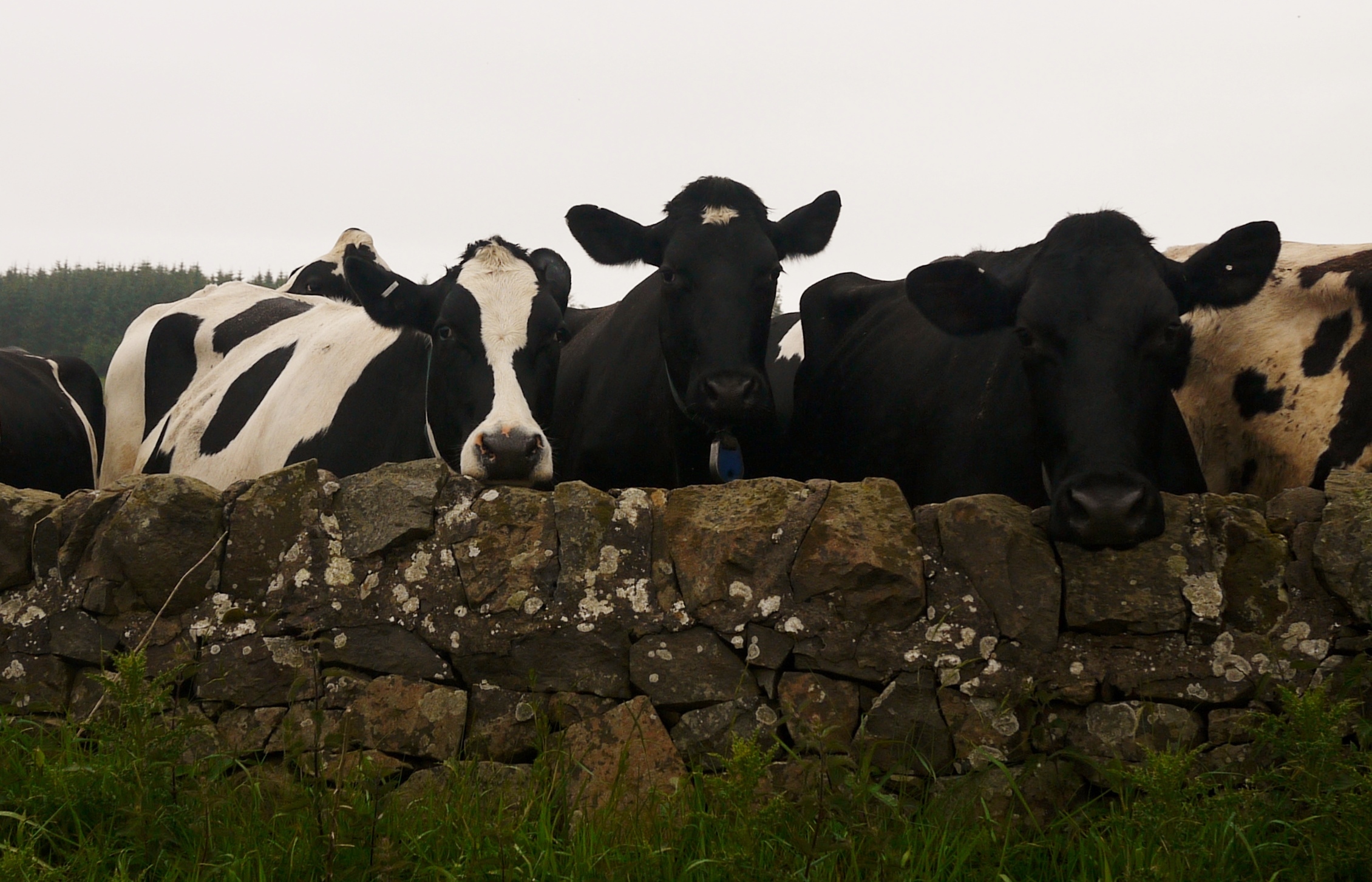
After Loch Lomond (in my previous post), we decided to take the ferry over to Bute in honour of one of my friend's birthdays; her day, her choice. After having spent many an hour for mythical buses on one of our trips over to the island, we decided to take the car with us this time, so we could explore more of the island at our own leisure - the bus service is actually pretty decent (if you read the timetable... *ahem*) but it doesn't take you to the more remote areas and I think you're probably less likely to get stuck behind many many cows who'd quite like their lunch please. The ones above were waiting to join their friends already on the road. Driving around the island made a nice change from visiting the castle at Rothesay yet again - don't get me wrong, it's a good castle, as castles go, but I've been there four times now, most recently with my sister and nephews when they came to visit at Easter. The weather was considerably nicer then, though.

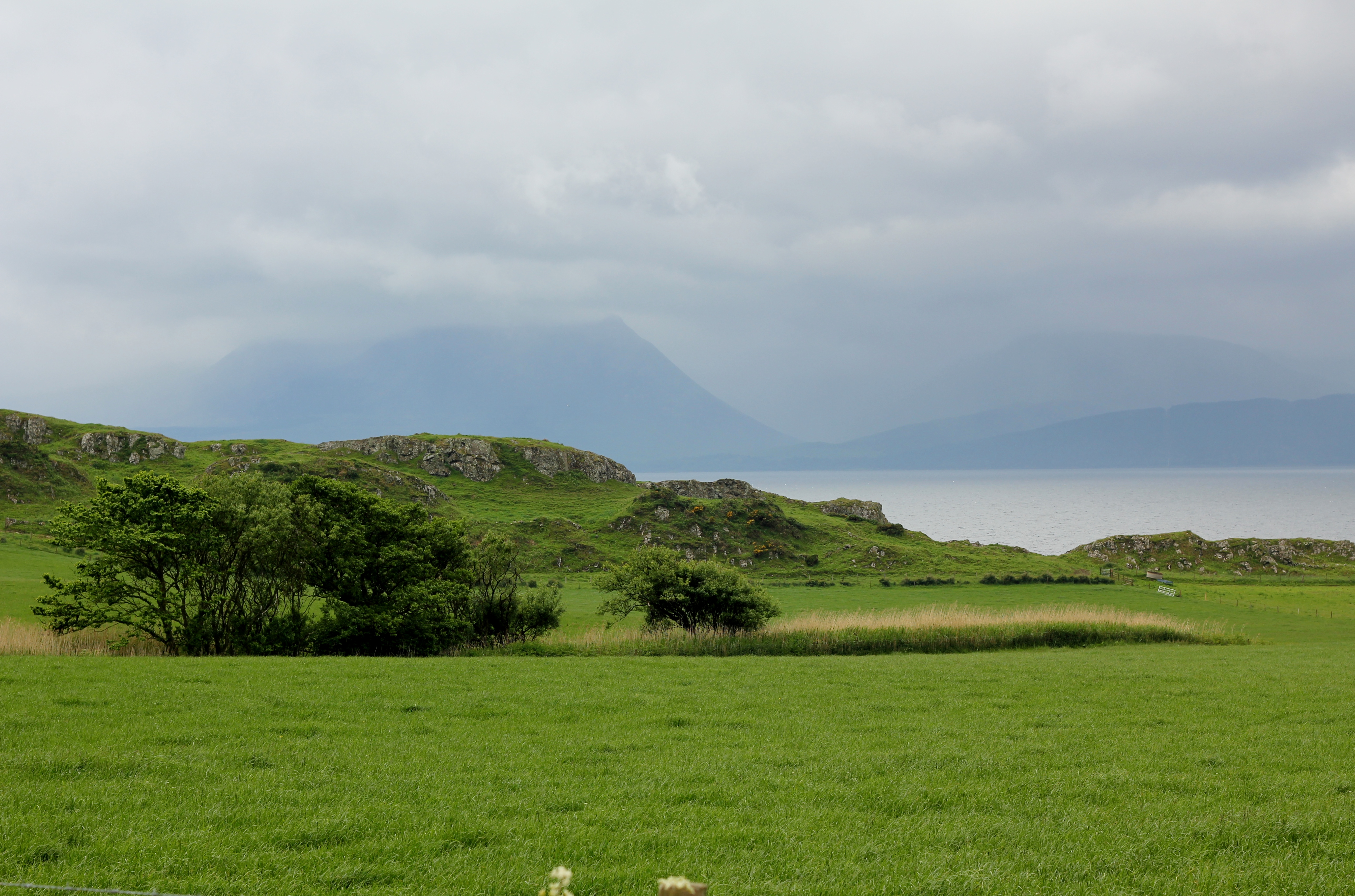
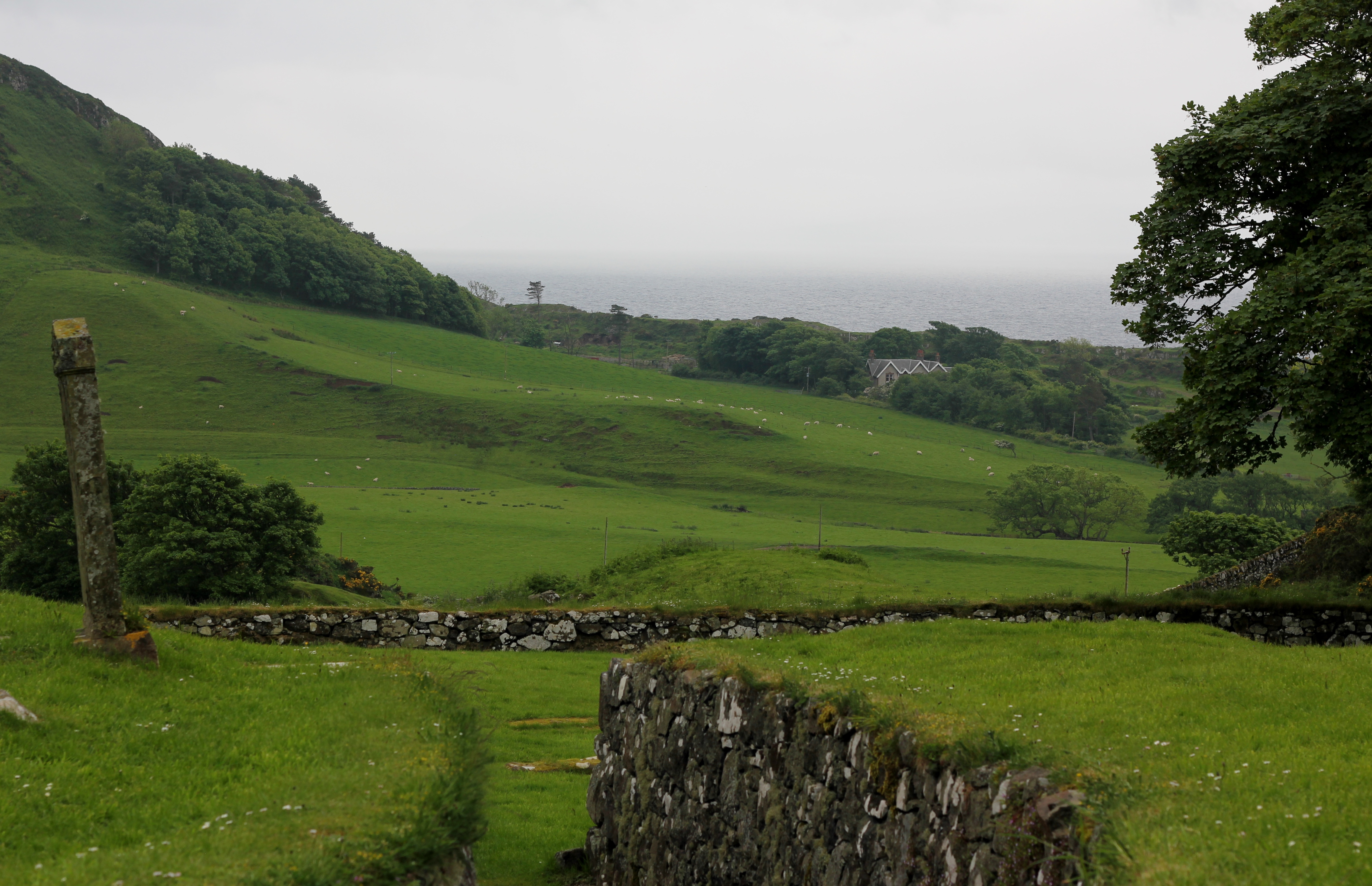
We took a stop at one of the beaches first, then went on to find a derelict church, which turned out to be an early medieval monastery founded by St Blane. The place was a bit of a hike to get to, but beautifully situated in a very sheltered spot near the top of a hill, overlooking the coast:


It's a shame it wasn't sunny, but at least the rain held off until we were ready to get back to the car, and I guess the weather gives its own mood to the place...

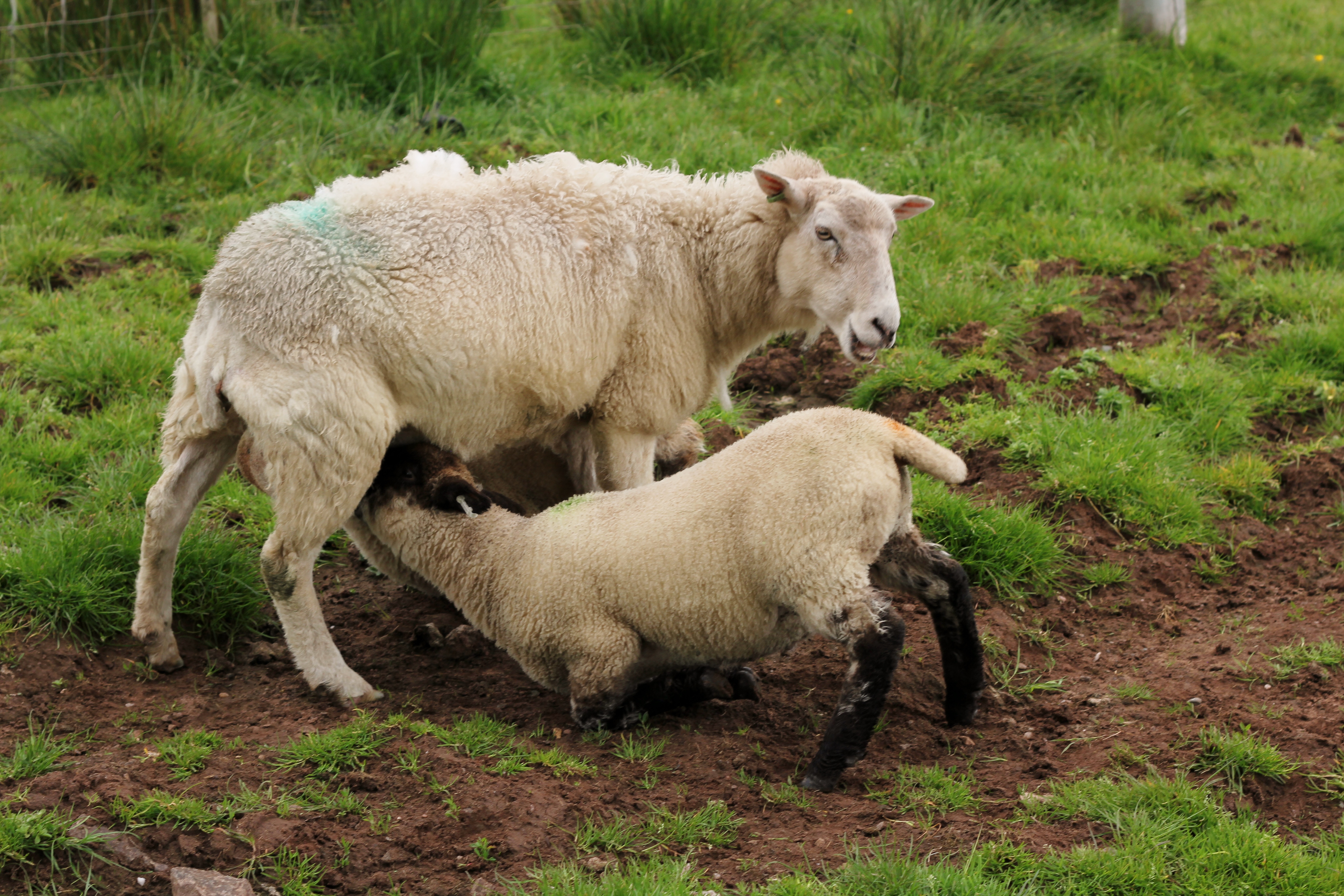
The path up to the site was home to many many sheep and lambs:


Who were quite skittish and suspicious of us at first. They seemed to calm down if you baa'd at them, so why not...

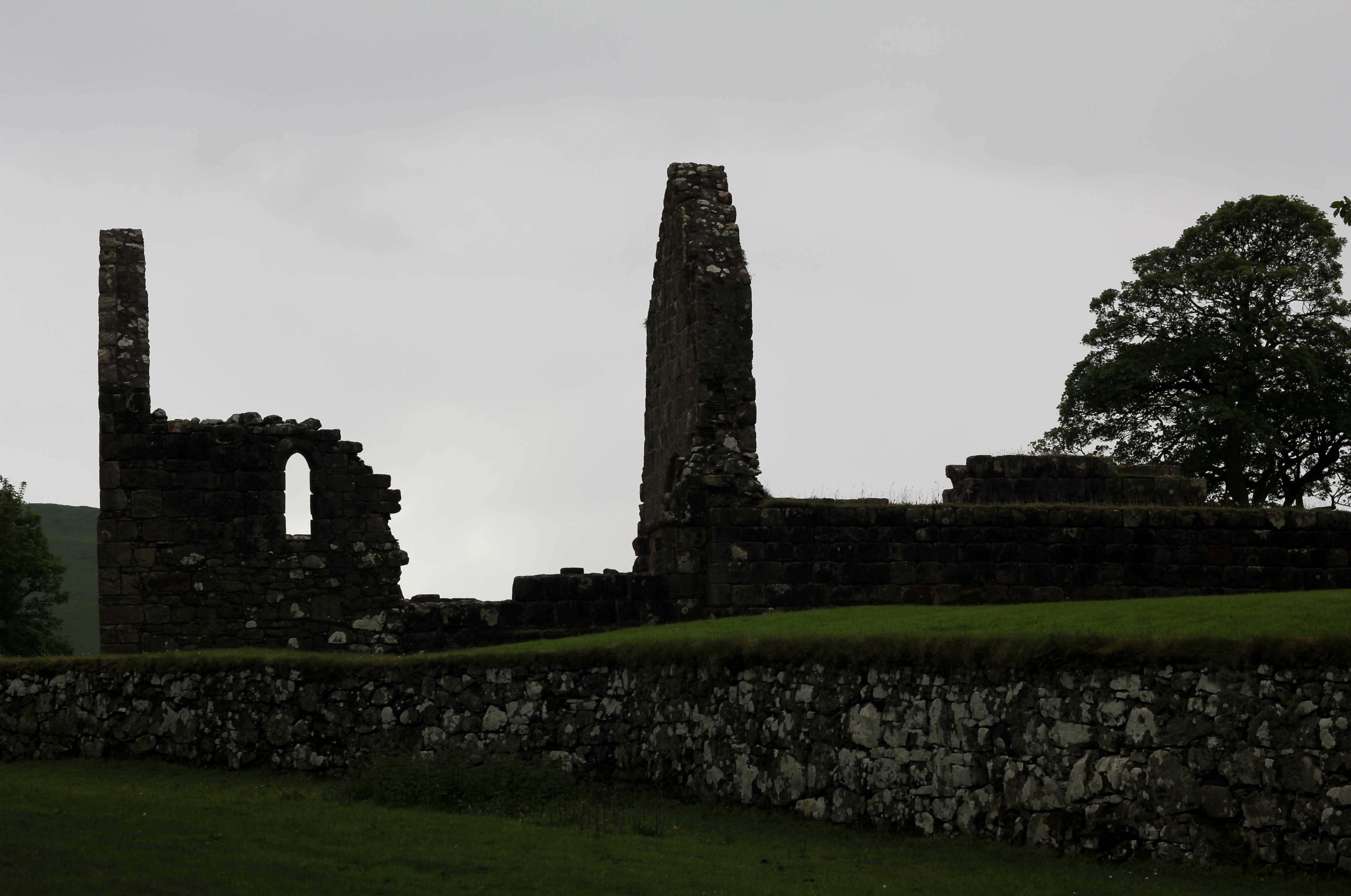
But anyway. Up at the monastery there's a mixture of early medieval and then more recent ruins. The church itself has twelfth century bits, but it's mostly later, up to the eighteenth century when it fell out of use. Some of the surrounding remains, including a well and some surrounding ruins of buildings of "indeterminate purpose" are probably early medieval but it doesn't seem like there's been much investigative work (or if there has, no one's updated the information plaques) to date things; the monastery itself was established in the sixth century, though.

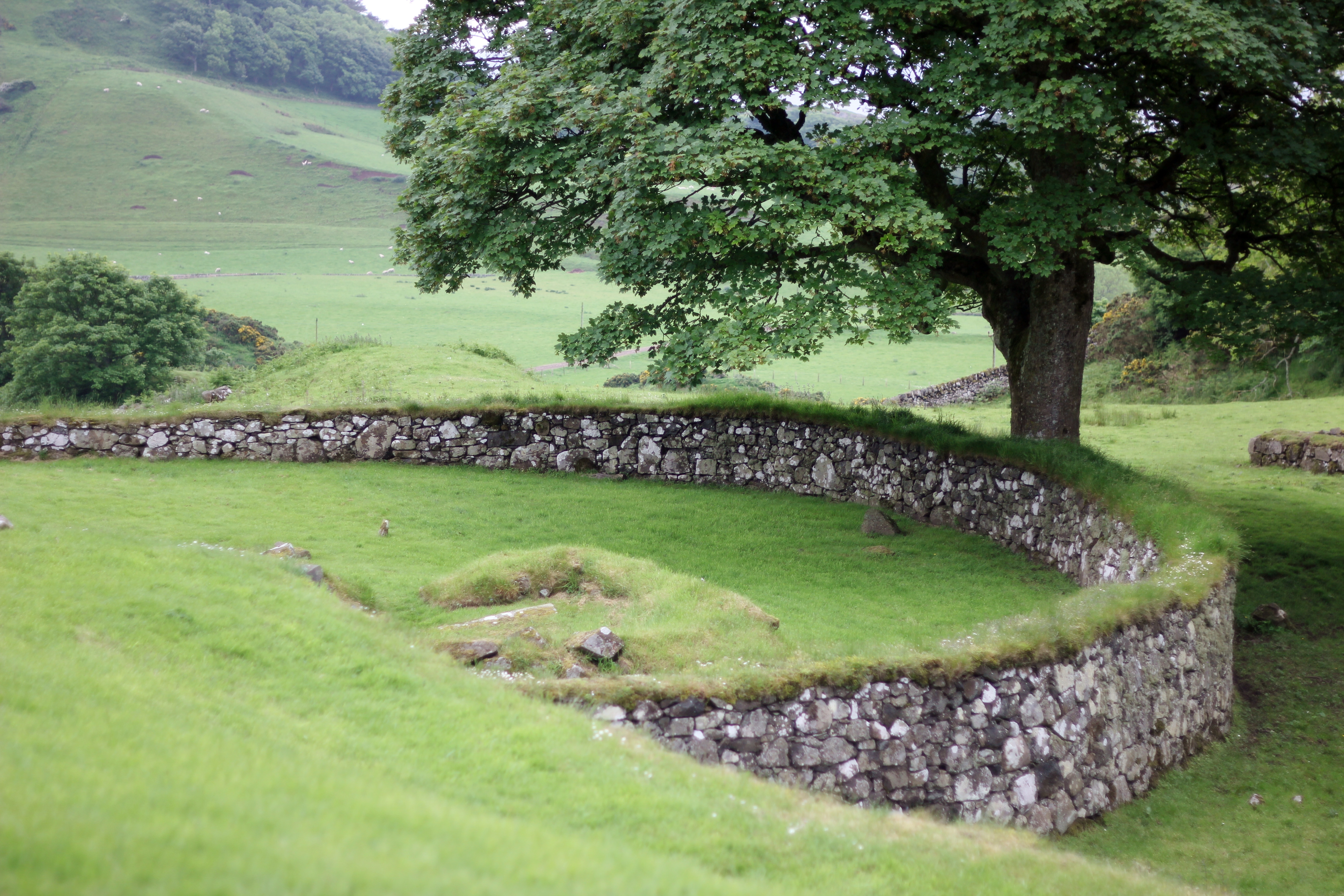
After the site fell out of use as a monastery it was used as a church for locals in the area - quite a trek to get to, I'd say. The graveyard was segregated, with the men and (earlier) the monks on the higher terrace, closest to the church, and the women buried on the lower terrace:


Here's a moody view of the church from the side(ish):


And here's more of the lower terrace, where you can see the rounded vallum (boundary wall), which tells you it's the original, early medieval boundary for the monastery:


Considering how early the monastery is, it's not surprising to find that it's situated just down the road from a stone circle and a stone row - sites like this were often plonked right in the middle of already significant, sacred areas. Maybe it was supposed to help provide a sense of continuity - a change in religion, but not too big a change in setting, perhaps - or maybe it was just practical (to be fair, it's a smallish island. It's pretty hard not to fall over the odd standing stone or stone circle somewhere).

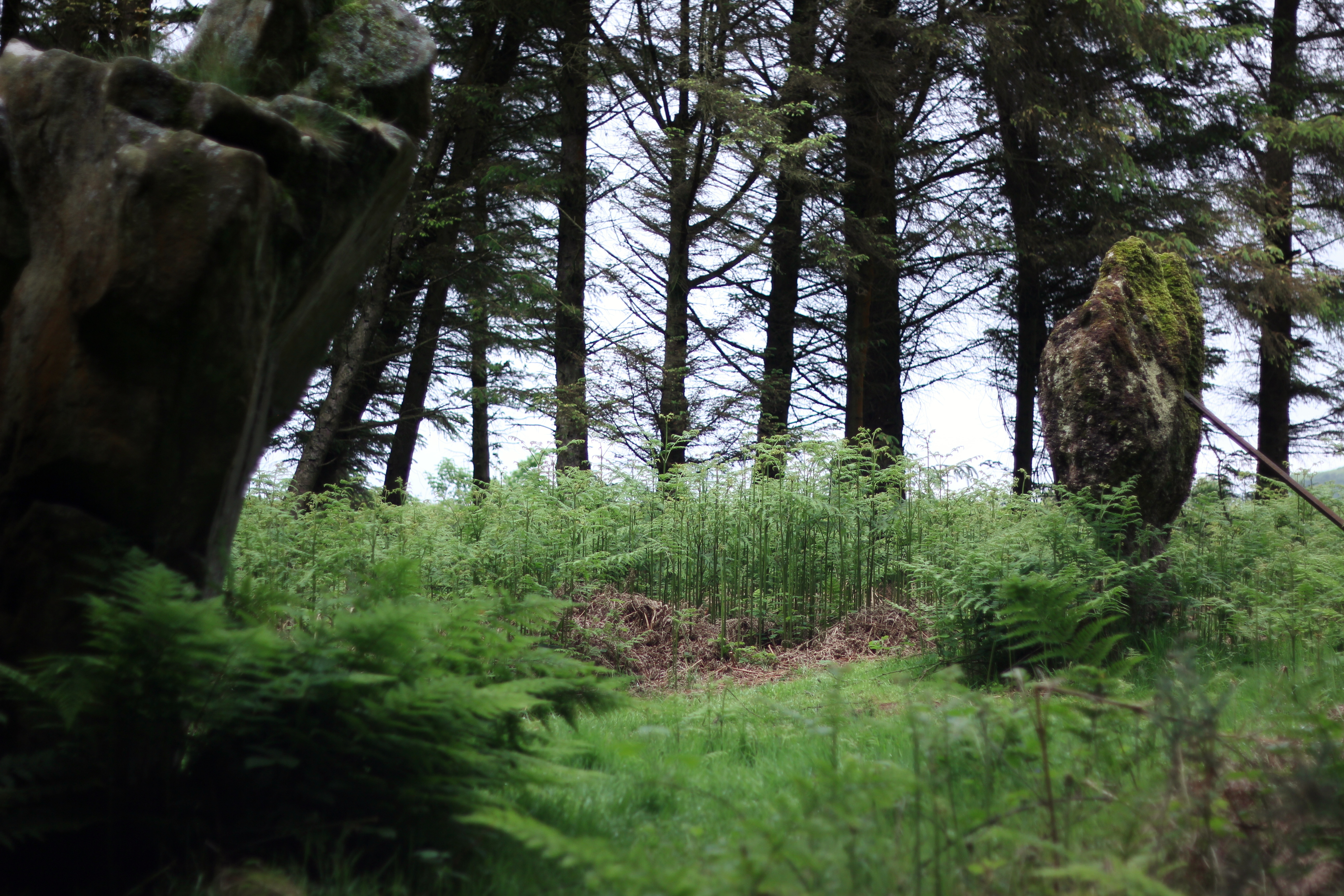
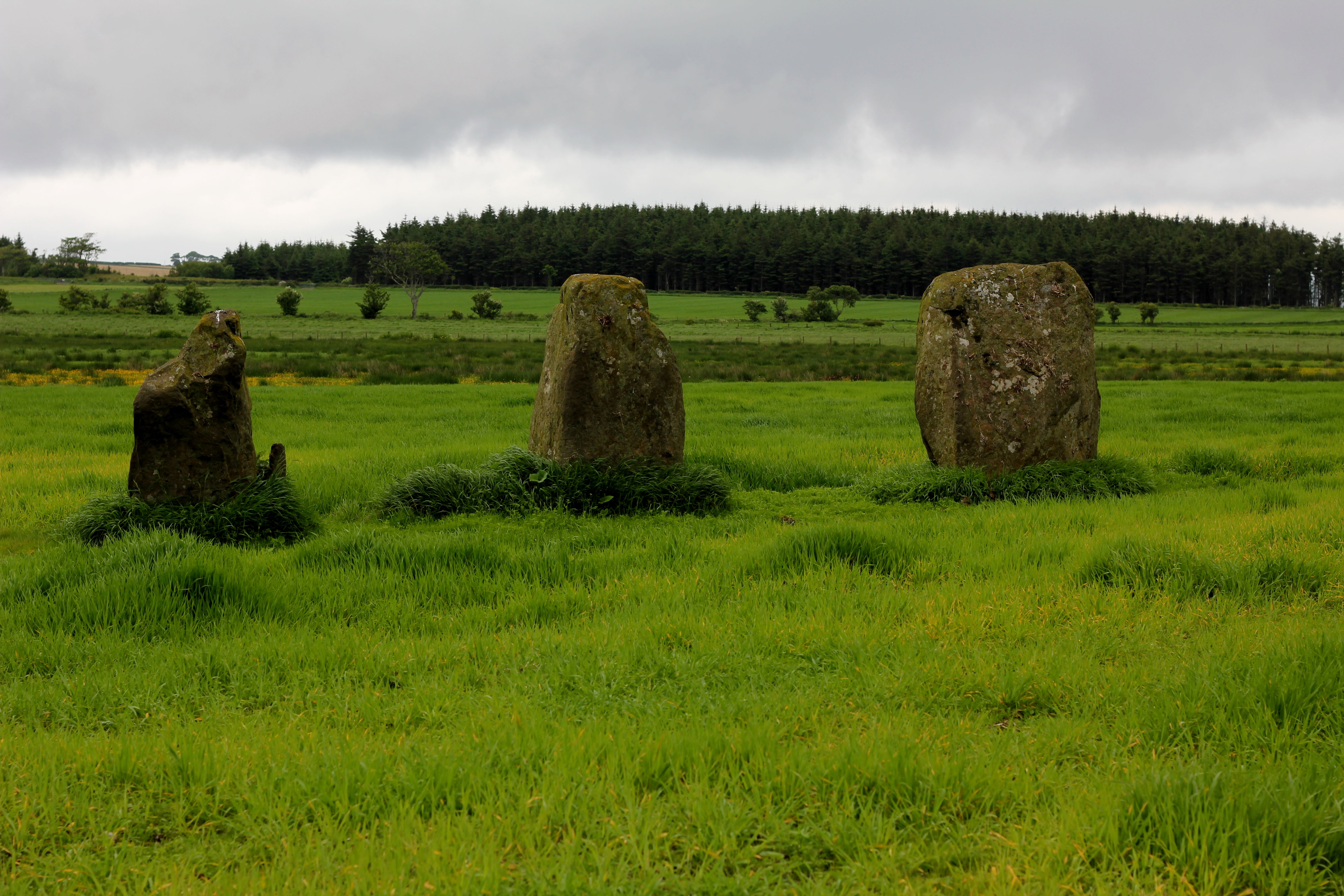
As we made our way back to the main road we stopped in at the Blackpark stone circle. Only three stones remain now, and I don't think the surrounding forested area would have been there when the circle was in use so it was difficult to get a sense of the place. The layout seemed pretty odd to me, but I think that's because of an attempt at restoration on one of the stones, which fell down and seems to have been put back up on top of a small mound, for some reason. One of the stones is extremely weathered and it seems like an aggregate of some sort, different to the other rocks (it's the one being propped up), which is also unusual:


The larger stone, on the left, has cracked in several places due to frost, and is almost completely split in half now. To the left of that one there's the other stone, which is much smaller than the others and it's been graffiti'd over the years.

Just down the road, between the circle and the monastery, is the Largizean stone row. It's about a 30 minute walk from the circle (according to the information board), but we doubled back in the car to save our legs a little. It was still a bit of a walk along a track to get to it, and it's stuck right in the corner of a field. Looking back towards the stone circle:


And then looking out to sea in the direction they seem to be pointing:


I don't have an exact date on the stone row or circle, but I'm guessing they're most likely to be late Neolithic. Possibly early Bronze Age, so roughly 4,000 years old or so.

We toured around the rest of the island after a spot of lunch, just so we could say we'd been to the Highlands proper - the Highland line intersects only part of the island - and stopped in briefly at Ettrick Bay (which is a beautiful sandy beach, when it's sunny and the tide's out). The weather was really turning on us at that point, but apparently there's a stone circle near the beach as well, so that's something I might hunt out at some point - the beach is easy to get to by bus from the main town, so if we don't manage a holiday away this summer I might take the kids there.

I think that's enough pictures and blether now...