There comes a point of blogging and trawling the internet where I'm not sure if I'm repeating myself...Have I said this before? Do I know this already? I'm not sure...I'll blame it on the painkillers.
Anyway, if I didn't already know this and haven't already posted this, then hurrah! Volume IV of the Carmina Gadelica is online:
Carmina Gadelica
It takes a while to load but the formatting is good. Volumes 1-3 are also listed there.
Monday, 17 September 2012


Sunday, 16 September 2012
Knowth
A nice wee article on the history (including ritual) of Knowth:
Irish Archaeological Research Digital Magazine Volume 4
Irish Archaeological Research Digital Magazine Volume 4
Saturday, 8 September 2012
Plans for Gàidhlig-only village on Skye
I saw this on tumblr referencing The Times (which is behind a pay wall), and the only other source I can find on this at the moment is a teaser from The Press and Journal:
The new £40million village beside the Gaelic college at Sleat will include almost 100 new homes – from affordable to high-market seafront plots – college buildings for research and teaching, and a new conference centre. There are also plans for hotel accommodation, a retail outlet and cafe bar as well as sport facilities, a central green, and parks, paths and cycle networks.But it certainly sounds like exciting news, and I just hope they can make this work without too much of a negative impact on the local environment.
Tuesday, 4 September 2012
Tastefulness...
So this is happening on my rowan tree:

And some other rowans in the village, too. While the horse chestnuts and some other trees are already putting on their autumnal suits, the rowans can't decide on whether or not it's spring or autumn. It's not something I've ever seen before, though I'm sure it's not uncommon, and as far as the trees go it's only rowans that seem to be flowering again. The weather has been all over the place - further up north the first frosts have already been and gone, while here we're still basking in warm sunshine one minute, only to find howling winds and droves of rain hurling themselves our way the next. No wonder the plants are confused! The blackberries are starting to ripen but the main crop is still a week or two away, I think, unless we get more sunshine.
I've had to neglect the garden this year and things are pretty overgrown in the flower beds at the moment but I'm enjoying the wildness of it all, at least, and the bees certainly are too. This is the time where I should be cutting back all of the bulbs and so on that have finished flowering before they sow yet more bulbs to overcrowd the beds even further, but in the absence of being able to get my hands dirty right now, I'm trying to get out there and tend to things in my own way. I don't want to neglect my space completely, so instead of digging and pruning, decorating it is...
The rowan - which I planted four years ago now - has matured a little (after recovering well from getting Mungo'd in its first year - the dog managed to snap it in half in a manic frolicking session that ruined most of the plants. Sod) and the branches are thick enough to tolerate some things hanging from it. I think it will need a while yet before I can hang anything heavy, like a bird feeder, but some light decorations will do and I always intended to turn it into a clootie tree of sorts. So the first thing I've put on it are some 'wind-chimes', though I'm not sure bamboo can qualify as a "chime" per se:

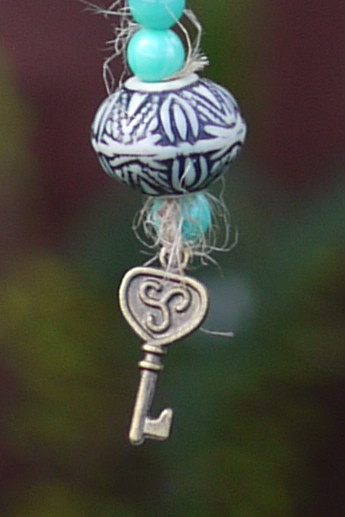
I bought one of those do-it-yourself kits from the kids section of the local craft shop, and my capable assistant, Rosie, helped with the painting, with blues and reds for health and protection. A while before I'd found some tiny wee key charms with triskeles on them that I couldn't resist, so on they went too:
I was supposed to have gone back to my hometown for a visit last month but I just couldn't manage the journey at the time and in the end I had to cancel, so my wonderful friends posted me the belated birthday present they'd been holding onto - a paint your own birdhouse (thank you so much!). It was a lovely surprise and Rosie helped with painting that too (one of Tom's friends has decided to basically adopt us these days, so as usual they were busy playing together while Rosie and I were hard at work). With starting school last month Rosie's needed a little more quality time lately as she settles in to her new routine and she loves to do anything creative, especially if it provides an opportunity to do something good for the garden too. So the arrival of another wee project for us was great, and will make a great addition to the tasteful aesthetic I'm going for...
I've yet to find a home for the bird house, I'm still deciding on whether or not I should try putting in on the fence or maybe donate it to one of the trees in the field behind us, but it's finished now. I told Rosie that rowan berries can be dried and worn as a necklace (traditionally for protection, as with amber) and she's quite keen on the idea; I'm not sure making her a necklace is practical, but maybe drying the berries to make a garland for her room is something we could make a project of. I made the kids a rowan charm a while ago but their room is in need of redecorating, so it might be nice to add something new once it's done.
And some other rowans in the village, too. While the horse chestnuts and some other trees are already putting on their autumnal suits, the rowans can't decide on whether or not it's spring or autumn. It's not something I've ever seen before, though I'm sure it's not uncommon, and as far as the trees go it's only rowans that seem to be flowering again. The weather has been all over the place - further up north the first frosts have already been and gone, while here we're still basking in warm sunshine one minute, only to find howling winds and droves of rain hurling themselves our way the next. No wonder the plants are confused! The blackberries are starting to ripen but the main crop is still a week or two away, I think, unless we get more sunshine.
I've had to neglect the garden this year and things are pretty overgrown in the flower beds at the moment but I'm enjoying the wildness of it all, at least, and the bees certainly are too. This is the time where I should be cutting back all of the bulbs and so on that have finished flowering before they sow yet more bulbs to overcrowd the beds even further, but in the absence of being able to get my hands dirty right now, I'm trying to get out there and tend to things in my own way. I don't want to neglect my space completely, so instead of digging and pruning, decorating it is...
The rowan - which I planted four years ago now - has matured a little (after recovering well from getting Mungo'd in its first year - the dog managed to snap it in half in a manic frolicking session that ruined most of the plants. Sod) and the branches are thick enough to tolerate some things hanging from it. I think it will need a while yet before I can hang anything heavy, like a bird feeder, but some light decorations will do and I always intended to turn it into a clootie tree of sorts. So the first thing I've put on it are some 'wind-chimes', though I'm not sure bamboo can qualify as a "chime" per se:
I bought one of those do-it-yourself kits from the kids section of the local craft shop, and my capable assistant, Rosie, helped with the painting, with blues and reds for health and protection. A while before I'd found some tiny wee key charms with triskeles on them that I couldn't resist, so on they went too:
I was supposed to have gone back to my hometown for a visit last month but I just couldn't manage the journey at the time and in the end I had to cancel, so my wonderful friends posted me the belated birthday present they'd been holding onto - a paint your own birdhouse (thank you so much!). It was a lovely surprise and Rosie helped with painting that too (one of Tom's friends has decided to basically adopt us these days, so as usual they were busy playing together while Rosie and I were hard at work). With starting school last month Rosie's needed a little more quality time lately as she settles in to her new routine and she loves to do anything creative, especially if it provides an opportunity to do something good for the garden too. So the arrival of another wee project for us was great, and will make a great addition to the tasteful aesthetic I'm going for...
I've yet to find a home for the bird house, I'm still deciding on whether or not I should try putting in on the fence or maybe donate it to one of the trees in the field behind us, but it's finished now. I told Rosie that rowan berries can be dried and worn as a necklace (traditionally for protection, as with amber) and she's quite keen on the idea; I'm not sure making her a necklace is practical, but maybe drying the berries to make a garland for her room is something we could make a project of. I made the kids a rowan charm a while ago but their room is in need of redecorating, so it might be nice to add something new once it's done.
Monday, 3 September 2012
Ice cream! And another review
Autumn is well and truly here now - no more wavering on the matter in these here parts. And with it comes the end of the school holidays (finally) and now, for me, a little more freedom than I'm used to. Both of the kids are in school now and as of tomorrow my daughter will be in school full-time, after spending the first couple of weeks only going in for the mornings.
To celebrate the start of a new era, and finish our holiday in style, I took the kids out to Largs (a nearby town and something of a tourist trap) for an ice cream. Not just any ice cream:
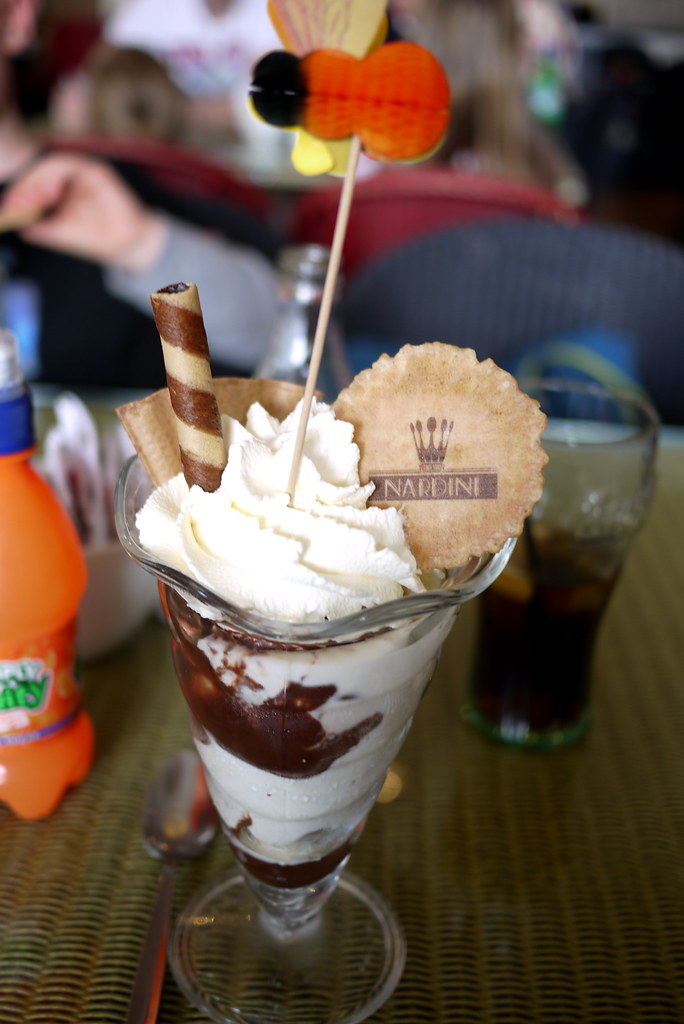
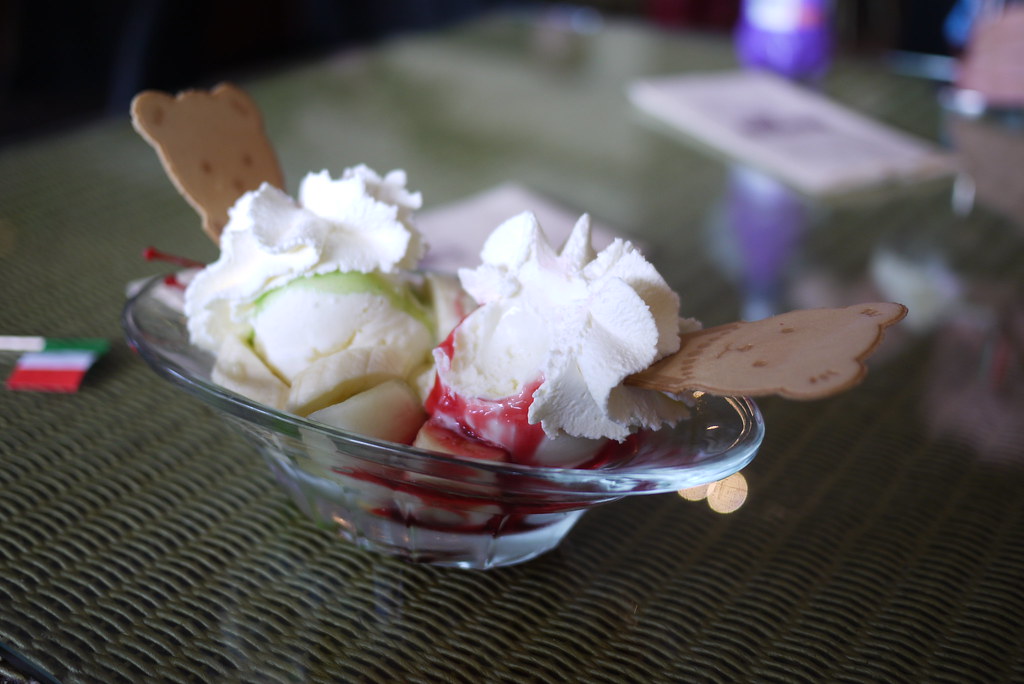
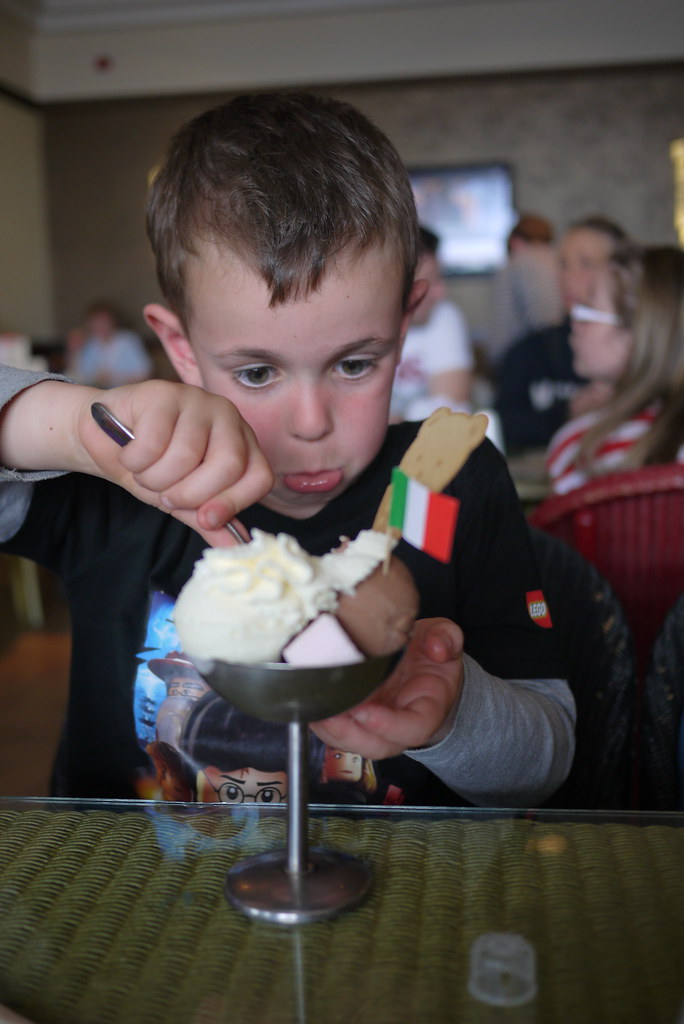
Proper ice cream. It's definitely a perk of living in a place like this, even if the weather sucks a lot of the time.
Once my back problems are resolved - hopefully in the very near future - I shall have to start making myself useful again. In the meantime I'm sure I'll think of some things to do to keep me out of trouble, but for now, here's another review:
Celtic Christianity and Nature: Early Irish and Hebridean Traditions
Mary Low
A common problem when trying to figure out this whole Gaelic Polytheism thing is finding where the Christianity starts and the paganism ends when we look at all of the source material we have to work with. A lot of what we see might look pagan, but there are things that we really can't take at face value, because things are never that simple or easy. Otherwise we might end up getting a bit over-excited about things and leap to conclusions like deciding that if we just strip out the obviously Christian bits we'll get the paganism and it's all cool and groovy. It's not as simple as that, for sure, but the situation's not as dire as some academics might like to think when they try to see everything as irreconcilably Christian just because it comes from the hands of Christian scribes, so let's call the whole thing off...
This is a book that I think is invaluable in getting a more balanced view, and more than that, it's a fantastic resource for looking at the kind of things we might see that are pre-Christian in origin (and thus useful to us, as polytheists) as far as Gaelic belief is concerned. Or not, as the case maybe, and accounting for all of the various shades of grey in between (and I'm sure there's far more than fifty shades there, and none of them involve abusive relationships or bad fan-fic, so that's cool. Anyway).
The purpose of this book is to explore the relationship between Christianity, native belief (as evidenced in the earliest Irish literature through to the relatively modern Hebridean evidence primarily gathered by Carmichael), and what's come to be known as "Celtic Christianity." Given Celtic Christianity's emphasis on nature, each chapter looks at a different subject like the land and the landscape, trees, water, fire, birds, the seasons, and the elements and explores whether such attitudes towards them might be evidence of pre-Christian belief, Christianity, or a synthesis of the two. For the most part there can't be any solid conclusions drawn and to Low's credit she let's the evidence she compiles speak for itself, allowing the reader to draw their own conclusions.
The broad scope - from the earliest literature to the modern - is something that I particularly liked because it underscores the point that often seems to be missed in CR these days: It's not just about looking at the Iron Age, it's looking at the whole continuum from what we know of pre-Christian times to the survivals we find today, and all the bits in between.
This is all great stuff and there is so much food for thought it's difficult to cover everything. All of the usual things you'd expect to find are there - the relationship between the land, the goddesses, and the people, the tradition of the sacred tree - the bile - the associations of birds with the gods, and so on, along with parallels that might found in the Bible that ultimately may have led to the survival and adaptation of such pre-Christian concepts into a Christian context. And so on.
Of particular interest to me was the chapter on the seasons and nature, as we see it articulated in nature poetry. There is a lot of Christian poetry devoted to the subject in medieval Ireland, but Low (following Kenneth Jackson) suggests that some of the earliest examples - Finn's song to the summer, or the famous poem heralding winter - may be hangovers from pre-Christian belief, where the seasons were possibly heralded (in the case of summer) or lamented (in the case of winter) in the form of seasonal carols. In the chapter on fire and the sun Low gives an overview of the arguments for and against solar deities. Being firmly on the side of the no camp on that one - which I happen to agree with - it was great to see the argument laid out so plainly, but she does explore the alternative view as well, if only to refute it. It would be interesting to see what those who might argue in favour of solar deities might have to say about it, but personally I found it to be one of the most useful bits of the book.
This is not to say the book is without its flaws. I don't think there's anything major here but you might find yourself quibbling with some of the arguments given, but that kind of thing is par for the course with any book. It's a fairly slim volume so some things get glossed over more than you might like (or maybe that's a good thing if you don't want it to get too complicated), and there are certainly some things that are missing - including some references I was surprised not to see, which doesn't have a massive impact over all, but I would've been interested to see some comment about it all nonetheless. Noticeably absent was discussion or even mention of the three realms, but I'm fairly sure that this has more to do with the time of publication - a few years, at least, before Liam Mac Mathúna's work was published, for sure - so it might be that Low just wasn't aware of it. It does date it slightly, though.
My main issue is the fact that Low refers to pre-Christian beliefs and religions as "primal." I really think that it's maybe an instinctive thing because it does seem to be a valid term to use in an anthropological sense, but I was always taught to try and avoid terms that might imply judgement values; that something primal is less evolved, perhaps. I couldn't help but wonder, why not just say "pre-Christian"?
Aside from that niggle I really enjoyed the book and would put it on my highly recommended list for sure. I'm not convinced it's a good book for a total beginner, though. This far in it's hard for me to judge because I found it an easy and straightforward read - there aren't a lot of Teh Big Wurdz to have to keep up with, and where something that's been previously discussed is referenced again a page number is given to allow a quick jump back if needed - but I do wonder if it's maybe a bit more than a beginner might want. It's not a book that spells things out plainly, "this is what the pre-Christian Irish believed" and that's probably what beginners are looking for. I'd still appreciate a book like that, to be honest...Still and all, I think this is about as good as it gets right now. For the non-beginner, or the beginner who wants to stick with it, I think the book is absolutely invaluable.
To celebrate the start of a new era, and finish our holiday in style, I took the kids out to Largs (a nearby town and something of a tourist trap) for an ice cream. Not just any ice cream:
Proper ice cream. It's definitely a perk of living in a place like this, even if the weather sucks a lot of the time.
Once my back problems are resolved - hopefully in the very near future - I shall have to start making myself useful again. In the meantime I'm sure I'll think of some things to do to keep me out of trouble, but for now, here's another review:
Celtic Christianity and Nature: Early Irish and Hebridean Traditions
Mary Low
A common problem when trying to figure out this whole Gaelic Polytheism thing is finding where the Christianity starts and the paganism ends when we look at all of the source material we have to work with. A lot of what we see might look pagan, but there are things that we really can't take at face value, because things are never that simple or easy. Otherwise we might end up getting a bit over-excited about things and leap to conclusions like deciding that if we just strip out the obviously Christian bits we'll get the paganism and it's all cool and groovy. It's not as simple as that, for sure, but the situation's not as dire as some academics might like to think when they try to see everything as irreconcilably Christian just because it comes from the hands of Christian scribes, so let's call the whole thing off...
This is a book that I think is invaluable in getting a more balanced view, and more than that, it's a fantastic resource for looking at the kind of things we might see that are pre-Christian in origin (and thus useful to us, as polytheists) as far as Gaelic belief is concerned. Or not, as the case maybe, and accounting for all of the various shades of grey in between (and I'm sure there's far more than fifty shades there, and none of them involve abusive relationships or bad fan-fic, so that's cool. Anyway).
The purpose of this book is to explore the relationship between Christianity, native belief (as evidenced in the earliest Irish literature through to the relatively modern Hebridean evidence primarily gathered by Carmichael), and what's come to be known as "Celtic Christianity." Given Celtic Christianity's emphasis on nature, each chapter looks at a different subject like the land and the landscape, trees, water, fire, birds, the seasons, and the elements and explores whether such attitudes towards them might be evidence of pre-Christian belief, Christianity, or a synthesis of the two. For the most part there can't be any solid conclusions drawn and to Low's credit she let's the evidence she compiles speak for itself, allowing the reader to draw their own conclusions.
The broad scope - from the earliest literature to the modern - is something that I particularly liked because it underscores the point that often seems to be missed in CR these days: It's not just about looking at the Iron Age, it's looking at the whole continuum from what we know of pre-Christian times to the survivals we find today, and all the bits in between.
This is all great stuff and there is so much food for thought it's difficult to cover everything. All of the usual things you'd expect to find are there - the relationship between the land, the goddesses, and the people, the tradition of the sacred tree - the bile - the associations of birds with the gods, and so on, along with parallels that might found in the Bible that ultimately may have led to the survival and adaptation of such pre-Christian concepts into a Christian context. And so on.
Of particular interest to me was the chapter on the seasons and nature, as we see it articulated in nature poetry. There is a lot of Christian poetry devoted to the subject in medieval Ireland, but Low (following Kenneth Jackson) suggests that some of the earliest examples - Finn's song to the summer, or the famous poem heralding winter - may be hangovers from pre-Christian belief, where the seasons were possibly heralded (in the case of summer) or lamented (in the case of winter) in the form of seasonal carols. In the chapter on fire and the sun Low gives an overview of the arguments for and against solar deities. Being firmly on the side of the no camp on that one - which I happen to agree with - it was great to see the argument laid out so plainly, but she does explore the alternative view as well, if only to refute it. It would be interesting to see what those who might argue in favour of solar deities might have to say about it, but personally I found it to be one of the most useful bits of the book.
This is not to say the book is without its flaws. I don't think there's anything major here but you might find yourself quibbling with some of the arguments given, but that kind of thing is par for the course with any book. It's a fairly slim volume so some things get glossed over more than you might like (or maybe that's a good thing if you don't want it to get too complicated), and there are certainly some things that are missing - including some references I was surprised not to see, which doesn't have a massive impact over all, but I would've been interested to see some comment about it all nonetheless. Noticeably absent was discussion or even mention of the three realms, but I'm fairly sure that this has more to do with the time of publication - a few years, at least, before Liam Mac Mathúna's work was published, for sure - so it might be that Low just wasn't aware of it. It does date it slightly, though.
My main issue is the fact that Low refers to pre-Christian beliefs and religions as "primal." I really think that it's maybe an instinctive thing because it does seem to be a valid term to use in an anthropological sense, but I was always taught to try and avoid terms that might imply judgement values; that something primal is less evolved, perhaps. I couldn't help but wonder, why not just say "pre-Christian"?
Aside from that niggle I really enjoyed the book and would put it on my highly recommended list for sure. I'm not convinced it's a good book for a total beginner, though. This far in it's hard for me to judge because I found it an easy and straightforward read - there aren't a lot of Teh Big Wurdz to have to keep up with, and where something that's been previously discussed is referenced again a page number is given to allow a quick jump back if needed - but I do wonder if it's maybe a bit more than a beginner might want. It's not a book that spells things out plainly, "this is what the pre-Christian Irish believed" and that's probably what beginners are looking for. I'd still appreciate a book like that, to be honest...Still and all, I think this is about as good as it gets right now. For the non-beginner, or the beginner who wants to stick with it, I think the book is absolutely invaluable.
Subscribe to:
Posts (Atom)