Saturday, 17 December 2011

Irish language sign a first for Belfast

Ahhh, politics. Don't you just love it?

Some people might say that a Christmas greeting sign - in Irish, no less - donated to the Belfast City Hall is a generous gift. A sign of good will, perhaps. Or perhaps not:

But David Browne, UUP, who has described Irish as "gobbledegook" said the decision was "an act of bad faith".
"The Irish language or Ulster Scots, it's all gobbledegook to me. The more polite way is to say that I don't understand it," he said.
"Even before the working group had met they did this. It is an act of bad faith," he said. "But I'm not really interested, the sign is up and that is it."

What a mature and reasoned response, Mr Browne.

Friday, 9 December 2011

A little festive cheer?

We survived 'Hurricane Bawbag' (as it was dubbed) relatively unscathed - we lost a wee bit of fence in the end, and the old satellite dish bounced off gleefully down the road before Mr Seren managed to catch it (losing all dignity in the process). But considering the damage elsewhere, we didn't do too badly at all. With winds over 160mph in some places, it seemed sensible to stay indoors as much as possible, and hope for the best...Thankfully the schools were closed.

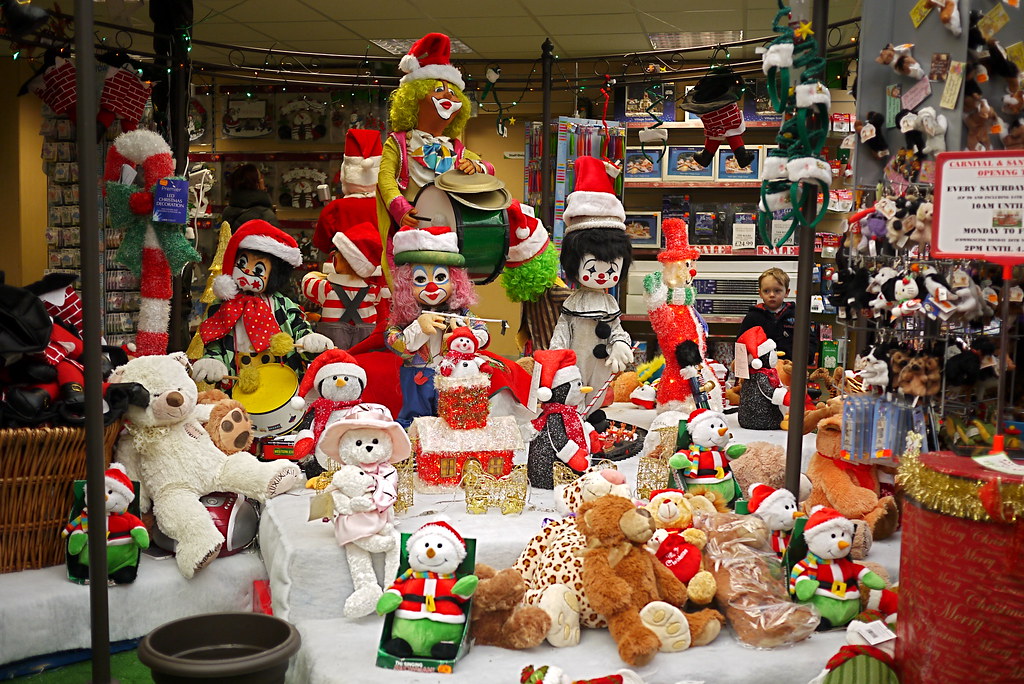
Today, however, all is back to normal, and aside from some early flurries of snow this morning we've yet to experience the predicted blizzard. To make the most of it (and as a blatant excuse to get out the house) I decided to spend the afternoon at the garden centre, in order to glory in all things questionably festive in nature. Of course, I took the camera with me, because otherwise I cannot share in the glory of all that is of a questionable and disturbingly festive nature. Allow me to illustrate:


I have to admit, I can't blame the look on the poor wee kid's face at the back there. (Is the tallest clown...supposed to look 'red face'?)

This is something the local garden centre does every year - it's their 'Winter Wonderland' sort of thing, where they put up loads of random and often tenuously festive displays. Aside from the clowns, most of the scenes of recent years have been of various fairy tales that are popularly adapted for pantomimes (they're a popular festive form of entertainment here). This year it's all been toned down a little, the first year we went it was definitely the best. That year, we had homicidal dwarves:


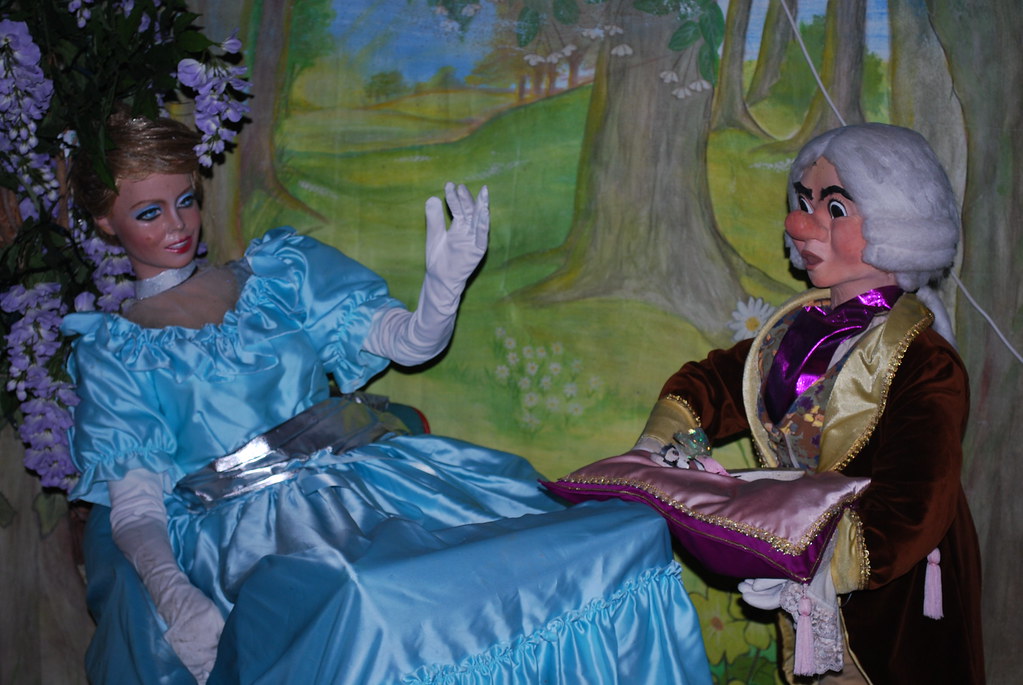
Another year, there was what can only be described as a suggestively come hither Cinderella:


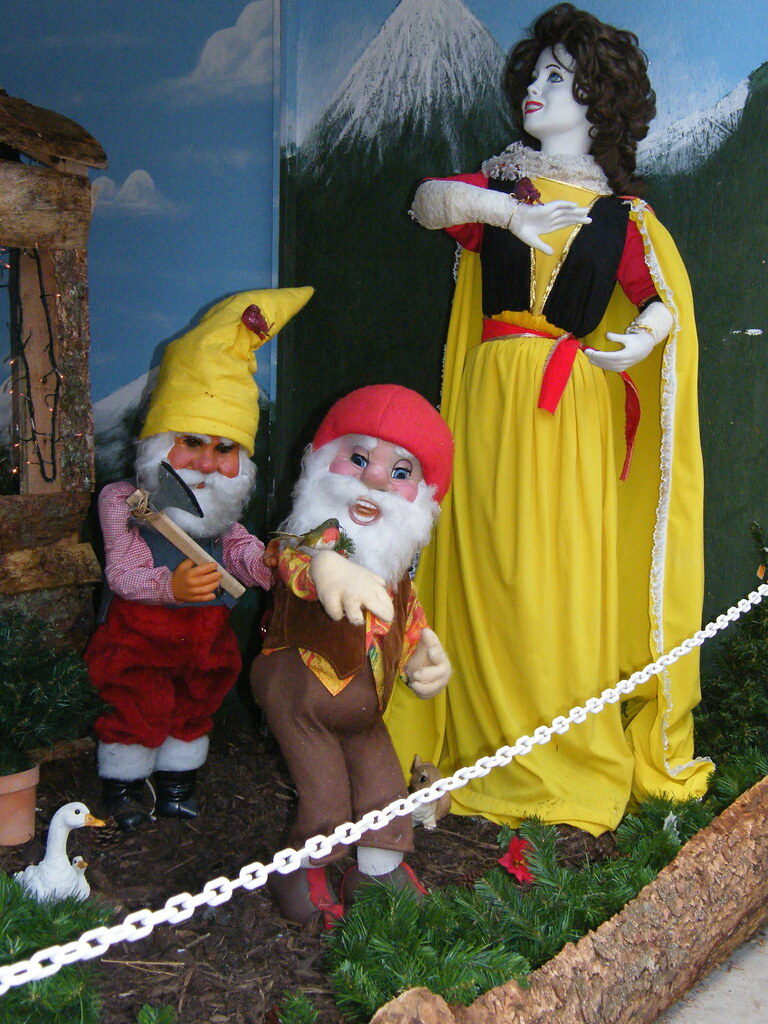
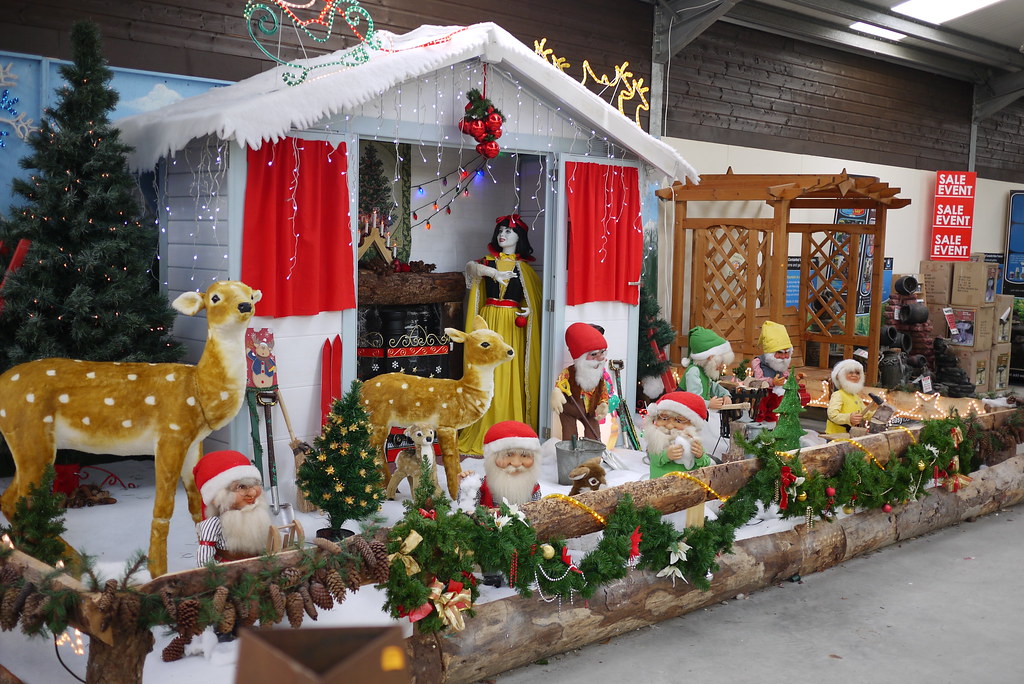
There was no Cinderella this year, but the dwarves were back again. Although alas, one of the dwarves certainly hasn't faired too well:


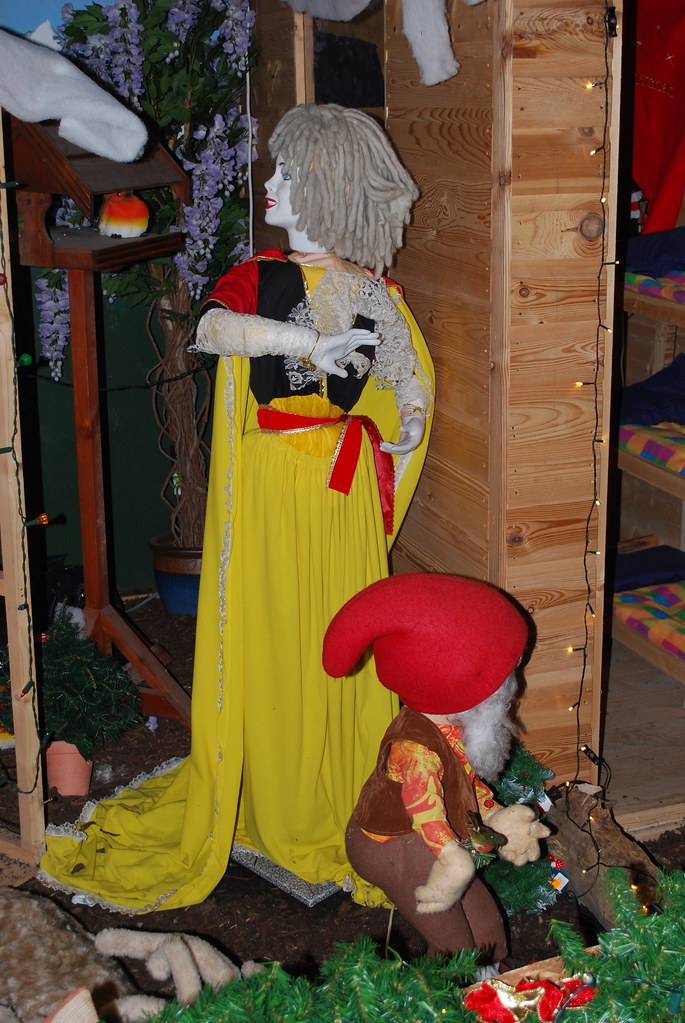
I can only imagine its injuries were the result of a heroic battle against the homicidal dwarf of previous years. A valiant defence of Snow White (a.k.a. Vampyra, I suspect), perhaps, for behold! She returned gloriously this year (after a few appearances with a mop for replacement hair), with the added bonus of a couple of pensive deer in tow:


It's perhaps safe to say that 'Snow White' has been taken to a somewhat literal extreme.

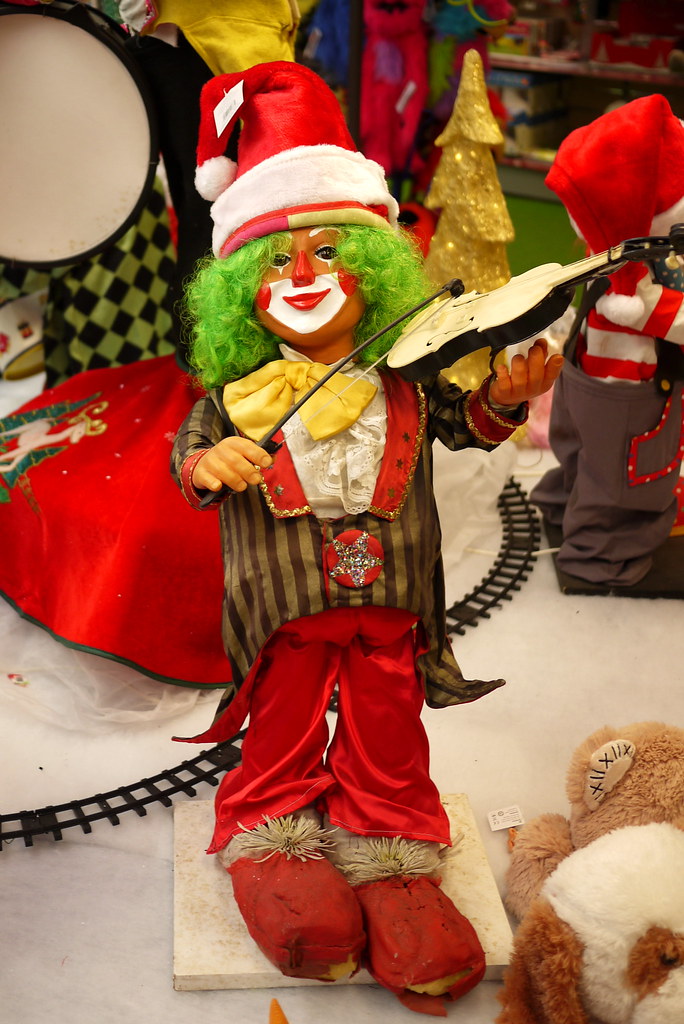
It's the clowns that really do it for me, though. I'm not sure quite why they might be considered festive, and they're something I've always found more than a little sinister in general (but especially so, after seeing Stephen King's IT when I was about thirteen or so), but the garden centre tends to go all out with them, for no apparent reason. This one is bad enough:


But this one takes first place for downright disturbing. If it were art, I would call it 'A Study in Sinister Nonchalance':


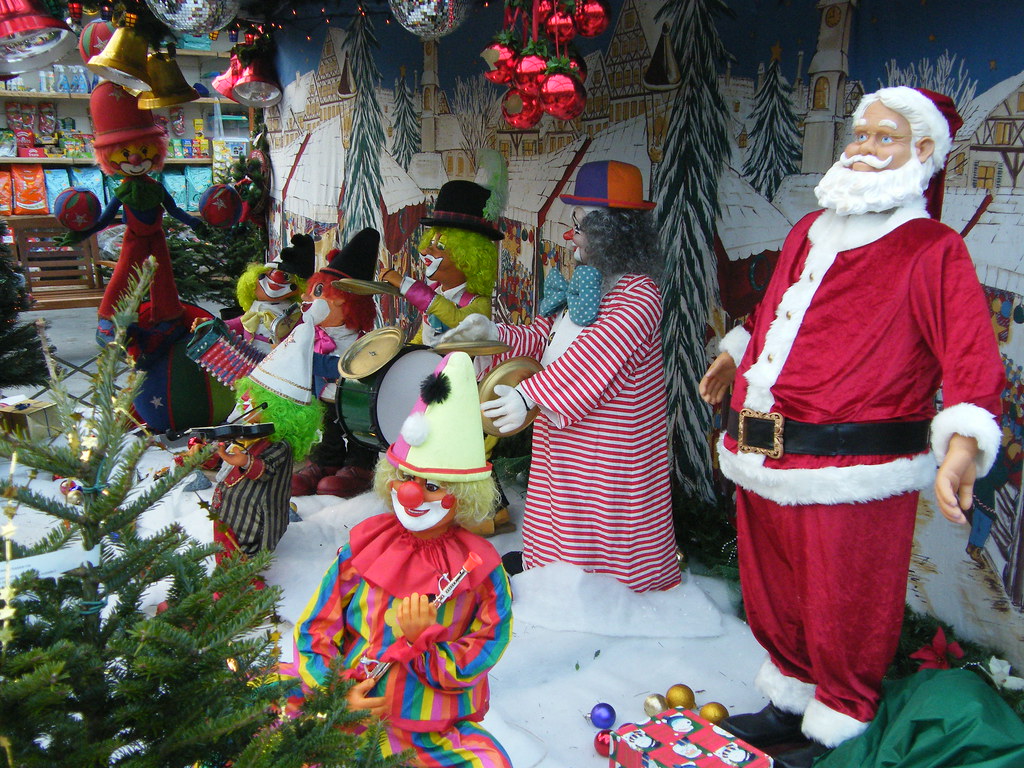
They move, you know. They all play happy and festive tunes and 'dance'. The first year there was this display:


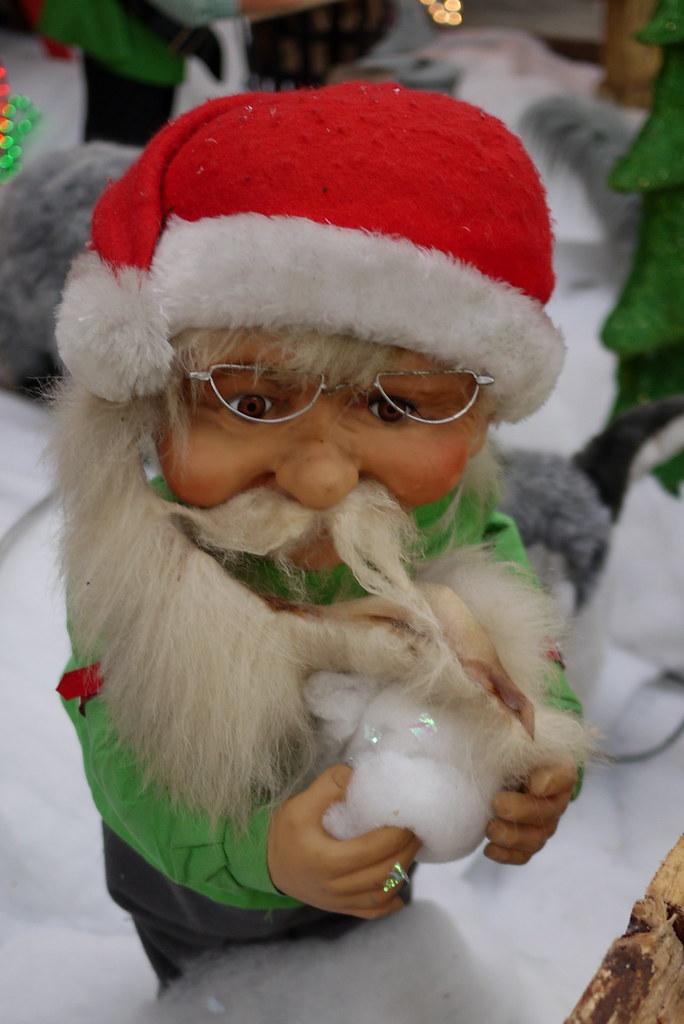
And I swear to you, I swear that the clown at the the front there, it was making rude gestures of the self-pleasuring variety. With his flute. Poor Santa. Look at him there, edging uncomfortably away. Ho-Ho-Ho-ly Shit What The Fuck Am I Doing Here...

But it seems that for decency's sake, they've toned it down somewhat this year:


And now the clowns just want to eat your soul.

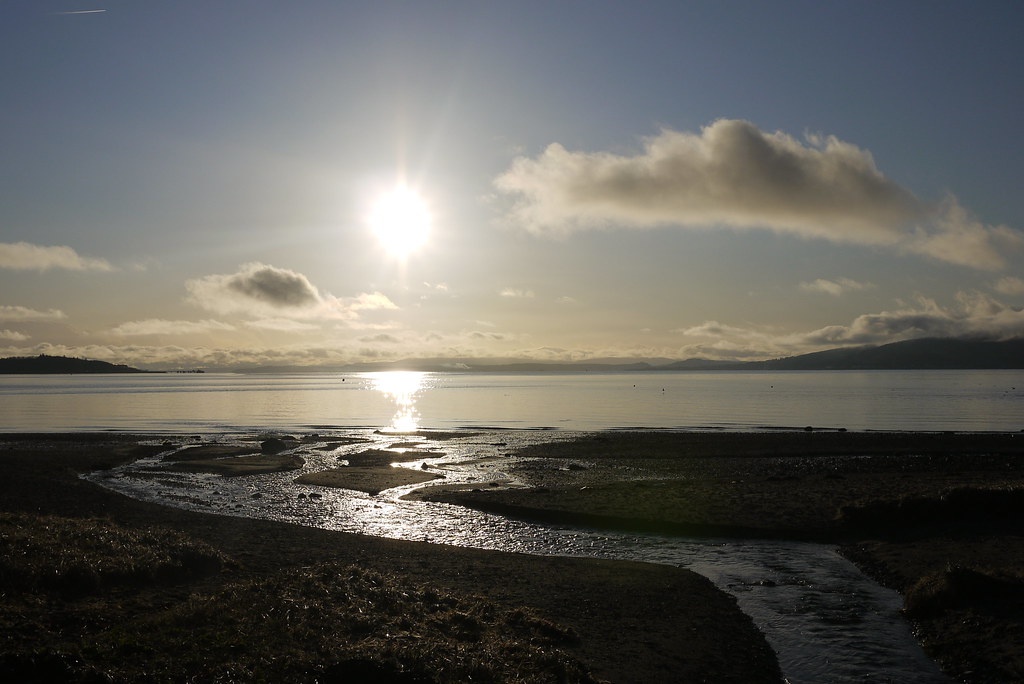
Outside, though, it's lovely:


As furious as the Cailleach has been these past few days - snow, hail, sleet, rain, thunder and lightning, sleet, and more snow and torrential downpours - well. It doesn't seem like anyone round here minds.

Book Review: Irish Folk Medicine

Irish Folk Medicine
Patrick Logan

This title is a re-release of Logan's Irish Country Cures, so as far as I know they're one and the same just under different names.

Having read another of Logan's books I had a vague idea of what to expect here - a book that's short and sweet, well-written and well-researched, and providing a good overview of the subject. This is pretty much what you end up with in this book; it's a nice little tome that covers as much as possible in as few pages as possible - good for an introduction.

It's a quick read and one of those books that you pick up and put down as you find the time. It's not a particularly demanding read, although given the subject matter there are some things in here that I'm totally unfamiliar with - certain ailments and terminology that I'm not particularly sure what they refer to. Logan himself is a doctor so he writes with authority on the subject of various complaints and treatments, but this is both an advantage and disadvantage, I think. Many of the complaints referred to aren't really relevant today, or else they might be called something else, but they were either well-known at the time of writing, or at least still in living memory at the time; as such, at times there's very little explanation of things that I would've appreciated explanation of (or at least a glossary at the back). Me, I've heard of terms like dropsy, but I can never remember what it refers to...

Aside from that, the book gives a good overview of the subject and with Google handy the more obscure elements of the book aren't too much of an inconvenience. Along with human ailments (which are separated into internal and then external sections) there's also a brief section on animal ailments and treatments, and a short section on folk treatments at wells, spas, and sweathouses. At times the writing almost slips into the kind of style that seems to be note form - brief sentences that are barely grammatical - but at least it keeps things pithy.

The content isn't particularly exciting or revolutionary - to me anyway - and the treatments described aren't exactly ones I'll be trying any time soon...But there are some nice bits and pieces to be found here, and along with learning about folk remedies and attitudes towards illness, Logan does a good job of pointing out where these remedies seem to have a long pedigree - being found in Irish or even Anglo-Saxon manuscripts. This says a lot about the longevity of these treatments, some of which are pseudo-medicinal, some of which rely on sympathetic magic, or else sound medicine and common sense.

There isn't much detail as far as the supposed origins of many of these diseases are concerned - the belief in illnesses caused by the evil eye, for example - and nor is there much detail about who these folk-healers that people often consulted in cases where illnesses didn't respond to conventional approaches. The book is slightly lacking for that, but I think that's symptomatic of the time in which it was written - and to be fair, there still hasn't been much work on that, even today.

Over all, this is not one of those books that I'd say is essential reading, but if you have an interest in folk healing and herbology, then this is certainly a good one for the bookshelf. Given its length, this is a good introduction to the subject, for sure, and you should be able to find it cheaply second hand.

Wednesday, 30 November 2011

Expand your vocabulary, the Scots way

On this day last year my then five-year-old son had the joy of tasting the delights of the nation's favourite fizzy beverage (resulting in several hours of bouncing off walls afterwards, of course). This year will be a little quieter, I hope, since the kids are off school today because of the national strike.

In theory we'll be going to the supermarket today, if the roads have cleared from all the flooding we had yesterday - the town nearest to us was completely cut off in the floods, and we had half of this month's average rainfall come down in 24 hours - about 2 inches, I believe, often coming down as huge chunks of hail. With no sign of any let up in the weather any time soon I suspect it's only going to get worse; this month has been extremely wet already and the ground is absolutely sodden. We're not too badly off where we are - on top of a hill - but the dogs are feeling thoroughly bored and forlorn.

The weather is officially dreich. A good word, that. In honour of St Andrew's Day, it's only right to celebrate all things Scottish. So how about some more good Scots words?


Awfy - awful
Baw - ball
Blether - idle chatter
Blootert - extremely drunk
Boak (bowk) - retch, vomit (as in: 'Och wheesht, ye'll gimme the boak' Oh shut up, you'll make me sick
Boggin - stinking, no good
Bowfin - smelly, stinking. Worse than mingin
Braw - handsome, fine
Breeks - trousers ('pants'), i.e. breeches
Broon - brown
But and ben - a type of two-roomed cottage, generally with the door in the middle and a window either side
Cludgie - toilet
Corbie - raven or crow; a generic term for corvids
Coup (cowp) - a rubbish dump, tip
Crabbit - grumpy, grouchy, ill-tempered
Craw - crow
Druthy - thirsty
Droukit - soaked, drenched, sopping wet (or else: drookeet)
Dunt - bump ('A dunted ma heid' - I bumped my head) 
Fair - somewhat, very
Feart - frightened afraid
Foosty - dank, damp-smelling
Frae - From
Gallus - self-confident, outgoing, cheeky or daring
Geggie - mough (as in: 'Wheesht yer geggie!' Shut your mouth)
Gies - 'give us' (as in me - 'Gies it' Give me it)
Gin - if
Glaikit - silly, foolish
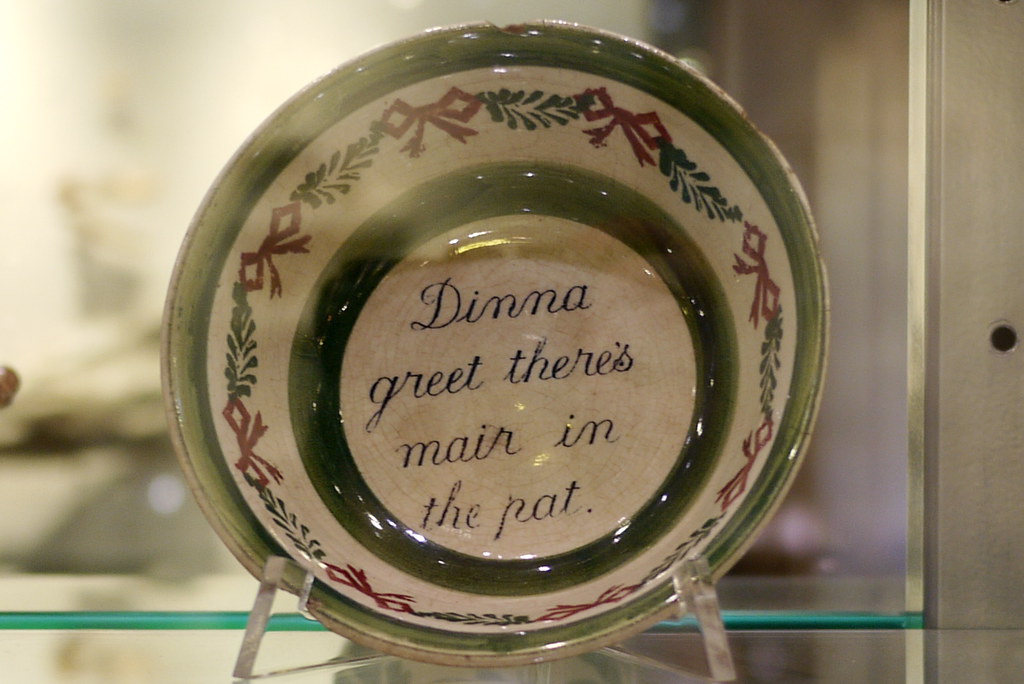
Greet - cry

"Don't cry, there's more in the pot."

Gubbit (gubbed) - beaten, thrashed, broken
Haud - hold (as in: 'Haud yer wheesht!' Hold your wheesht; Be quiet!)
Haver - talk nonsense (as in The Proclaimer's song "And when I'm haverin," in I Would Walk 500 Miles)
Hen - a familar (but also somewhat patronising, depending on context) way of addressing a woman, a term of endearment. "Dinnae fash yersel' hen" Don't bother yourself, hen/Don't go to any trouble, hen
Het - heated (as in 'Het Pint'); het up - worked up 
Hoachin - absolutely rotten, maggot-ridden
Hoodie - a type of crow, but also used as a general term for all kinds of corvids
Howfin - stinking; also: howling
Howk - dig, gouge
Ilka - every
Keek - look; 'keek!' is a Scots equivalent of 'peekaboo!' with babies
Ken - know, understand (as in: 'Ah dinna ken' I don't know; 'Ah ken fine damn well' I understand perfectly
Kich (or keech) - shit
Leid - language
Licht - light (and as such: bricht - bright, nicht - night etc)
Lum - chimney (as in: 'Lang may lum reek!' Long may your chimney smoke; wishing someone the continued prosperity to be able to keep their fire going strong)
Mawkit (maukit) - literally, it refers to maggots (mawks), it's used to refer to something that's absolutely rotten, filthy; often used to describe children (as in: 'Lookit ye, yer mawkit!')
Mickle - a lot, a great amount
Mind - remember (as in: 'Dae ye mind yon lassie?' Do you remember that girl (over there)?
Mingin - stinking
Neuk - corner (nook)
Ony - any
Piece - slice of bread with something on it, or a sandwich; pieces and jam/jeely piece - jam sandwich
Peely wally - pale, sickly-looking
Plook - spot (acne)
Shoogle - shake, bounce (as in, 'Am shooglin the wee bairn oan ma knee' I'm bouncing the baby on my knee); also shooglie - shaky
Skelp - smack (as in: 'Wheest, or Ah'll gie ye a skelp aroun yer heid!' Quiet, or I'll give you a smack around the head!)  
Skelpit - smacked
Sic - such
Sleekit - sly, cunning, slick
Sook - suck; someone who ingratiates themselves, sucks up, an affectionate animal ('Ya wee sook')
Tattie (tottie) - potato
Telt - told
Thegither - together
They - those (as in: 'See they weans' See those children)
Thrawn - stubborn, obstinate, contrary, difficult or awkward; misshapen, twisted
Toaty - tiny (as in: 'toaty wee footsies')
Unco - strange, unknown, odd, great, or as an adverb: very
Wan - one
Wean - child (possibly a contraction of 'wee ane' - wee one; or else referring to a child that has now been weaned (although it's not pronounced the same) according to some) 
Wheesht - hush, shush. Also found in Gàidhlig - 'Ist a-nis!' Hush now
Widnae - would not (also dinna - didn't, wisnae - wasn't etc)
Yin - one (referring to someone, a thing); Big Yin (Big One - a nickname for the comedian Billy Connolly)

And finally, some insults and swear words (consider yourself warned!). These are generally applied liberally in conversations, and calling someone such names can be a term of endearment or an insult depending on the context. There aren't many words that are considered to be extremely taboo, and the 'f' and the 'c' word tend to get thrown around a lot in social conversation, almost of like a form of punctuation:

Bampot - someone who's a bit daft, crazy, a silly idiot
Bawbag - ballbag (i.e. scrotum) also bawheid, fanny baws, cunty baws
Besom - a difficult woman. Can also be used affectionately - 'Ye daft besom' 
Clarty (or in Glasgow, 'clatty') - dirty; may also be used to describe a lady of loose morals
Cuntit - 'Cunted' - as in pissed (drunk) to the extreme, paralytic, exhausted
Daftie - a harmless idiot, silly
Dobber - idiot, tosser, wanker (kinda rude, associated with a penis; in England 'dobber' can refer to someone who tells tales, so be careful!)
Dunderheid - idiot, simpleton
Eejit - idiot
Erse - arse ('A face like a skelpit erse' - A face like a slapped arse)
Fud - 'the female genitalia'; less harsh than calling someone the 'c' word; an idiot
Jobbie - turd
Numpty - fool, moron
Nyaff - an irritating person
Pish - piss; can be used in a variety of ways, e.g. not very good ('That's pish!'), nonsense ('Yer talkin' pish'), an expression of disdain, pished - drunk, annoyed
Scunner - nuisance, or else a bore, sickening or disgusting person
Teuchter - a pejorative term for a country person, north of the central belt (especially in the sense of a Gàidhlig speaker)
Tollie - turd
Tube - (pronounced 'choob') idiot, tosser

Friday, 25 November 2011

Pottering about

Not much doing at the moment, except pottering about here and there and trying to avoid the wind and rain outside at all costs. And the usual stuff that any full time parent does each day...Yes, it's a veritable rollercoaster of fun round here.

So I've done some more tweaking and updating on the website, and I've added a chunk more to the Article Downloads page. A good one in particular I came across is Space and Time in Irish Folk Rituals and Traditions, which has some interesting stuff on various festivals and wake traditions. It's an interesting read, and has some good pointers to further reading as well.

Other tinkering about includes a reworking and republishing of the So what do you believe? article, and after searching through some old articles I found a bit on the origin of the word frìth, which is usually said to be Norse in origin, but John MacInnes claims is, in fact, Gàidhlig after all. I added that into the Frìth essay on the website, and also went about tweaking the Saining article to correct a few bits and pieces that have needed seeing to for a while now.

It's St Andrew's Day next Wednesday so the local school is getting well-prepared for the celebrations (although they'll be on strike on the actual day, so I'm not sure if they'll move the celebrations to before or after). In preparation for the day, my eldest, Tom, is learning a smattering of Scots. So far I've been reliably informed that a dog is a doug, a cow is a coo, and a crow is a craw. He's very proud of his command of his newfound command of the dialect.