There's only so much colouring in and drawing a parent can take of an afternoon, so yesterday I took my youngest off into Greenock after she finished nursery, to kill some time before we had to go and get the elder sibling from school. We had some books from the library that were long overdue so those got returned, and we took a nose around the library to see how good their history section was. The answer was not great, but I did pick up a few books to have a gander at when I got home. Hurrah.
My current in-teh-leck-choo-al reading is JP Mallory's Aspects of the Táin, which I got from my last trip to the university library, but it's slow going and a little dry so far, so some lighter reading is in order, I think. My brain can handle that. So from my trip to the local library yesterday, I got a book on modern Hogmanay celebrations, a book on Scottish Nursery Rhymes, and one of The Making of Scotland series that I haven't read yet. The latter is one of those short and glossy type of books with lots of pictures in it, so it's been a quick read, and as it deals with the Picts, it's been an enjoyable one. Time for a review, before I forget.
Surviving in Symbols: A Visit to the Pictish Nation
Martin Carver
As part of The Making of Scotland series, there are a few things I expected of this book: A straightforward, easy read, covering the basics; lots of pictures and illustrations; and a few problems with proof-reading here and there (but no biggy). And that was pretty much what I got...
Of the other books I've read in the series, I'm not sure this is one of the better ones - although I suspect my vague disappointment here is more because this is a subject I enjoy, so there was a lot of things I wanted to see being discussed. You can only fit so much in.
There is still a lot of good stuff packed in here, but there are a few bits and pieces in the book that I think could have been done better, on the whole. For one, I would have thought putting the Picts into context - who they were, when they were, where they were, and addressing or challenging some of the common misconceptions about them would have been a good thing to start with. But apparently not. As a result, I found the introduction a little dense, jumping straight into Columba and Adomnán, Bede and Northumbrians. Don't be put off, though.
The first illustration in the book is a tattooed artisan, carving Pictish symbols onto stone, with the accompanying blurb suggesting: "They may have carried their patterns in their heads, but here we speculate that some images at least were carried on their bodies, by one of the very oldest forms of picture-making - tattooing with natural dyes." I take this to be an oblique reference to woad tattoos (because everybody knows the Picts were covered head to toe in woad tattoos - Mel Gibson and Keira Knightly said so, so it must be true...), but at no other point in the book is the issue raised or even mentioned. It's pointed out that as 'Picti' they were known as 'the Painted People', but that's about it. It would have been nice to see some discussion of what this meant, and what other evidence there is, if any, for something that's now so ingrained in how people see them. In a way, though, maybe it's understandable in trying to lift the Picts out of their quagmire of woad.
Aside from that, the meat of the book is good. The author makes the point that the Picts were just like anyone else at the time; they were (to all intents and purposes) Britons, not some sort of pre-Celtic, non-Indo European, matriarchal, Bronze Age relics. They spoke a Celtic language, as far as we can ascertain, but one that had probably evolved differently to their Brythonic neighbours further south. Their material culture was distinctive, but not so different from anyone else. They drew heirs from matrilineal lines when needed, just like their contemporaries elsewhere did. They were not a different, separate race, but at some point, they could have been considered to be a nation.
Carver looks at the issue of the 'Pictish oghams', Pictish monuments, the conversion to Christianity, how they lived, and where, and for the most part it's well done. He gives a good introduction to the basics without being too biased in favour of one theory or another, but does point out what is most commonly accepted by academics. For someone who isn't so sure of the subject, this does a good job of building a solid foundation for further study.
To a degree, some of this is out of date now - there's no mention of the Pictish symbols possibly being a laguage, for example, since the book is now eleven years old. But there is some discussion of things I've not seen widely discussed elsewhere - like the issue of the 'Pictish' oghams being Pictish at all, as well as a good overview of Pictish burial practises. The author is certainly at his best when dealing with archaeology, as an archaeologist himself.
As a gentle introduction to the subject, it does a good job. It's short, but to the point, and the pictures and illustrations help to break it all up a little and give more detail in some of the most important areas that are covered. The book covers the main points, and throws in a good bit extra here and there, and gives a good list for further reading, and really, that's all you can ask for.
For the most part, if it falls short at certain points it's because there isn't enough space to go into more detail, rather than things being just plain inaccurate, but as far as this is concerned, I did feel the book was too focused on the Picts' relationship with their neighbours - Northumbrians especially - rather than their own internal politics and make up. I would liked to have seen more about that, but then again the focus does help to show that they weren't mythical blue wee people that nobody else in the early medieval world ever happened to mention...
References would have been nice, though. And an index.
Wednesday, 15 September 2010


Thursday, 9 September 2010
Yup, another update...and some other thoughts
After getting the last few articles on the festivals finished off, I've put together some thoughts on celebrating Midsummer and Là Fhèill Mìcheil, which you can find here:
Celebrating Midsummer
Celebrating Là Fhèill Mìcheil
And after some moderate success with my attempts at making a modern version of the traditional strùthan, I've added the recipe to the long list of other varieties of bannocks. If I ever manage to get hold of some barley meal I'd like to try some barley bannocks, but otherwise that section is finished for now as well, I think. Purty picture included:
Strùthan
While I was doing the article on Là Fhèill Mìcheil I got to thinking about how to go about ritualising it - there's a lot to work with in terms of maybe trying to back-engineer some sort of ritual based on Carmichael's description of it in particular, but I have some reservations about that and I've run into a bit of a dead end with my attempts. In particular, it kind of feels a little bit like I'm trying to 'pick' a deity to fit the festival, but it really does seem that Manannán is a good fit. He and Michael seem to share a lot of similarities - associations with horses, the sea, a shield....Maybe that's just my personal bias, seeing as he's a god I tend to have a lot to do with, and I've been reading about him a lot lately. It kind of raises a few questions, though (assuming I'm onto something), especially considering his firmer associations with Midsummer. Perhaps my biggest problem in attempting anything like this is that I don't really emphasise the 'lesser' festivals in my practices, so I'm probably not the best person to try. And liturgy has never been one of my strong points.
In the meantime, though, I've got to thinking about cheery things like death and the afterlife...So I started working on an article about that, during my kid-free mornings, and realised that it really needed to be two articles. Surprisingly, I got long winded. How unusual.
The first one I've done is called:
Afterlife and Ancestors
I've tried to look at as many sources as I possibly can, as I usually do, but I'm sure there's a lot more I could've added, and hopefully will over time as things come to my attention. For once, it's sadly lacking in anything specifically Scottish, so it would be good to think more on that, but what little there is that I found is almost identical to the Irish sources anyway (not exactly shocking).
Gàidhlig lessons will be starting again soon, so I really need to start going over my last year's worth of lessons before they start. I've been a thoroughly bad and neglectful student over the summer, it has to be said. Bad Seren.
Celebrating Midsummer
Celebrating Là Fhèill Mìcheil
And after some moderate success with my attempts at making a modern version of the traditional strùthan, I've added the recipe to the long list of other varieties of bannocks. If I ever manage to get hold of some barley meal I'd like to try some barley bannocks, but otherwise that section is finished for now as well, I think. Purty picture included:
Strùthan
While I was doing the article on Là Fhèill Mìcheil I got to thinking about how to go about ritualising it - there's a lot to work with in terms of maybe trying to back-engineer some sort of ritual based on Carmichael's description of it in particular, but I have some reservations about that and I've run into a bit of a dead end with my attempts. In particular, it kind of feels a little bit like I'm trying to 'pick' a deity to fit the festival, but it really does seem that Manannán is a good fit. He and Michael seem to share a lot of similarities - associations with horses, the sea, a shield....Maybe that's just my personal bias, seeing as he's a god I tend to have a lot to do with, and I've been reading about him a lot lately. It kind of raises a few questions, though (assuming I'm onto something), especially considering his firmer associations with Midsummer. Perhaps my biggest problem in attempting anything like this is that I don't really emphasise the 'lesser' festivals in my practices, so I'm probably not the best person to try. And liturgy has never been one of my strong points.
In the meantime, though, I've got to thinking about cheery things like death and the afterlife...So I started working on an article about that, during my kid-free mornings, and realised that it really needed to be two articles. Surprisingly, I got long winded. How unusual.
The first one I've done is called:
Afterlife and Ancestors
I've tried to look at as many sources as I possibly can, as I usually do, but I'm sure there's a lot more I could've added, and hopefully will over time as things come to my attention. For once, it's sadly lacking in anything specifically Scottish, so it would be good to think more on that, but what little there is that I found is almost identical to the Irish sources anyway (not exactly shocking).
Gàidhlig lessons will be starting again soon, so I really need to start going over my last year's worth of lessons before they start. I've been a thoroughly bad and neglectful student over the summer, it has to be said. Bad Seren.
Sunday, 5 September 2010
Book review: Irish Wake Amusements
O frabjous day! I've put my back out. Aren't I lucky?
Woe, woe is me! I'd probably be throwing myself dramatically onto a conveniently placed piece of furniture at this point, so I can sob loudly and pathetically for effect, but that would hurt. And also mean I'd have to be standing up. Or at least sitting somewhere strategic...Neither is an option right now.
But while I have nothing better to do than lie around feeling sorry for myself, at least I have some reading time on my hands. Which leads me to my next review:
Irish Wake Amusements
Seán Ó Súilleabháin
I read Ó Súilleabháin's other book, Irish Folk Custom and Belief a while ago and really enjoyed it, so I had high hopes for this one. Overall, I wasn't disappointed. As far as readability is concerned.
This book is short and sweet again, written in the same conversational style, and well referenced. It's a good, quick read that covers all of the basics of the subject, plus a bit more, although as with the last book, Ó Súilleabháin could have probably written something four times the size and still not covered anything. I have to say, though, this book doesn't feel as broad-brushed as Irish Folk Custom and Belief did, so I've come away feeling a lot more satisfied this time.
It's not the cheeriest of subjects to read about, but it's an interesting one, especially for someone like me who's been brought up in a very different sort of environment, where death is sidelined and kept quiet and solemn. Not so here.
Ó Súilleabháin keeps a tight focus on the basics - what happens before the wake starts, what happens when people join the wake, the kind of hospitality that is given and expected from the family of the deceased, and then goes on to the main part of the book - the wake amusements. He splits them all up into different types of amusements or games and devotes a chapter to each one, and then goes on to look at the reaction of the Church and how they tried to clamp down on the practice over the centuries - with little success - followed by an examination of the origins of customs. It was at this point that some of the problems became apparent with the book, since it wasn't so much an attempt at looking at the possible origins, but more defending folk's behaviour in these bygone times. They didn't know any better, these rustic folk, is the general gist, but in these enlightened times, we are all good Christians now, and do it properly...
This is a very sanitised version of events, in amongst all the detail. Having read elsewhere on the subject I've seen mention of far ruder and rougher games being played at Irish wakes (in E Estyn Evans' Irish Folk Ways, who says they're far too obscene to commit to paper) than Ó Súilleabháin describes here, and it seems that Ó Súilleabháin is actively trying to play this element down. There is the occasional mention of lewd or obscene behaviour, or the potential for it, but no details. It's almost as if you can tell that such things are mentioned in hushed tones, if that's possible in print.
Clearly, Ó Súilleabháin is writing to a particular audience. Clearly, someone who's read the book before me also thought that Ó Súilleabháin wasn't being entirely honest about everything - at one point, Ó Súilleabháin comments that modern wakes, where they are still practised, are devoid of drunkenness. "I'm sorry, but that's bollicks!"[sic] writes my anonymous friend in the margin. I have to agree.
It's a shame that the book falls a little short on this point, but overall it does have a lot of good stuff to offer (and to be fair to Ó Súilleabháin, he's not the only one who didn't want to go there). One of the most useful aspects of the book is the detail that Ó Súilleabháin gives for all of the games that he lists, because, as he points out, few of them are specific to wake occasions. Most of them are the general sort of parlour games that can be found on any festive occasion, and so from a Gaelic Polytheist perspective, they can be referenced when trying to add a competitive or simple fun element to festivities at Lùnastal (for example). Some of them are well known already - Blind Man's Buff, Hide the Slipper, variants on games like Simon Says, and so on. This is especially good for me, looking for inspiration for involving the kids, but as Ó Súilleabháin points out, these games were traditionally for anyone but the elderly.
Like any book, it can't be taken at face value, and with this caveat in mind it's a very informative, and useful, book to read if you want to do some research in this area. Unfortunately, it's definitely one of those books you'll have to get from the library, because for such a small book it comes with an incredibly hefty price tag as far as I've seen. Count yourself lucky if you see it going cheap, and snap it up.
Woe, woe is me! I'd probably be throwing myself dramatically onto a conveniently placed piece of furniture at this point, so I can sob loudly and pathetically for effect, but that would hurt. And also mean I'd have to be standing up. Or at least sitting somewhere strategic...Neither is an option right now.
But while I have nothing better to do than lie around feeling sorry for myself, at least I have some reading time on my hands. Which leads me to my next review:
Irish Wake Amusements
Seán Ó Súilleabháin
I read Ó Súilleabháin's other book, Irish Folk Custom and Belief a while ago and really enjoyed it, so I had high hopes for this one. Overall, I wasn't disappointed. As far as readability is concerned.
This book is short and sweet again, written in the same conversational style, and well referenced. It's a good, quick read that covers all of the basics of the subject, plus a bit more, although as with the last book, Ó Súilleabháin could have probably written something four times the size and still not covered anything. I have to say, though, this book doesn't feel as broad-brushed as Irish Folk Custom and Belief did, so I've come away feeling a lot more satisfied this time.
It's not the cheeriest of subjects to read about, but it's an interesting one, especially for someone like me who's been brought up in a very different sort of environment, where death is sidelined and kept quiet and solemn. Not so here.
Ó Súilleabháin keeps a tight focus on the basics - what happens before the wake starts, what happens when people join the wake, the kind of hospitality that is given and expected from the family of the deceased, and then goes on to the main part of the book - the wake amusements. He splits them all up into different types of amusements or games and devotes a chapter to each one, and then goes on to look at the reaction of the Church and how they tried to clamp down on the practice over the centuries - with little success - followed by an examination of the origins of customs. It was at this point that some of the problems became apparent with the book, since it wasn't so much an attempt at looking at the possible origins, but more defending folk's behaviour in these bygone times. They didn't know any better, these rustic folk, is the general gist, but in these enlightened times, we are all good Christians now, and do it properly...
This is a very sanitised version of events, in amongst all the detail. Having read elsewhere on the subject I've seen mention of far ruder and rougher games being played at Irish wakes (in E Estyn Evans' Irish Folk Ways, who says they're far too obscene to commit to paper) than Ó Súilleabháin describes here, and it seems that Ó Súilleabháin is actively trying to play this element down. There is the occasional mention of lewd or obscene behaviour, or the potential for it, but no details. It's almost as if you can tell that such things are mentioned in hushed tones, if that's possible in print.
Clearly, Ó Súilleabháin is writing to a particular audience. Clearly, someone who's read the book before me also thought that Ó Súilleabháin wasn't being entirely honest about everything - at one point, Ó Súilleabháin comments that modern wakes, where they are still practised, are devoid of drunkenness. "I'm sorry, but that's bollicks!"[sic] writes my anonymous friend in the margin. I have to agree.
It's a shame that the book falls a little short on this point, but overall it does have a lot of good stuff to offer (and to be fair to Ó Súilleabháin, he's not the only one who didn't want to go there). One of the most useful aspects of the book is the detail that Ó Súilleabháin gives for all of the games that he lists, because, as he points out, few of them are specific to wake occasions. Most of them are the general sort of parlour games that can be found on any festive occasion, and so from a Gaelic Polytheist perspective, they can be referenced when trying to add a competitive or simple fun element to festivities at Lùnastal (for example). Some of them are well known already - Blind Man's Buff, Hide the Slipper, variants on games like Simon Says, and so on. This is especially good for me, looking for inspiration for involving the kids, but as Ó Súilleabháin points out, these games were traditionally for anyone but the elderly.
Like any book, it can't be taken at face value, and with this caveat in mind it's a very informative, and useful, book to read if you want to do some research in this area. Unfortunately, it's definitely one of those books you'll have to get from the library, because for such a small book it comes with an incredibly hefty price tag as far as I've seen. Count yourself lucky if you see it going cheap, and snap it up.
Tuesday, 31 August 2010
Book review: The Waves of Manannán
It's taken two months of lunchtime reading, but I've finally finished MacQuarrie's Waves of Manannán. Given the time, effort, and several failed attempts previously to get stuck into it, I think I can safely say...This was my Everest.
But I'm very glad indeed to have conquered it. And now, may the gushing commence...
The Waves of Manannán
Charles MacQuarrie
This was a mammoth effort for me to get through, and not in a bad way, I'm glad to say. It's a book to take time over, to read in small doses and absorb, think about and let the flavours mature. The resulting stew is very tasty.
I can't say this is everything you'll ever want to know about Manannán, if you're interested in that sort of thing, but it's a damn good place to start. The primary focus of the book is on Manannán's portrayals in Irish myth and literature, and in this respect it tries to be as comprehensive as possible, given the constraints of a PhD dissertation.
MacQuarrie splits the material up into four 'waves', with the first wave detailing Manannán's earliest portrayals in myths (starting with Immram Brain, 'The Voyage of Bran'); the second wave dealing with his appearances in pseudo-history (including Lebor Gabála Érenn, 'The Book of Invasions', and the Dindshenchas, or 'Placename Folklore'); the third wave looking at his appearances in the Finn tales and folktales (including those from the Isle of Man); and the final wave, the 'new wave' focusing on modern Anglo-Irish literature, such as Lady Gregory, WB Yeats, and James Joyce. Because of this, there's not so much on anything Scottish - or as much as I would have liked (analysis of Manannán's possible links with Shony would've been nice...MacQuarrie mentions the possible connection between the ritual to Shony on Lewis, and Manannán, citing Hutton, but doesn't go into any depth), but this may be due to the time in which it was written.
Yes, it's academic - it's a PhD dissertation, so maybe that goes without saying, really (but I will anyway) - so you may find it dry in places. Or if not dry, then dense and a little on the heavy side if you're not used to this sort of thing. Where MacQuarrie does get into detailed academic analysis, he does a good job of explaining things and doesn't rely on Teh Big Wurdz and confuse the reader with jargon, but still, it's not the sort of book I'd recommend for a beginner.
Because it's primarily a literary view, the emphasis is on how Manannán is portrayed in the tales and literature, and how this changes over time, so if you're looking for a manual as far as how to relate to Manannán as a god then you'll be disappointed. The final section, after the 'waves', is titled Beginnings and Endings, and this was the most interesting part for me, looking at Manannán's origins in particular. MacQuarrie suggests that Manannán takes his name from the Isle of Man (rather than lending his name to it), and was probably so named, or 'invented' as MacQuarrie puts it, in around the fifth century A.D. with the role of being a divine father for the Dalriadan king Mongán mac Fiachna. It's certainly food for thought, even if I'm not entirely convinced of all of MacQuarrie's conclusions, here.
MacQuarrie deals with a lot of myths that most people won't be familiar with, but does a good job of giving the general gist of the plot so you can keep up with the points he wants to make. He writes well and is engaging, but shortens the names of the tales to just their initials for brevity's sake - this is understandable, but it can be a little confusing at times when you're not familiar with the name of the tales in the first place, so I found that a bit distracting in places. Handy hint: there's a list of tales at the back of the book...
The biggest downside to this book - aside from the complete lack of any indexing (boo!) - is the price and its availability; I can't really justify the expense of buying a copy myself (much as I'd like to) and it's not necessarily widely available in academic libraries. However, if you do get your hands on a copy, then do give it a go, and give it a go from cover to cover. You'll miss out on an awful lot otherwise.
But I'm very glad indeed to have conquered it. And now, may the gushing commence...
The Waves of Manannán
Charles MacQuarrie
This was a mammoth effort for me to get through, and not in a bad way, I'm glad to say. It's a book to take time over, to read in small doses and absorb, think about and let the flavours mature. The resulting stew is very tasty.
I can't say this is everything you'll ever want to know about Manannán, if you're interested in that sort of thing, but it's a damn good place to start. The primary focus of the book is on Manannán's portrayals in Irish myth and literature, and in this respect it tries to be as comprehensive as possible, given the constraints of a PhD dissertation.
MacQuarrie splits the material up into four 'waves', with the first wave detailing Manannán's earliest portrayals in myths (starting with Immram Brain, 'The Voyage of Bran'); the second wave dealing with his appearances in pseudo-history (including Lebor Gabála Érenn, 'The Book of Invasions', and the Dindshenchas, or 'Placename Folklore'); the third wave looking at his appearances in the Finn tales and folktales (including those from the Isle of Man); and the final wave, the 'new wave' focusing on modern Anglo-Irish literature, such as Lady Gregory, WB Yeats, and James Joyce. Because of this, there's not so much on anything Scottish - or as much as I would have liked (analysis of Manannán's possible links with Shony would've been nice...MacQuarrie mentions the possible connection between the ritual to Shony on Lewis, and Manannán, citing Hutton, but doesn't go into any depth), but this may be due to the time in which it was written.
Yes, it's academic - it's a PhD dissertation, so maybe that goes without saying, really (but I will anyway) - so you may find it dry in places. Or if not dry, then dense and a little on the heavy side if you're not used to this sort of thing. Where MacQuarrie does get into detailed academic analysis, he does a good job of explaining things and doesn't rely on Teh Big Wurdz and confuse the reader with jargon, but still, it's not the sort of book I'd recommend for a beginner.
Because it's primarily a literary view, the emphasis is on how Manannán is portrayed in the tales and literature, and how this changes over time, so if you're looking for a manual as far as how to relate to Manannán as a god then you'll be disappointed. The final section, after the 'waves', is titled Beginnings and Endings, and this was the most interesting part for me, looking at Manannán's origins in particular. MacQuarrie suggests that Manannán takes his name from the Isle of Man (rather than lending his name to it), and was probably so named, or 'invented' as MacQuarrie puts it, in around the fifth century A.D. with the role of being a divine father for the Dalriadan king Mongán mac Fiachna. It's certainly food for thought, even if I'm not entirely convinced of all of MacQuarrie's conclusions, here.
MacQuarrie deals with a lot of myths that most people won't be familiar with, but does a good job of giving the general gist of the plot so you can keep up with the points he wants to make. He writes well and is engaging, but shortens the names of the tales to just their initials for brevity's sake - this is understandable, but it can be a little confusing at times when you're not familiar with the name of the tales in the first place, so I found that a bit distracting in places. Handy hint: there's a list of tales at the back of the book...
The biggest downside to this book - aside from the complete lack of any indexing (boo!) - is the price and its availability; I can't really justify the expense of buying a copy myself (much as I'd like to) and it's not necessarily widely available in academic libraries. However, if you do get your hands on a copy, then do give it a go, and give it a go from cover to cover. You'll miss out on an awful lot otherwise.
Monday, 30 August 2010
Lùnastal, finally...
Say hello to my little friend...
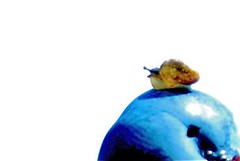
So finally, autumn has arrived; fruits are ripening, the air is getting cooler, the trees are changing colour, the wind is picking up, and the sea is getting choppy. And this little baby snail was having a grand old time on one of the blueberries the kids and I picked earlier this week, our first batch of blueberries this year. The main crop is yet to come, but the ones we've had so far have been delicious.
As you can see, the snail agrees.
Given the theme of the season, first fruits have been high on the agenda for our celebrations, so there's been a lot of fruit picking and tending of vegetables recently. The last week or so has seen the ushering in of some successes - blueberries and blackberries, along with the first harvest of my very own onions and beetroots - along with a multitude of flail. The biggest fail has been the broccoli so far - there's still quite a few things yet to ripen, but the broccoli came along great until I decided that nooooo, it didn't look like it does in the shop, so it'll surely bush out a little if I leave it.
Not so much. But the flowers are pretty. Cheerfully yellow, in fact.
The actual celebrations started on Thursday evening, with the main event taking place on Friday, and the usual was had - feasting and rites, baking and harvesting. Since it all happens to have coincided with Tom starting school, and Rosie starting nursery, we've naturally been afflicted with the lurgy (or a cold, in common parlance) within the space of a week, so our communal efforts were somewhat muted. I'd had high hopes for our games and the things we could all do together, but with us all being under the weather, and Rosie in particular, there was a limit to what we could do.
So with the kids there was fruit picking and marvelling at spiders, followed by scooter races (somewhat short-lived due to frayed and lurgied sensibilities of somebody having to actually lose...), and all sorts of competitions the kids were keen on taking part in. Mr Seren was out for the evening, so before bedtime and after the feasting, we had a dance-off, too, and picked some flowers from the garden for seasonal decorations. Although as far as the dance-off was concerned, I'm not sure Tom's penchant for break-dancing versus Rosie's current obsession with ballet was an entirely level playing field.
To start it all off, though, I did some experimenting with the struan recipe I tried a while ago, and had a much better outcome this time. Behold!
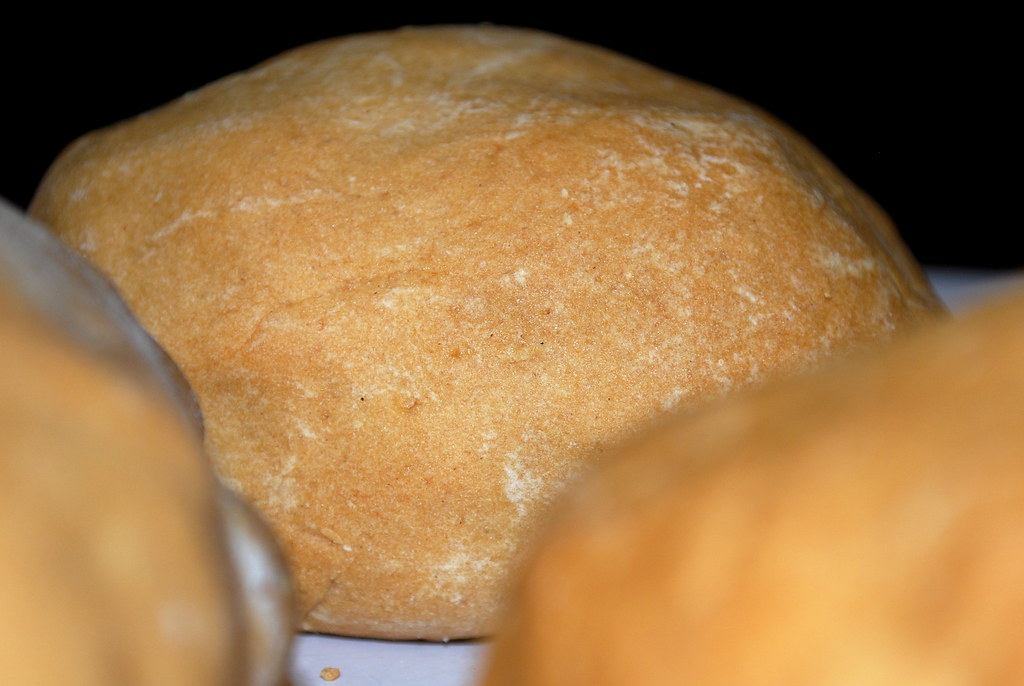

In my first attempt I did it too thick, and wasn't sure if making a dough for the coating was really workable so tried a paste instead. The results were passable, but kind of bricklike once cooled...I figured that I should try them much thinner this time, and kind of succeeded in that respect, although based on the treacle bannocks I've seen, that are popular in the Dumfries and Galloway area, and seem pretty similar in style, they should still be a wee bit thinner if possible. And for the coating, given the recipe I was using (from Margaret Fay Shaw), I figured the description of a dough was for a reason, so a dough I'd try. It was a little fiddly, but worth it; even when they've cooled, they're still edible.
The struans I made on Thursday evening, with the games and feast scheduled for the day after. I was hoping to go brambling with the kids during the day of our 'official' celebrations, but that never happened, given their lurgied and somewhat miserable state. Still and all, there was much excitement about our feast, and the blackberry, raspberry and blueberry crumble that was to follow for dessert in particular. It didn't look like much, but it was tasty.
We had the grand unveiling of our latest seasonal picture, as well, which we did during the week. I ended up going for the apple tree idea, and decided to make the tree itself out of modelling clay, so while I sculpted a vague approximation of a tree shape, Tom and Rosie decided they'd much rather make their own sculptures. Rosie ended up with a vase (with a little help from me to shape it), and Tom ended up with a blob, that he then cheerfully decorated to look like a hillock with a big loch in the middle. Me, I did the tree and decorated it with (vague approximations of) triskeles, and got the kids to help me paint and glitter up some tiny shells we'd collected from the beach, to make the Otherworldly apples:

With the feasting and fun done, the kids in bed and Mr Seren out for the evening, I got down to my personal devotions. Usually I like to go to a local promontory to make offerings, but not being able to leave the kids, I had to make do with offerings in the garden. I sained the house and was going to make some rowan charms but my rowan has gone missing. Instead, I had to make do with fixing a charm that had come apart a little during the recent redecoration of the living room, and I decided to use a red cow-shaped bead to make a charm for my hobhouse. It's about the only place I haven't made a charm for, so even though it was a complete whim, it seemed rude not to do something once I'd thought of it.
I made my devotions to Lugh and even tried my hand at some (bad) praise poetry. Which was well-received, I think, if only for the fact that I was probably being humoured for my honest intent on that score at the least. But all in all, it felt good to be celebrating; it felt good to be finally doing after waiting for so long. Sometimes I think that in a way, this festival is a lesson in patience for me. After sowing, growing, tending and waiting, that final point of ripening seems to take forever, but the end result is always something to look forward to.
Sleep was restless and broken when it came, and I woke up ridiculously early. After wasting an hour trying to kid myself that my headache would miraculously disappear and I could sleep again, I got up around 5.30am and went in search of painkillers, and then as I was ruminating hopefully on my impending pain relief I went to the window and saw a fox happily chomping down on the lamb joint I'd left out as an offering, with Grumble (one of our cats) sat nearby, watching, as if to say "I could have that off you if I wanted to, you know." Even though it could see me watching, it wasn't phased, just threw a glance or two my way while it ate. The fox took its merry time, though, and sauntered off underneath the fence once it was done.
And that was that, really.
So finally, autumn has arrived; fruits are ripening, the air is getting cooler, the trees are changing colour, the wind is picking up, and the sea is getting choppy. And this little baby snail was having a grand old time on one of the blueberries the kids and I picked earlier this week, our first batch of blueberries this year. The main crop is yet to come, but the ones we've had so far have been delicious.
As you can see, the snail agrees.
Given the theme of the season, first fruits have been high on the agenda for our celebrations, so there's been a lot of fruit picking and tending of vegetables recently. The last week or so has seen the ushering in of some successes - blueberries and blackberries, along with the first harvest of my very own onions and beetroots - along with a multitude of flail. The biggest fail has been the broccoli so far - there's still quite a few things yet to ripen, but the broccoli came along great until I decided that nooooo, it didn't look like it does in the shop, so it'll surely bush out a little if I leave it.
Not so much. But the flowers are pretty. Cheerfully yellow, in fact.
The actual celebrations started on Thursday evening, with the main event taking place on Friday, and the usual was had - feasting and rites, baking and harvesting. Since it all happens to have coincided with Tom starting school, and Rosie starting nursery, we've naturally been afflicted with the lurgy (or a cold, in common parlance) within the space of a week, so our communal efforts were somewhat muted. I'd had high hopes for our games and the things we could all do together, but with us all being under the weather, and Rosie in particular, there was a limit to what we could do.
So with the kids there was fruit picking and marvelling at spiders, followed by scooter races (somewhat short-lived due to frayed and lurgied sensibilities of somebody having to actually lose...), and all sorts of competitions the kids were keen on taking part in. Mr Seren was out for the evening, so before bedtime and after the feasting, we had a dance-off, too, and picked some flowers from the garden for seasonal decorations. Although as far as the dance-off was concerned, I'm not sure Tom's penchant for break-dancing versus Rosie's current obsession with ballet was an entirely level playing field.
To start it all off, though, I did some experimenting with the struan recipe I tried a while ago, and had a much better outcome this time. Behold!
In my first attempt I did it too thick, and wasn't sure if making a dough for the coating was really workable so tried a paste instead. The results were passable, but kind of bricklike once cooled...I figured that I should try them much thinner this time, and kind of succeeded in that respect, although based on the treacle bannocks I've seen, that are popular in the Dumfries and Galloway area, and seem pretty similar in style, they should still be a wee bit thinner if possible. And for the coating, given the recipe I was using (from Margaret Fay Shaw), I figured the description of a dough was for a reason, so a dough I'd try. It was a little fiddly, but worth it; even when they've cooled, they're still edible.
The struans I made on Thursday evening, with the games and feast scheduled for the day after. I was hoping to go brambling with the kids during the day of our 'official' celebrations, but that never happened, given their lurgied and somewhat miserable state. Still and all, there was much excitement about our feast, and the blackberry, raspberry and blueberry crumble that was to follow for dessert in particular. It didn't look like much, but it was tasty.
We had the grand unveiling of our latest seasonal picture, as well, which we did during the week. I ended up going for the apple tree idea, and decided to make the tree itself out of modelling clay, so while I sculpted a vague approximation of a tree shape, Tom and Rosie decided they'd much rather make their own sculptures. Rosie ended up with a vase (with a little help from me to shape it), and Tom ended up with a blob, that he then cheerfully decorated to look like a hillock with a big loch in the middle. Me, I did the tree and decorated it with (vague approximations of) triskeles, and got the kids to help me paint and glitter up some tiny shells we'd collected from the beach, to make the Otherworldly apples:
With the feasting and fun done, the kids in bed and Mr Seren out for the evening, I got down to my personal devotions. Usually I like to go to a local promontory to make offerings, but not being able to leave the kids, I had to make do with offerings in the garden. I sained the house and was going to make some rowan charms but my rowan has gone missing. Instead, I had to make do with fixing a charm that had come apart a little during the recent redecoration of the living room, and I decided to use a red cow-shaped bead to make a charm for my hobhouse. It's about the only place I haven't made a charm for, so even though it was a complete whim, it seemed rude not to do something once I'd thought of it.
I made my devotions to Lugh and even tried my hand at some (bad) praise poetry. Which was well-received, I think, if only for the fact that I was probably being humoured for my honest intent on that score at the least. But all in all, it felt good to be celebrating; it felt good to be finally doing after waiting for so long. Sometimes I think that in a way, this festival is a lesson in patience for me. After sowing, growing, tending and waiting, that final point of ripening seems to take forever, but the end result is always something to look forward to.
Sleep was restless and broken when it came, and I woke up ridiculously early. After wasting an hour trying to kid myself that my headache would miraculously disappear and I could sleep again, I got up around 5.30am and went in search of painkillers, and then as I was ruminating hopefully on my impending pain relief I went to the window and saw a fox happily chomping down on the lamb joint I'd left out as an offering, with Grumble (one of our cats) sat nearby, watching, as if to say "I could have that off you if I wanted to, you know." Even though it could see me watching, it wasn't phased, just threw a glance or two my way while it ate. The fox took its merry time, though, and sauntered off underneath the fence once it was done.
And that was that, really.
Subscribe to:
Posts (Atom)