A quick note on some new articles I've just put up on Tairis:
Making a dealbh Bride - Some ideas on making an icon of Bride in time for Là Fhèill Brìghde, with pictures. Hopefully I'll update it soon enough when I make this year's icon.
The Dadga in Myth, History and Pseudo-history
Part One
Part Two
Part Three
This was originally a dissertation, and the version I've published here is a slight reworking I did in preparation for publication in a journal. Sadly it was never published, seeing as the journal never managed to publish another issue, so I thought I'd put it out into cyberspace myself.
As I've noted on each page there's a lot I'd change in it now, nearly ten years on, but given a lack of resources that's not a job I can do properly just now. Maybe one day. It's by no means definitive either - there was a pretty strict word limit I had to stick to, so there was a lot that didn't get as much attention as it needed.
So err...enjoy.
Sunday, 24 January 2010


Tuesday, 19 January 2010
Hogmanay
It seems I kind of forgot to post about Hogmanay...
There's no denying I've had a lot of things going on in the past year that I'm glad to see the back of, if at all possible, so I was quite keen on celebrating Hogmanay. To me it's about renewal, as much as it's a farewell, and I suppose you might say I'm deeply superstitious about some things. Starting the New Year is one of them: I'd like to start on a positive note in the hopes that it carries through for the year, at the least.
So on the 31st, as the bells approached, Mr Seren and I were together, waiting for the bells. We rang them in with BBC Alba, drank a toast and did the usual, and then I ran outside to see the fireworks. I had some offerings to put out too, so it was good timing, and evidently all the noise had disturbed a bird or two because a crow flew down and perched on the fence right in front of me - some coincidence, I'd say. We looked at each other for a moment, and there was one of those pregnant pauses before the moment broke. It felt like Badb was making herself known and I wondered what that meant (and I've been pondering since). I stayed outside for a bit, but nothing else happened.
I did my devotions, sained the house and everyone in it, and eventually went to bed. I couldn't get comfy though, I had a cold coming on and I was achy and still hyperactive from everything. In the end I got up, without having had more than an hour's broken sleep, and pottered about the house, meditated, and eventually saw the sunrise in. Mr Seren lasted until about 3am - he was trying to stay up too, like he usually does, but he was just too tired and we were going over to the in-laws the next day anyway, so he needed to be fit to drive.
I was hoping to perform the frìth again, but I was in two minds about it. On the one hand I felt that my crow-sighting was a sign enough, but on the other hand I wanted to do it 'properly'. The kids were up before the sun was, though, so in spite of my best efforts it just didn't work. Unless you count being interrupted by Rosie because she wanted help putting her fairy wings on (in which case...fuck). I swear, those things breed in this house. I did see the moon setting, though, which made a nice symmetry to how I started my celebrations the night before - seeing the moon rise, and then the partial eclipse. But all in all it wasn't so much portentous - or as portentous - as just rounding things off a bit.
I managed to grab a catnap or two before we went to the in-laws, with some freshly made Yethol bannocks as a first-footing gift, and we had the obligatory steak pie, lots of chat about the impending wedding, and (for the kids at least) far too many sweeties. It was good fun, even though I was absolutely knackered by the end of it all. Rosie had to have a reassurring cuddle when Doctor Who started regenerating, it was all a bit confusing for her (not least because we were shouting at the TV because it was so overblown...GET ON WITH IT!!!!).
Anyway, seeing as my mother-in-law gave me a surprise windfall, I've spent most of it on some new clothes (that fit, yay!) and so on, but I also allowed myself a little splurge on some books. I got a Gaelic book to help me with my studies, and a book on Irish Food and Folklore (which sounded good, but is mostly disappointing. I tried the recipe for an Irish Curd Cheesecake and as I was working through the instructions, realised the author had neglected to mention when the cottage cheese was supposed to be added. It's the main bloody ingredient! Not hard to figure out, though, but shoddy work. The folklore was thoroughly lacking, superficial, and poorly researched for the most part, too). I also got two books on Scottish fairies - academic books, so I was bit more confident that they'd be good and meaty, and happily it seems I'm right. The first is Scottish Fairy Belief by Lizanne Henderson and Edward Cowan, which is kind of an introduction to the subject, and the second is Fantastical Imaginations: The Supernatural in Scottish History and Culture by Lizanne Henderson (edited by, anyway), which is a collection of essays on the subject. I'm nearly finished with the first and was pleased to find something that comes with good timing:
"The most interesting name of all, used to specifically denote the queen of the fairies, is NicNiven or Neven, which appears to derive from Neamhain, one of the Gaelic and Irish war furies better known as Badb. The matter is complex since Neamhain and Badb may represent different aspects of the same persona, but badhb in some Irish dialects is the word for the supernatural death messenger more familiarly known in Ireland and Scotland as the banshee, bean-sithe literally 'fairy-woman' in Gaelic. Badhb also means a hoodie-crow and carries the sense of 'deadly' or 'ill-fated'; it can also translate as 'witch', which is apposite since Scotland NicNiven was also queen of the witches. This intriguing name therefore, originated in the Gàidhealtachd whence it was imported into the Lowlands and even found its way to Shetland. W. B. Yeats was therefore incorrect when he stated that 'the gentle fairy presences' which haunted the imagination of his countrymen became 'formidable and evil as soon as they were transferred to Scottish soil', since this truly terrifying death messenger seems to be shared by both Ireland and Scotland while her associations give some indication of how the Scots regarded the fairy queen."
So lots for me to ponder, I think. I have to say, I'm really enjoying Scottish Fairy Belief, which is always happy-making.
There's no denying I've had a lot of things going on in the past year that I'm glad to see the back of, if at all possible, so I was quite keen on celebrating Hogmanay. To me it's about renewal, as much as it's a farewell, and I suppose you might say I'm deeply superstitious about some things. Starting the New Year is one of them: I'd like to start on a positive note in the hopes that it carries through for the year, at the least.
So on the 31st, as the bells approached, Mr Seren and I were together, waiting for the bells. We rang them in with BBC Alba, drank a toast and did the usual, and then I ran outside to see the fireworks. I had some offerings to put out too, so it was good timing, and evidently all the noise had disturbed a bird or two because a crow flew down and perched on the fence right in front of me - some coincidence, I'd say. We looked at each other for a moment, and there was one of those pregnant pauses before the moment broke. It felt like Badb was making herself known and I wondered what that meant (and I've been pondering since). I stayed outside for a bit, but nothing else happened.
I did my devotions, sained the house and everyone in it, and eventually went to bed. I couldn't get comfy though, I had a cold coming on and I was achy and still hyperactive from everything. In the end I got up, without having had more than an hour's broken sleep, and pottered about the house, meditated, and eventually saw the sunrise in. Mr Seren lasted until about 3am - he was trying to stay up too, like he usually does, but he was just too tired and we were going over to the in-laws the next day anyway, so he needed to be fit to drive.
I was hoping to perform the frìth again, but I was in two minds about it. On the one hand I felt that my crow-sighting was a sign enough, but on the other hand I wanted to do it 'properly'. The kids were up before the sun was, though, so in spite of my best efforts it just didn't work. Unless you count being interrupted by Rosie because she wanted help putting her fairy wings on (in which case...fuck). I swear, those things breed in this house. I did see the moon setting, though, which made a nice symmetry to how I started my celebrations the night before - seeing the moon rise, and then the partial eclipse. But all in all it wasn't so much portentous - or as portentous - as just rounding things off a bit.
I managed to grab a catnap or two before we went to the in-laws, with some freshly made Yethol bannocks as a first-footing gift, and we had the obligatory steak pie, lots of chat about the impending wedding, and (for the kids at least) far too many sweeties. It was good fun, even though I was absolutely knackered by the end of it all. Rosie had to have a reassurring cuddle when Doctor Who started regenerating, it was all a bit confusing for her (not least because we were shouting at the TV because it was so overblown...GET ON WITH IT!!!!).
Anyway, seeing as my mother-in-law gave me a surprise windfall, I've spent most of it on some new clothes (that fit, yay!) and so on, but I also allowed myself a little splurge on some books. I got a Gaelic book to help me with my studies, and a book on Irish Food and Folklore (which sounded good, but is mostly disappointing. I tried the recipe for an Irish Curd Cheesecake and as I was working through the instructions, realised the author had neglected to mention when the cottage cheese was supposed to be added. It's the main bloody ingredient! Not hard to figure out, though, but shoddy work. The folklore was thoroughly lacking, superficial, and poorly researched for the most part, too). I also got two books on Scottish fairies - academic books, so I was bit more confident that they'd be good and meaty, and happily it seems I'm right. The first is Scottish Fairy Belief by Lizanne Henderson and Edward Cowan, which is kind of an introduction to the subject, and the second is Fantastical Imaginations: The Supernatural in Scottish History and Culture by Lizanne Henderson (edited by, anyway), which is a collection of essays on the subject. I'm nearly finished with the first and was pleased to find something that comes with good timing:
"The most interesting name of all, used to specifically denote the queen of the fairies, is NicNiven or Neven, which appears to derive from Neamhain, one of the Gaelic and Irish war furies better known as Badb. The matter is complex since Neamhain and Badb may represent different aspects of the same persona, but badhb in some Irish dialects is the word for the supernatural death messenger more familiarly known in Ireland and Scotland as the banshee, bean-sithe literally 'fairy-woman' in Gaelic. Badhb also means a hoodie-crow and carries the sense of 'deadly' or 'ill-fated'; it can also translate as 'witch', which is apposite since Scotland NicNiven was also queen of the witches. This intriguing name therefore, originated in the Gàidhealtachd whence it was imported into the Lowlands and even found its way to Shetland. W. B. Yeats was therefore incorrect when he stated that 'the gentle fairy presences' which haunted the imagination of his countrymen became 'formidable and evil as soon as they were transferred to Scottish soil', since this truly terrifying death messenger seems to be shared by both Ireland and Scotland while her associations give some indication of how the Scots regarded the fairy queen."
So lots for me to ponder, I think. I have to say, I'm really enjoying Scottish Fairy Belief, which is always happy-making.
Thursday, 31 December 2009
Bliadhna Mhath Ùr
There's less than an hour to go of this year on this side of the Pond, and earlier there was a partial eclipse of a blue moon. So aside from wishing everyone a Happy New New Year, I thought I'd share a picture I took of a gloriously full moon at the start of the partial eclipse:
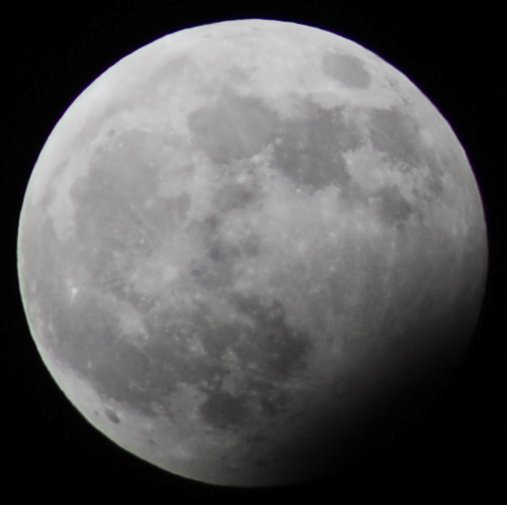
The night is cold and clear so far. Sheets of ice (compacted snow) and what remains of the snow we had a few weeks ago now still lies on the ground. The cold weather shows no sign of letting up, and for once we enter the new year in the grips of a proper winter.
It's not been an easy year, but it's not been a terrible one either. I hope for better, for 2010. After this, I'll start on saining the house with the water I've saved from Bealltainn. I'll have a wee dram ready for the bells, and leave out some offerings before I go to bed, along with a penny to go on the step outside. It's supposed to be good luck if it's still there in the morning.
I also intend to perform some frìth at sunrise, and I'll be baking some shortbread and/or some Yetholm bannocks to take to the in-laws tomorrow, for the obligatory New Year's steak pie. I honestly don't know why it has to be steak pie, but apparently that's the way it is for New Year's Day. As far as I can tell, it's a west of Scotland thing.
But anyway.
Have a good yin. Good Wishes to you all.
The night is cold and clear so far. Sheets of ice (compacted snow) and what remains of the snow we had a few weeks ago now still lies on the ground. The cold weather shows no sign of letting up, and for once we enter the new year in the grips of a proper winter.
It's not been an easy year, but it's not been a terrible one either. I hope for better, for 2010. After this, I'll start on saining the house with the water I've saved from Bealltainn. I'll have a wee dram ready for the bells, and leave out some offerings before I go to bed, along with a penny to go on the step outside. It's supposed to be good luck if it's still there in the morning.
I also intend to perform some frìth at sunrise, and I'll be baking some shortbread and/or some Yetholm bannocks to take to the in-laws tomorrow, for the obligatory New Year's steak pie. I honestly don't know why it has to be steak pie, but apparently that's the way it is for New Year's Day. As far as I can tell, it's a west of Scotland thing.
But anyway.
A Guid new year to ane an' a',
0, mony may you see,
And during a' the years that come,
0, happy may you be!
And may you ne'er hae cause to mourn,
To sigh or shed a tear,
To ane an' a' baith great an' sma',
A hearty guid New Year!
Peter Livingstone
Have a good yin. Good Wishes to you all.
Wednesday, 25 November 2009
Cailleach Bheur
Given the weather at the moment - gales, torrential rain, slee, hail, flooding - it was a nice coincidence that I finally spotted a copy of a book I've been after for ages, which I was hoping would have some good stuff about the Cailleach. It was a little more than I'd usually spend on a book so Mr Seren said he'd get it me for Christmas - not that we're doing presents for each other, but anyway...
Donald MacKenzie refers to the book a lot in his Scottish Folk-Lore and Folk Life and he seemed to take a lot of his information from this source, so I had to have it. My efforts in getting my hands on it were frustrated by the fact that I couldn't get it from the library, so hunting down my own copy was the only way to go. It arrived yesterday and I got into it with gusto, and so far I'm really enjoying it - lots of good stuff, and she gives a version of the Cailleach's battle with Spring, but without Bride or Angus in it like MacKenzie has, who really does seem to be the only source for that.
So anyway, I thought it would be good to copy it down for anyone interested. And maybe it would please her so we she'll calm down and we can get some sunshine for once, eh?
"The word Beur, taken simply as it stands, signifies a peak, point, or pinnacle, and may without straining be taken to mean, in its plural form of 'Bheur' (mountain) ridges.
The hag of the ridges, would be a suitable enough appellation for the genius of the mountain tops. There, on the topmost ridges, do the dark herds of Cailleach Bheur congregate. Thence rush the floods in fleecy foam, and snowy cascades leap, for dark clouds and dark billows are her herds of deer; her sheep and goats are fleecy clouds, and also white-crested waves, or seething waters of hill and plain.
The manner in which the word 'beur' is used is illustrated in the following quotation:
leis an dionaiche long,
A' gearradh a h'astar feadh thonn
Gun chùram mar theine nan speur
Troimh bheàrna beur nan neul-
Whose taut barque
Cleaves with a fearless prow unerring her way thro' the bilow,
Like a lightning flash that shoots thro' the gaps of the jagged cloud ridges.
None of these surmises concerning the origin of the name is quite convincing or satisfactory.
The sphere of the Cailleach's influence, and the actions attributed to her are the following: -
With her mallet - 'farachan' - or pestle - 'slachdan' - she beats and pounds the earth till all growth is destroyed; Nature has become torpid.
But about the middle of January Nature shows signs of reviving, and the sun has begun his returning journey. The Cailleach gets alarmed, and summons the 'faoiltich,' wolflings, or wolf-storms; 'faol,' a wolf. Those storms last until the middle of February.
Then follows the third week of February - 'trì lathan gobaig,' three days of 'shark-toothed,' bitter, stinging east winds; and 'trì lathan feadaig,' three days of 'plover-winged,' swift, fitful blasts, careering, rainy winds that are 'the death of sheep and lamb, and get the strong cattle bogged till the flood rolls over their heads.'
Here are the Gaelic words for those last lines.
'S mise 'n fheadag luirigineach luath;
Marbhaidh mi 'chaora, marbhaidh mi 'n t-uan;
Cuiridh mi a' bho' mhòr 's an toll
Gus am bi an tonn thar a ceann.
Then comes the last week of the month, 'Seachdain a' Ghearrain.' The name is variously interpreted. Some have supposed it to mean a week of sighing, moaning winds, from 'gearan,' complaining. Others take it to denote 'Ploughing Week,' from 'gearran,' a colt. A third party surmise that the name comes from 'geàrr-shion,' short, sudden squalls. But those who suggest this rendering place the week between the 15th of March and the 11th of April. Ploughing week is probably the true interpretation.
The first week of March is marked by temporary blasts of foul weather and flying showers - 'Sgarraichean na Feill Connain' - St. Conan Storms. The second week is marked by tempestuous weather, squally and inclement, 'Doirionn na Feill Padruig' - St. Patrick gales.
Then the Cailleach becomes desperate over her want of success. Despite her efforts to keep the earth hard by beating it with her mallet, despite her storming, the grass waxes, buds appear, and the blossoms peep from beneath their hoods. The Cailleach exclaims
Dh'fhàg e shios mi, dh'fhàg e shuas mi;
Dh'fhàg e eadar mo dhà chluais mi;
Dh'fhàg e thall mi, dh'fhàg e bhos mi;
Dh'fhàg e eadar mo dhà chois mi!
Shootings her and sprouting there,
It eludes me everywhere;
Overhead and underfoot
Bud and blade blossom shoot.
The brave, little wild duck taunts the Cailleach - "Despite thy shrivelling, stinging-cold little March, I and my twelve are yet alive!' 'Just wait a little!' exclaims March, or the Cailleach - for here they are synonymous; she borrows three days from February, and the result is thus described in Scotch: -
The first day it was win' an' west,
The neist day it was snaw an' sleet,
The third day it sae hard did freeze,
The wee birds nebs stuck tae the trees.
The Cailleach tries to chase away her son - the sun, wooing the young Spring - but he escapes with his bride. She causes the wild duck and her brood to perish with cold, and in so doing puts out her own eye. Baffled and defeated on every hand, and fleeing before her enemies, the wintry storms of the Cailleach sink into a calm as the returning sun shines forth and the warm winds blow.
The enraged Cailleach is defeated, she flings her mallet under a holly, where never a blade of grass can grow thereafter, so powerful is the magic influence to deaden growth.
This brings us to 'Latha na Caillich' - Old Wife's Day - the 25th day of March (old style), the date of the Caileach's overthrow, the flinging down of her mallet, and her punishment in being turned into stone."
K. W. Grant, Myth, Tradition and Story from Western Argyll, 1925, p5-6.
Sadly she doesn't cite any sources that she vaguely mentions at times, and a lot of it seems to be anecdotal anyway. She also seems keen to show the Cailleach as having Norwegian origins, which is interesting, and there do seem to be some parallels with some of the mythology so it does seem that there has been an influence at least. I'm looking forward to finishing it off, anyway, when I get a minute...
Donald MacKenzie refers to the book a lot in his Scottish Folk-Lore and Folk Life and he seemed to take a lot of his information from this source, so I had to have it. My efforts in getting my hands on it were frustrated by the fact that I couldn't get it from the library, so hunting down my own copy was the only way to go. It arrived yesterday and I got into it with gusto, and so far I'm really enjoying it - lots of good stuff, and she gives a version of the Cailleach's battle with Spring, but without Bride or Angus in it like MacKenzie has, who really does seem to be the only source for that.
So anyway, I thought it would be good to copy it down for anyone interested. And maybe it would please her so we she'll calm down and we can get some sunshine for once, eh?
"The word Beur, taken simply as it stands, signifies a peak, point, or pinnacle, and may without straining be taken to mean, in its plural form of 'Bheur' (mountain) ridges.
The hag of the ridges, would be a suitable enough appellation for the genius of the mountain tops. There, on the topmost ridges, do the dark herds of Cailleach Bheur congregate. Thence rush the floods in fleecy foam, and snowy cascades leap, for dark clouds and dark billows are her herds of deer; her sheep and goats are fleecy clouds, and also white-crested waves, or seething waters of hill and plain.
The manner in which the word 'beur' is used is illustrated in the following quotation:
leis an dionaiche long,
A' gearradh a h'astar feadh thonn
Gun chùram mar theine nan speur
Troimh bheàrna beur nan neul-
Whose taut barque
Cleaves with a fearless prow unerring her way thro' the bilow,
Like a lightning flash that shoots thro' the gaps of the jagged cloud ridges.
None of these surmises concerning the origin of the name is quite convincing or satisfactory.
The sphere of the Cailleach's influence, and the actions attributed to her are the following: -
With her mallet - 'farachan' - or pestle - 'slachdan' - she beats and pounds the earth till all growth is destroyed; Nature has become torpid.
But about the middle of January Nature shows signs of reviving, and the sun has begun his returning journey. The Cailleach gets alarmed, and summons the 'faoiltich,' wolflings, or wolf-storms; 'faol,' a wolf. Those storms last until the middle of February.
Then follows the third week of February - 'trì lathan gobaig,' three days of 'shark-toothed,' bitter, stinging east winds; and 'trì lathan feadaig,' three days of 'plover-winged,' swift, fitful blasts, careering, rainy winds that are 'the death of sheep and lamb, and get the strong cattle bogged till the flood rolls over their heads.'
Here are the Gaelic words for those last lines.
'S mise 'n fheadag luirigineach luath;
Marbhaidh mi 'chaora, marbhaidh mi 'n t-uan;
Cuiridh mi a' bho' mhòr 's an toll
Gus am bi an tonn thar a ceann.
Then comes the last week of the month, 'Seachdain a' Ghearrain.' The name is variously interpreted. Some have supposed it to mean a week of sighing, moaning winds, from 'gearan,' complaining. Others take it to denote 'Ploughing Week,' from 'gearran,' a colt. A third party surmise that the name comes from 'geàrr-shion,' short, sudden squalls. But those who suggest this rendering place the week between the 15th of March and the 11th of April. Ploughing week is probably the true interpretation.
The first week of March is marked by temporary blasts of foul weather and flying showers - 'Sgarraichean na Feill Connain' - St. Conan Storms. The second week is marked by tempestuous weather, squally and inclement, 'Doirionn na Feill Padruig' - St. Patrick gales.
Then the Cailleach becomes desperate over her want of success. Despite her efforts to keep the earth hard by beating it with her mallet, despite her storming, the grass waxes, buds appear, and the blossoms peep from beneath their hoods. The Cailleach exclaims
Dh'fhàg e shios mi, dh'fhàg e shuas mi;
Dh'fhàg e eadar mo dhà chluais mi;
Dh'fhàg e thall mi, dh'fhàg e bhos mi;
Dh'fhàg e eadar mo dhà chois mi!
Shootings her and sprouting there,
It eludes me everywhere;
Overhead and underfoot
Bud and blade blossom shoot.
The brave, little wild duck taunts the Cailleach - "Despite thy shrivelling, stinging-cold little March, I and my twelve are yet alive!' 'Just wait a little!' exclaims March, or the Cailleach - for here they are synonymous; she borrows three days from February, and the result is thus described in Scotch: -
The first day it was win' an' west,
The neist day it was snaw an' sleet,
The third day it sae hard did freeze,
The wee birds nebs stuck tae the trees.
The Cailleach tries to chase away her son - the sun, wooing the young Spring - but he escapes with his bride. She causes the wild duck and her brood to perish with cold, and in so doing puts out her own eye. Baffled and defeated on every hand, and fleeing before her enemies, the wintry storms of the Cailleach sink into a calm as the returning sun shines forth and the warm winds blow.
The enraged Cailleach is defeated, she flings her mallet under a holly, where never a blade of grass can grow thereafter, so powerful is the magic influence to deaden growth.
This brings us to 'Latha na Caillich' - Old Wife's Day - the 25th day of March (old style), the date of the Caileach's overthrow, the flinging down of her mallet, and her punishment in being turned into stone."
K. W. Grant, Myth, Tradition and Story from Western Argyll, 1925, p5-6.
Sadly she doesn't cite any sources that she vaguely mentions at times, and a lot of it seems to be anecdotal anyway. She also seems keen to show the Cailleach as having Norwegian origins, which is interesting, and there do seem to be some parallels with some of the mythology so it does seem that there has been an influence at least. I'm looking forward to finishing it off, anyway, when I get a minute...
Wednesday, 18 November 2009
Birth and Baptism
First off, a quick note - my dear husband has (finally) fixed the header and the side bar on the site. I'd still like the font size to be bigger on each page but the last time I tried to do that, it's probably how the header broke in the first place...And a better side bar that isn't so unwieldy would be good, but I'm probably pushing my luck there...
Anyway, my I've been feeling in a writy mood lately, and following a discussion on Óenach I was inspired to re-write one of the articles that had been on the original site - mainly I wanted to flesh it out and reference it. So I've done that and it's up on the site now, called Birth and Baptism. There are some things I'd like to add at some point, when resources and time allows - especially on the subject of evidence for druid baptism and the practice of bestowing geasa (tabus) at birth or at important times of change in a person's life. But if I wait for that then like everything else I'll sit and tweak it here and there until it's perfect, and it never will be, so it will never get published.
But instead of wading through my waffle, I thought it might be a good idea to post some of the most pertinent excerpts that I've used to inform what I've written. So errr...why not wade through loads of other people's waffle, eh?
First off, Henderson has some good bits to say on it - a bit scattered, but that can be read around:
Then there's Napier, who gives a wealth of information in his chapter about Birth, with plenty of personal anecdotes, too. Here's a good chunk, but really, it's good to read the whole thing:
Or, concerning Bride in her role as midwife (traditionally, she was said to have helped Mary):
And for Scottish charms to aid childbirth:
The main portion of information about baptism practises from the Carmina Gadelica is in Book Three, which is now available from the Internet Archive site (I'm linking to the main page for it so you can choose which version you want to look at or download). This excerpt I quote in full in the article, but aside from the fact I think it's beautiful, I think the symbolism and imagery it invokes of the nine waves is very in keeping with pre-Christian ideals:
Anyway, my I've been feeling in a writy mood lately, and following a discussion on Óenach I was inspired to re-write one of the articles that had been on the original site - mainly I wanted to flesh it out and reference it. So I've done that and it's up on the site now, called Birth and Baptism. There are some things I'd like to add at some point, when resources and time allows - especially on the subject of evidence for druid baptism and the practice of bestowing geasa (tabus) at birth or at important times of change in a person's life. But if I wait for that then like everything else I'll sit and tweak it here and there until it's perfect, and it never will be, so it will never get published.
But instead of wading through my waffle, I thought it might be a good idea to post some of the most pertinent excerpts that I've used to inform what I've written. So errr...why not wade through loads of other people's waffle, eh?
First off, Henderson has some good bits to say on it - a bit scattered, but that can be read around:
See more at: Henderson, Survivals in Belief Amongst the Celts - chapter 3, The Earthly Journey in particular."The mother never sets about any work till she has been kirked. In the Church of Scotland there is no ceremony on the occasion; but the woman, attended by some of her neighbours, goes into the church, sometimes in service time, but oftener when it is empty; goes out again, surrounds it, refreshes herself at some public-house, and then returns home. Before this ceremony she is looked on as unclean, never is permitted to eat with the family; nor will any one eat of the victuals she has dressed" (Pennant's Tour). Within my own recollection the idea of 'uncleanness' before the 'kirking' was retained...
...In the Proceedings of the Synod of Cashel, A. D. 1172, Benedict of Peterborough mentions for Ireland the following curious facts, which show that the father, in accordance with old custom, could immerse the child thrice in water immediately after birth, or, in the case of a rich man's child, thrice in milk. Thus we could perhaps speak of a rite of milk-baptism: "In illo autem concilio statuerunt, et auctoritate summi pontificis praeceperunt, pueros in ecclesia baptizari, In nomine Patris et Filii et Spiritus Sancti, et hoc a sacerdotibus fieri praeceperunt. Mos enim prius erat per diversa loca Hiberniae, quod statim cum puer nasceretur, pater ipsius vel quilibet alius eum ter mergeret in aqua. Et si divitis filius esset, ter mergeret in lacte."
The mention of the milk reminds of the rite after Christian baptism at Rome on Easter eve in the ninth century: "For the newly-baptised the chalice is filled, not with wine but with milk and honey, that they may understand . . . that they have entered already upon the promised land. And there was one more symbolical rite in that early Easter Sacrament, the mention of which is often suppressed,—a lamb was offered on the altar, afterwards cakes in the shape of a lamb. It was simply the ritual which we have seen in the mysteries." "
Then there's Napier, who gives a wealth of information in his chapter about Birth, with plenty of personal anecdotes, too. Here's a good chunk, but really, it's good to read the whole thing:
"When writing of fairies I noticed,—but as it is connected with birth, I may here mention it again,—a practice common in some localities of placing in the bed where lay an expectant mother, a piece of cold iron to scare the fairies, and prevent them from spiriting away mother and child to elfland. An instance of this spiriting away at the time of child-bearing is said to have occurred in Arran within these fifty years. It is given by a correspondent in Long Ago:—"There was a woman near Pladda, newly delivered, who was carried away, and on a certain night her wraith stood before her husband telling him that the yearly riding was at hand, and that she, with all the rout, should ride by his house at such an hour, on such a night; that he must await her coming, and throw over her her wedding gown, and so she should be rescued from her tyrants. With that she vanished. And the time came, with the jingling of bridles and the tramping of horses outside the cottage; but this man, feeble-hearted, had summoned his neighbours to bear him company, who held him, and would not suffer him to go out. So there arose a bitter cry and a great clamour, and then all was still; but in the morning, roof and wall were dashed with blood, and the sorrowful wife was no more seen upon earth. This," says the writer, "is not a tale from an old ballad, it is the narrative of what was told not fifty years ago."
Immediately after birth, the newly-born child was bathed in salted water, and made to taste of it three times. This, by some, was considered a specific against the influence of the evil eye; but doctors differ, and so among other people and in other localities different specifics were employed. I quote the following from Ross' Helenore:—
"Gryte was the care and tut'ry that was ha'en,
Baith night and day about the bonny weeane:
The jizzen-bed, wi' rantry leaves was sain'd,
And sic like things as the auld grannies kend;
Jean's paps wi' saut and water washen clean,
Reed that her milk gat wrang, fan it was green;
Neist the first hippen to the green was flung,
And there at seelfu' words, baith said and sung:
A clear brunt coal wi' the het tangs was ta'en,
Frae out the ingle-mids fu' clear and clean,
And throu' the cosey-belly letten fa',
For fear the weeane should be ta'en awa'."Before baptism the child was more liable to be influenced by the evil eye than after that ceremony had been performed, consequently before that rite had been administered the greatest precautions were taken, the baby during this time being kept as much as possible in the room in which it was born, and only when absolutely necessary, carried out of it, and then under the careful guardianship of a relative, or of the mid-wife, who was professionally skilled in all the requisites of safety. Baptism was therefore administered as early as possible after birth.
Another reason for the speedy administration of this rite was that, should the baby die before being baptised, its future was not doubtful. Often on calm nights, those who had ears to hear heard the wailing of the spirits of unchristened bairns among the trees and dells. I have known of an instance in which the baby was born on a Saturday, and carried two miles to church next day, rather than risk a week's delay.
...I have quite a vivid remembrance of being myself believed to be the unhappy victim of an evil eye. I had taken what was called a dwining which baffled all ordinary experience; and, therefore, it was surmised that I had got "a blink of an ill e'e." To remove this evil influence, I was subjected to the following operation, which was prescribed and superintended by a neighbour "skilly" in such matters:—A sixpence was borrowed from a neighbour, a good fire was kept burning in the grate, the door was locked, and I was placed upon a chair in front of the fire. The operator, an old woman, took a tablespoon and filled it with water. With the sixpence she then lifted as much salt as it could carry, and both were put into the water in the spoon. The water was then stirred with the forefinger till the salt was dissolved. Then the soles of my feet and the palms of my hands were bathed with this solution thrice, and after these bathings I was made to taste the solution three times. The operator then drew her wet forefinger across my brow,—called scoring aboon the breath. The remaining contents of the spoon she then cast right over the fire, into the hinder part of the fire, saying as she did so, "Guid preserve frae a' skaith." These were the first words permitted to be spoken during the operation. I was then put in bed, and, in attestation of the efficacy of the charm, recovered. To my knowledge this operation has been performed within these 40 years, and probably in many outlying country places it is still practised.See: Napier, Folk Lore, Or Superstitious Beliefs in the West of Scotland Within This Century.
The origin of this superstition is probably to be found in ancient fire worship. The great blazing fire was evidently an important element in the transaction; nor was this a solitary instance in which regard was paid to fire. I remember being taught that it was unlucky to spit into the fire, some evil being likely shortly after to befall those who did so. Crumbs left upon the table after a meal were carefully gathered and put into the fire. The cuttings from the nails and hair were also put into the fire. These freaks certainly look like survivals of fire worship.
We must not, however, pursue this digression further, but return to our proper subject. It was not necessary that the person possessed of the evil eye, and desirous of inflicting evil upon a child, should see the child. All that was necessary was that the person with the evil eye should get possession of something which had belonged to the child, such as a fragment of clothing, a toy, hair, or nail parings. I may note here that it was not considered lucky to pare the nails of a child under one year old, and when the operation was performed the mother was careful to collect every scrap of the cutting, and burn them.
It was considered a great offence for any person, other than the mother or near relation, in whom every confidence could be placed, to cut a baby's nails; if some forward officious person should do this, and baby afterwards be taken ill, this would give rise to grave suspicions of evil influence being at work. The same remarks apply to the cutting of a baby's hair. I have seen the door locked during hair-cutting, and the floor swept afterwards, and the sweepings burned, lest perchance any hairs might remain, and be picked up by an enemy."
Or, concerning Bride in her role as midwife (traditionally, she was said to have helped Mary):
See: Carmina Gadelica Volume 1."When a woman is in labour, the midwife or the woman next her in importance goes to the door of the house, and standing on the 'fad-buinn,' sole-sod, doorstep, with her hands on the jambs, softly beseeches Bride to come:
'Bhride! Bhride! thig a steach,
Tha do bheatha deanta,
Tabhair cobhair dha na bhean,
’S tabh an gein dh’an Triana.'
Bride! Bride! come in,
Thy welcome is truly made,
Give thou relief to the woman,
And give the conception to the Trinity.
When things go well, it indicates that Bride is present and is friendly to the family; and when they go ill, that she is absent and offended. Following the action of Bride at the birth of Christ, the aid-woman dedicates the child to the Trinity by letting three drops of clear cold water fall on the tablet of his forehead.
(See page 114.)"
And for Scottish charms to aid childbirth:
The earliest reference I have been able to find of the use of these seeds as amulets in the West Highlands is in Johne Morisone’s "Deseription of Lewis," supposed to have been written between 1678 and 1688. His words are:-"The sea casteth on shore sometimes a sort of nutts growing upon tangles, round and flat, sad broun or black coullered, of the breadth of a doller, some more, some less; the kernal of it being taken out of the shell is an excellent remedie for the bloodie flux. They ordinarlie make use of the shell for keeping their snuff. Ane other sort of nutt is found in the same maner, of less syze, of a broun colour, flat and round, with a black circle, quhilk in old times women wore about their necks both for ornament and holding that it had the virtue to make fortunate in cattle, and upon this account they were at the pains to bind them in silver, brass, or tinn, according to their abilities. There are other lesser yet, of a whitish coulour and round, which they call Sant Marie’s Nutt, quhilk they did wear in the same maner, holding it to have the virtue to preserve women in childbearing."See: Geo F Black, Scottish Charms and Amulets.
In the Life of Sir Robert Christison there is an extract from his Journal of May 30th, 1866, in which Sir Robert records that Dr Macdonald of Lochmaddy had not been able to get him a specimen of because it is "so rare and is so prized as a charm during childbirth that the midwives wear the seeds set in silver for the women to hold in their hands while in labour; and a husband, who had two, refused twenty shillings for one of them, saying he would not part with it for love or money till his spouse be past childbearing."
The main portion of information about baptism practises from the Carmina Gadelica is in Book Three, which is now available from the Internet Archive site (I'm linking to the main page for it so you can choose which version you want to look at or download). This excerpt I quote in full in the article, but aside from the fact I think it's beautiful, I think the symbolism and imagery it invokes of the nine waves is very in keeping with pre-Christian ideals:
“When a child was born the midwife would put three small drops of water upon the forehead of the little on in the name of the Father, in the name of the Son, in the name of the Spirit, and she would say:Is that enough? Maybe not. How about some good stuff from Walter Gregor before I finish:The little drop of the Father
On thy little forehead, beloved one.The little drop of the Son
On thy little forehead, beloved one.The little drop of the Spirit
On thy little forehead, beloved one.To aid thee from the fays,
To guard thee from the host;To aid thee from the gnome,
To shield thee from the spectre;To keep thee for the Three,
To fill thee with the graces;The little drop of the Three,
To lave thee with the graces.Then the midwife would give the child to a nurse to wash it, and the nurse would put a small palmful of water on the poor little infant, and she would sing the sweetest music that ever ear heard on the earth, and she say in this wise:
A wavelet for thy form,
A wavelet for thy voice,
A wavelet for they sweet speech;A wavelet for thy luck,
A wavelet for thy good,
A wavelet for thy health;A wavelet for thy throat,
A wavelet for thy pluck,
A wavelet for thy graciousness;
Nine waves for thy graciousness.
The rune would be on the nurse's tongue till she was finished of bathing the little infant.”
See: Folk-lore of the North-East of Scotland (chapters 1-3)."On the birth of the child, the mother and offspring were sained, a ceremony which was done in the following manner:--A fir-candle was lighted and carried three times round the bed, if it was in a position to allow of this being done, and, if this could not be done, it was whirled three times round their heads; a Bible and bread and cheese, or a Bible and a biscuit, were placed under the pillow, and the words were repeated, "May the Almichty debar a’ ill fae this umman, an be aboot ir, an bliss ir an ir bairn." When the biscuit or the bread and cheese had served their purpose, they were distributed among the unmarried friends and acquaintances, to be placed under their pillows to evoke dreams.
Among some of the fishing population a fir-candle or a basket containing bread and cheese was placed on the bed to keep the fairies at a distance. A pair of trowsers hung at the foot of the bed had the same effect.
Strict watch was kept over both mother and child till the mother was churched and the child was baptised, and in the doing of both all convenient speed was used. For, besides exposure to the danger of being carried off by the fairies, the mother was under great restrictions till churched. She was not allowed to do any kind of work, at least any kind of work more than the most simple and necessary. Neither was she permitted to enter a neighbour's house, and, had she attempted to do so, some would have gone the length of offering a stout resistance, and for the reason that, if there chanced to be in the house a woman great with child, travail would prove difficult with her."
Subscribe to:
Posts (Atom)