Thursday, 1 May 2008

Archive: Bealltainn 2008

Last year's Bealltainn celebrations were a little unfocused thanks to having a one month old in the house, so I think pretty much anything I did this year would have been an improvement - and considering my similarly unfocused efforts for Là Fhèill Bhrìghde just gone, I was determined to make more of an effort this time round. I have no excuses now - we're all moved in, sorted out and life in general is a little bit more certain, so I don't have those distractions to take up all my spare energy. Now Rosie's had her first birthday I'm starting to wean her as well, so Baby Brain is also starting to recede and my brain is starting to feel a little less fuzzy compared with the fog I've become so accustomed to. Being able to drink actual caffeinated coffee again also helps considerably. Seriously. I missed my old friend.

I digress. Shocking, I know.

I started off taking the kids for a walk yesterday, hunting for some rowan which I found easily. It seems like a mild winter and living on the west coast and right in the path of the Gulf Stream makes a whole lot of difference because in previous years I've had a hard time being sure that what I think looks like rowan really is rowan, because without the leaves, I'm a little less confident on these matters. I'd brought some cheese along as an offering, so after asking I broke off some dead bits that seemed to be about the right size and gave thanks for it. I would have preferred to have taken the wood from a tree I'm more familiar with, so as not to risk offending the spirits so much, but the rowan I've planted in the garden is still basically a stick with leaves sprouting from it and I don't think I'll be able to touch it for a few years yet to allow it to establish itself properly.

It so happened that a young crow drew my attention to the rowan trees in the first place, so I took it as a good sign. I was heading for a different bunch of rowans that I was fairly sure were what I was looking for, but I followed the crow instead. Tom was mightily amused by its squawking and the way it scratched its scruffy feathers with a claw as if mimicking the dog (and so was I, I admit), so it was hard to ignore. Having got what I came for, I decided to explore the woods behind my house instead of heading down to the shore as I was intending, and I'm glad I did because I found a nice bit of woodland that was relatively untouched. The woods in the village, where we usually take our walks are nice but heavily overmanaged by a well-meaning group of people who've taken it upon themselves to 'improve' the woodland, and while the paths they've put through it are handy for me, with a pram, I'm not sure the flowerbeds of daffodils are entirely keeping with a 'wilderness'.

Anyway, this less-than-tamed woodland took us on something of an off-road adventure, which was very exciting given the torrential rain we've been having, given the resulting mud, combined with my complete lack of grace and agility. There were bluebells everywhere, which are very much a Bealltuinn thing to me because they're a sign that spring is progressing, summer's on its way, so I was pleased to see them and took it as a confirmation that it was time to celebrate.

And the moss...One thing I love about this place we've moved to is the moss. It's everywhere, thick and soft, just glorying in the fact that it's moss. I'm tempted to prod it and poke it, but I don't think the wee beasties would appreciate it, and I prefer not to get so up close and personal with them...
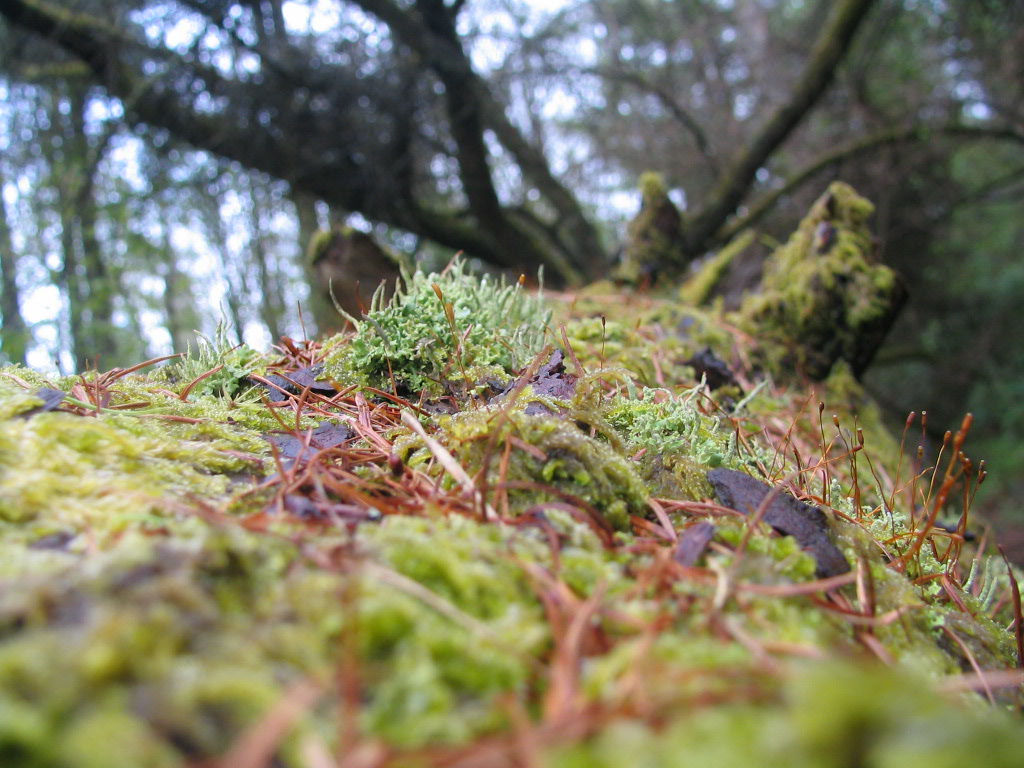
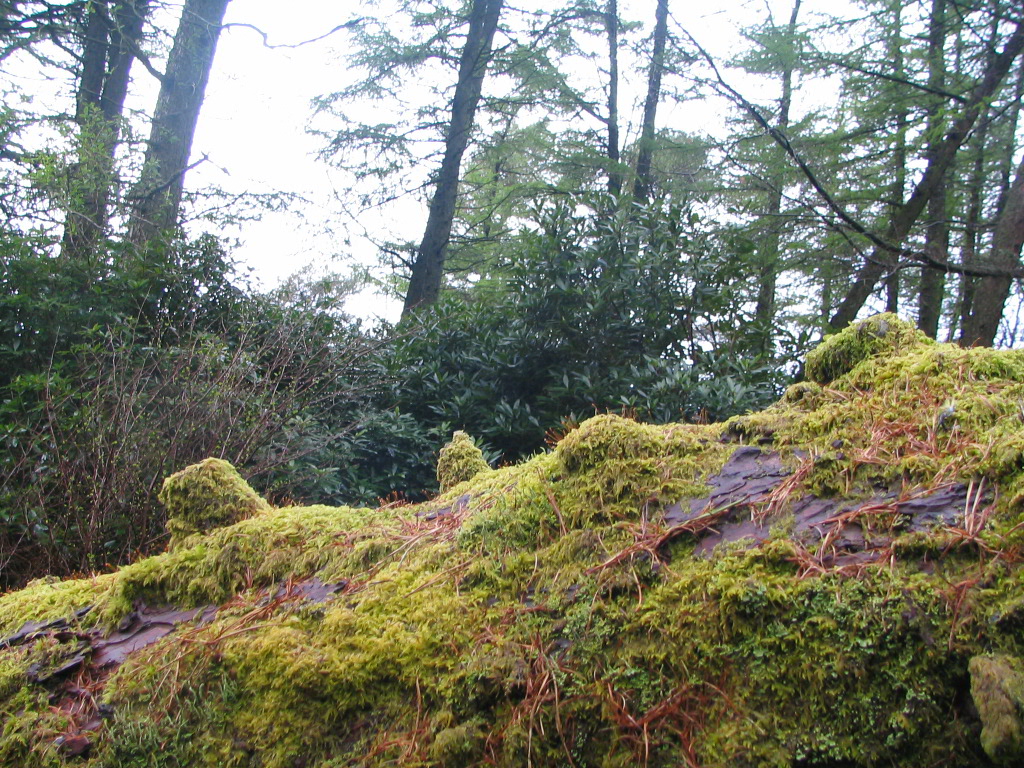
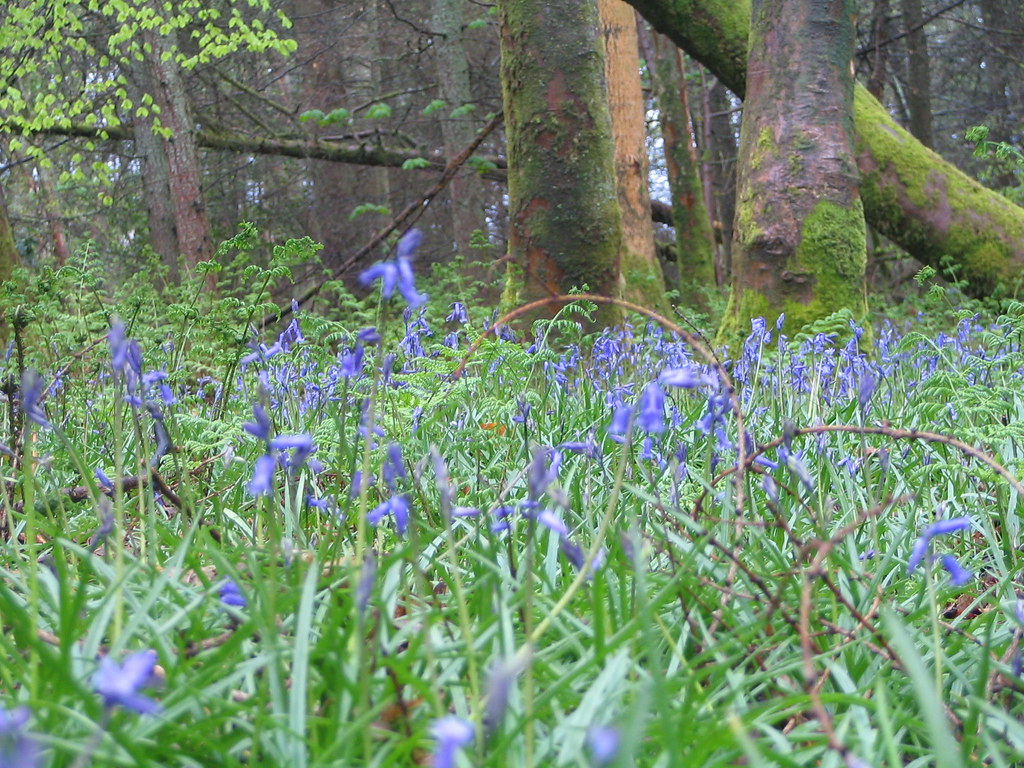

Yeah, the pictures aren't great, but I thought I'd post them anyway. It somehow seemed appropriate to try and capture the spirit of the place.

We got home fairly late, so dinner was put on with haste and I cleaned and tidied the house. I'd meant to get some lamb but there wasn't any when I went shopping so we ended up with chicken instead. Mr Seren surprised me with some Belgian chocolates, which were greatly appreciated - I'd like to say I was restrained and savoured every last one, but sod that. Gorging is good (though my waistline disagrees)...

Anyway, with our chicken feast devoured, the kids eventually put to bed and Mr Seren surgically reattached to his computer for the evening, it was time to start things proper. I started with a right-hand turn and a Good Wish to bless the proceedings, followed by the extinguishing of the hearth flame, which I then ceremonially relit with blessings that I kind of made up on the spot, taking the songs from Carmina Gadelica as inspiration.

From that flame I lit nine candles (in a candle holder given to us by my sister-in-law that I've used before) that I could move outside for a 'bonfire' later on, and got out the rowan I'd collected earlier along with some red thread to make some protective charms, based on McNeill's description and pictures in The Silver Bough. I made the sticks of wood into equal-armed crosses, which I tied together with the red thread to hang above the front and back doors of my house (and here's a picture of my slightly lopsided efforts...).

As I hung them up, I said a charm for protection that I made up for the occasion:

I hang this charm
To ensure no harm
Comes to me or mine

Away away
Today today
Forever and all time

I'm not a poet, mind, but it seemed to help me focus and set them as proper wards for the year to come. It's something I haven't done since we moved so they're long overdue, aside from the plants and tree I put in the garden with a view towards protecting and warding. One of Mr Seren's friends, when she came to visit, commented on the rowan and said I should put it in the front garden for protective purposes ("because it guards against the wee nasties, y'know?"), so I might get another for the front garden because it looks like some of the plants there have died and there should be room now. I'll make new charms to hang up next year and transfer these to the loft (attic) to protect against fire. There wasn't enough rowan to collect to make one for the loft this time, or one for the car to ensure safe journeys as I'd initially intended, either, but that's something I can work on later on.

Next came the bannocks and caudle, which I make for festival occasions based on what Alexander Carmichael outlines in the Carmina Gadelica, along with the traditional lore that John Gregorson Campbell outlines in The Gaelic Otherworld. Each bannock I make, I ask for a blessing for the person it's meant for, and any meal (fallaid) that's leftover makes the bonnach fallaid, which is meant to be made with a hole through it to discourage the Good Folk from entering your house. For Bealltainn I make another, larger 'family' bannock with nine 'knobs' on, for offerings. Then I make the caudle (a custardish type drink with oatmeal) for drinking and libation. In previous years I've tried applying the caudle to the bannocks as a sort of glaze, which is attested to in certain parts of Scotland, but from my experiments I prefer making the caudle as a drink for a libation.

With the bannocks made (I added a little sugar and mixed spice this year, to try and make them a bit more tasty - sweet versions like the Selkirk bannock evolved over time from the plain, savoury, versions apparently - and I was very surprised and pleased with the results. I made them very thick and cooked them very slowly this time, which also worked well, my new pan helped spread the heat more evenly), and the caudle, I went outside with the nine candles I'd lit earlier to act as my 'bonfire'. I broke the family bannock into nine pieces, tossing each piece behind me as described by Carmichael, along with extra offerings to the gods, spirits and ancestors. The caudle (which I experimented with as well - it ended up very tasty, but a little too thick) was shared as a libation, and after spending some time just being outside and mulling things over, looking for any signs or messages that there might be for me, I jumped over the 'bonfire' for luck and went back inside.

First thing in the morning I collected some water and used it to perform the sop seille ('spittle wisp', also from Campbell) - water mixed with my own spittle, spread around the thresholds and house with a piece of straw to protect the household from harmful influences. Tom was up early so he followed me around as I did it, taking great interest and waking Rosie up...I thought hard about when I should do the sop seille. It seemed to make more sense to do it the night before, at the start, but given the fact that the first water of the morning holds so much significance and power, it seemed better to do it in the morning once I'd gathered it.

After doing our everyday stuff - breakfast, shower, toddler group, lunch, an unusual nap for Tom - we went off to the seaside with Eddie. I took the remaining caudle and bannocks, along with some cheese as an offering to the river and the sea, the gods and the spirits of this place that I'm now calling home (and is becoming home to me, too). It seemed like a good way to round off the day, making my offering in such an inbetween place (on the shore, neither land nor sea, at the Firth, both sea and river in some respects) on such an inbetween day as Bealltuinn is...

Before I took the kids and the dog out, I picked an ogam to see what was what, and whether my efforts have been well received this year. First off I picked h-úath, which concerned me. Overall it's not a good sign, but then there seemed to be a certain ambiguity because of its associations with hawthorn, its protective qualities and generally more positive associations with Bealltainn that suggested luck and protection for the coming year (as I was aiming for with everything I've been doing). I picked another few to try and clarify, and got ruis, reinforcing the protective aspects from h-úath with its association with elder, but still otherwise generally negative. Either I've done the right thing with putting more emphasis than I usually do on warding and saining, or I'm being squeamish about the more overtly negative meanings associated with the two. Still not sure, I picked another one and got coll, which seemed to be saying that I should trust in my initial judgement...That's what my gut instinct was telling me, but I think I'll sit on it.

So that's pretty much it...It's late and I need sleep, so anything more that even borders on being coherent will have to wait, for now. Night night.

Thursday, 24 April 2008

Archive: The Celts - Bernhard Maier

The Celts: A history from earliest times to the present
Bernhard Maier

This book was originally published in German in 2000, being made available in English translation in 2003 as far as I can tell from the publishing info. It's not normally the sort of area I'm interested in these days, but it's on the reading list for Celtic Civ 1a (or 101 for those across the pond) at Glasgow Uni and it piqued my interest, to see if there was anything in it that was more up to date than the stuff I learned some...*counts fingers*...eleven (ye gods) years ago now.

When I ordered it, I was expecting to receive something similar to Barry Cunliffe's The Ancient Celts - a fairly hefty tome with lots of nice glossy pictures liberally interspersed throughout the text and that nice smell that those books with the glossy pages for the colour pictures always have. Given the subject, the comparision is inevitable, so I was surprised to find that what actually arrived was a fairly modest book with no pictures - glossy or otherwise - and sans the nice smell.

I have to admit, the lack of pretty pictures immediately put me off wanting to read the book because a) I like looking at the pretty pictures, b) they help put things into context, and c) there's that psychological trick that publishers are happy to capitalise on that makes a glossy book with lots of pretty pictures and handy boxes with little 'soundbites' interspersed throughout infinitely more readable and 'dip-into-able'...

Once I got a grip and decided to have a stab at sitting down and reading it, I found that it was actually quite readable. I speak in relative terms, of course...If you're interested in the subject, then it reads well...if you're looking for some light reading that doesn't tax the brain too much and instantly grabs you with its witty reparte, then this book is not for you, so much...It's not the sort of book that has the double page spread devoted to a particular subject with the convenient soundbites housed in pretty coloured boxes at the edge of a page, or anything like that...it is what it is, straightforward and generally fairly focused. That said, it's still the sort of book that's easy to dip into because the chapters and sub-headings within each chapter make everything easy to flick through ( and the index helps too...).

Unlike Cunliffe's The Ancient Celts (which was the prescribed text, all shiny and new then, when I began studying the subject at Glasgow, and still is alongside Maier), Maier takes a fairly straightforward and chronological approach to the subject, from the earliest evidence of the Celts in the Hallstatt period, through the La Tene, the Gallo-Roman and then the insular Celtic timelines up until the present. Cunliffe doesn't exactly ramble in his treatment of the subject, but he does provide a lot more context to the influences and issues surrounding the study of the Celts - both in terms of the political and social influences that affected the contemporary sources as well as the more modern analyses, interpretations and general misinterpretations that abound with the term 'Celts' and all it encompasses and entails.

Basically, Maier provides a fairly straightforward and bald description of the Celts throughout history, while Cunliffe is more analytical of the subject and therefore a bit more informative in terms of helping a beginner or intermediate get to know the subject and the issues surrounding it. In this sense, while Maier might be more up to date and less complicated, I think Cunliffe might be more useful as a recommended introduction to the Celts as a whole because it will help you to analyse anything else you might read. Then again, Maier's book will appeal to people who aren't looking for so much jargon, in general, if not on the whole, and just want something that's a little more straightforward - 'this is what happened in this period, and then this happened in this period' etc. For some this might be boring, for others, it might be less confusing.

Maier approaches the subject from a more 'Celticist' perspective, which means he deals with the evidence in terms of what the archaeology tells us, what the sources tell us, what the language tells us and so on and so forth - generally a more rounded approach, although one might argue that this makes him a jack of all trades, master of none. He's also (the blurb at the back tells me) a 'comparative religion specialist with interests in Celtic, Indo-European and Semitic Linguistics', which means there's a fair amount of evidence provided on the ritual/religious practices of the Hallstatt, La Tene and Romano-Gaulish period in particular - less so for the continent because he deals with firm evidence and as yet there's very little to draw from there, comparatively speaking. While authors like Barry Cunliffe, Simon James and Miranda Greene tend to try and approach the subject of 'the Celts' in a fairly rounded manner, it's obvious that they're archaeologists and that's where their specialty lies, which is why they tend to be a bit more jargony at times and less satisfactory in their treatment of subjects outside of the archaeological evidence.

For Maier, I thought his treatment of the insular Celts was a lot more superficial than the earlier information provided, particularly in terms of religious practice and traditions, so generally the book might appeal more to anyone interested in continental practices. I'm not sure that the book will provide anything earthshattering whatever period you're looking at, but it's a good introduction overall, and the references obviously draw from books that are also essential reading and so it gives good pointers for further study. You'll find a lot of references that are on the CR FAQ reading list, for one.

There were a few points that made me scratch my head, I have to admit. While it's impossible to agree with any one book 100%, I'm genuinely perplexed at the claims that:

"As typlogical research has shown, many features by which insular Celtic differs both from Gaulish and from the other early Indo-European languages have prescisely corresponding features in the Hamitic languages of North Africa, such as Berber and ancient Egyptian, and the Semitic languages such as Hebrew and Arabic..." (page 122).

I'm not a linguist, so I wouldn't dare to imply I have any sort of expert opinion in this area, but this is news to me...More to the point there aren't any references given to such a claim that would allow anyone to explore the issue further, which is otherwise unheard of in the book. Generally it's well referenced and fairly balanced (in as much as I noticed, anyway), so this example is all the more unfortunate.

Overall, you could do a lot worse than this book. I think the lack of glossy pictures - for context if anything else (because what's the point of describing a piece of art in detail without providing an illustration?) - will be offputting to some, if not most, people. That and the more comprehensive analytical approach that Cunliffe's takes makes his book the better option if you're looking for an all-rounder, but where Maier lacks in detail with the later periods of Celtic history in particular, he makes up for with a more rounded approach in terms of bringing Celtic culture up to the present - this book isn't supposed to be about the details, it's an overview and in those terms it fulfills its purpose well. There are some weaknesses to Cunliffe (especially in his treatment of religious practices, which relies heavily on a classical approach) which Maier tends to make up for. In all, Maier might be an easier read for beginners in terms of substance (or lack of, as it were), but not necessarily the way in which he presents his material.

I'd still recommend Cunliffe as a starting point - if anything, his books are probably cheaper and more widely available - but Maier makes a very good balance and complements other introductory books on the subject. Even if you're more interested in a particular Celtic culture, books like this are a good place to start because they provide a good background to start from. In essence, you could do a lot worse than starting here, but still...there's better out there.

Tuesday, 1 April 2008

Archive: The Great Queens - Rosalind Clark

The Great Queens
Rosalind Clark

It took me at least four attempts to get hold of this book, and while it was slightly more than I usually fork out to fund my book obsession, I'm particularly pleased I made the effort with this one. It wasn't available at Glasgow uni library so buying it was pretty much my only option, without jumping through inter-library loan hoops.

First and foremost, I didn't find it to be too much of a dry read. The book focuses on the use of what Clark argues are essentially sovereignty goddesses in various differing forms in Irish literature, from early medieval evidence to relatively modern examples like Yeats. Seeing as my area of interest is early medieval I was surprised to find that it wasn't too much of a chore to plough on through the final chapters that dealt with the more modern material, because ultimately I was interested in what Clark had to say even if I've never been interested in the modern stuff before now. I would even go so far as to say it piqued my interest in modern Irish history, which is something I've avoided (or at least not actively pursued, at any rate) until now.

Granted it's not light reading, and it's not the sort of book you'd want to take on holiday with you unless you're really interested in the Morrigan or the concept of divine sovereignty in Ireland, say, but still. If you are interested in these sorts of things, it's a worthwhile read. Unlike most of the discussion on this subject that I'm familiar with, Clark looks at the material from a literary perspective, rather than a historical or social perspective that I'm used to, so I found that refreshing. At the same time she came across as being very knowledgeable in the more historical areas too, so in that respect it gave a good balance.

Aside from the fact that I found her arguments about the Morrigan as being (ultimately) a sovereignty goddess persuasive, along with Medb and the Caillech, I found her analysis of the strengths and weaknesses of the various different versions/translations by people like Lady Gregory and Yeats particularly useful for future reference. That said, I'm not all that keen on pigeon-holing deities into one role like 'sky god', 'sun god' and so forth, because it has a tendency to reduce gods or goddesses to one particular function or motive, and they aren't that simple. The label of 'sovereignty goddess' is the same sort of pigeon-holing that I dislike, and yet it's a label that I find useful, myself, so I guess the book's helped me take a look at my own unconscious hypocrisy, I guess.

On the minus side, her references to a triple goddess/Great Mother in a Jungian sense, amongst other sorts of scholars that hold a similar view, was quite jarring, especially seeing as she only went into any great detail in the conclusion to the book. While it's easily read around, and not fundamental to the book itself, it's distracting and I found it slightly confusing at times because she didn't elaborate until you're fairly committed. Has Robert Graves struck again? No, it turns out, but it's one point I especially didn't find any agreement with.

The book also tended to be quite repetitive in places, and while that can make it good for dipping into as a reference (if you wanted to look something up in particular, the general gist of the previous paragraphs wouldn't be lost on you), it didn't make for a very smooth read from start to finish at times.

Ultimately, I liked the book. There aren't many non-fiction, scholarly, books that I can read from cover to cover, but with this one I didn't have a problem. I would go so far as to say that I could probably read it again, which is also fairly unheard of.

This is the sort of book that I think anyone interested in CR should read, but I certainly wouldn't say it's one of those books that anyone should read first, as a beginner or perhaps even intermediate. This is a book for someone who wants to narrow their reading into a particular area. For those who want something a little more focused and in depth, especially if you're interested in the Morrigan (in her various related guises/titles) or the fairly fundamental concept of sovereignty in Irish society, this is a book you should read at some point.

Ultimately, this is the sort of book that I'm happy to hoard, as is my wont, and I don't feel like it's taking up space on my bookshelf unnecessarily.

Saturday, 8 March 2008

Archive: On being a dumbass...

By popular demand (all two of you, anyway), I'm going to try to tell you a tale about crows, goddesses and being a dumbass...It may be long and rambling, as I'm wont to do, so consider this fair warning. I'll understand if your eyes start glazing over...

So here goes.

For the most part, unless I feel that I should do otherwise (for personal or seasonal reasons, say), I tend to honour 'the gods' in my spiritual practices. I've never had what I'd consider to be a patron or patrons, and I've never really considered it necessary to have one (or more) in order to find my spiritual practices fulfilling, or to find a connection with a deity. For me, so far, some relationships have been fleeting, others have been longer lasting. There are a few of the gods that I consider myself to be close to, like Manannan and the Dagda, but I wouldn't say that I'm 'theirs' utterly and completely. Occasionally I've called them my patrons for convenience in conversation, but ultimately I realise that that particular shoe doesn't quite fit in the sense that I should dedicate myself to either of them above all else. My affection for the Dagda stems from the fact that I spent a very intensive year doing my dissertation on him at university. My tutor suggested that I'd appreciate his somewhat cruder elements, and he was right (though I was never quite sure whether or not to be offended by my very Catholic tutor's opinion of me...).

With Manannan, he's been with me since pretty much the beginning - never really overtly, in a daily-conversations-in-my-head kind of way, but more powerfully so than any other relationship I've experienced with a deity. More than any other god, he's the one with whom I have a father/daughter kind of relationship. He's there whenever I go to the sea or even rivers; he's there whenever I travel the well worn path to him at night when I need him, and take grateful comfort in him. He was there everytime I went to the vantage point at the top of the street where I lived in Bo'ness, to look at the view of the Forth, leading out to sea, doing my daily devotions. Sometimes he 'speaks' to me; mostly he's there, nodding and smiling, or tut tut tutting as I stumble about on this path, finding my own way. He's there when I pick myself up, and he's there when I need a kick up the arse.

Until I moved to the west coast, that is. Now, he's there but distant. I assumed that I would have felt him even more strongly, being that this is closer to his territory, so to speak, but no. I look out to sea in search of him, and he tells me that's not the direction I should be looking. OK, I say, I can take a hint (even if it takes me several weeks to get it...).

Since moving here ("over here", where I am now, not "up here" in this country, I mean), one of the things I've been endeavouring to do is to make a connection with the spirits of the place. Naturally, I've also been thinking about the deities of this place, and for a good seven or eight years now I've had an interest in Clota/Clud (or is it *Clota?), who is thought to lend her name to the river Clyde. On my walks to the beach I've been making offerings to the sea, to the spirits and to the gods of the place - generally separately, as it seems appropriate to recognise them separately and distinctly. While I've had the distinct impression that my offerings have been received favourably, I've not had anything to suggest that there's something more I should be pursuing in that avenue - in terms of attempting to build a relationship with any local deities, that is. It all remains somewhat distant and slightly beyond reach so far.

So anyway...In trying to build a relationship with the land and the sea - this place and those in it (spirits or deities or otherwise) - I've done pretty much exactly the same as when we moved up to Bo'ness - albeit in a less focused way then, because it was something I'd not really had to consciously think about doing before. At that time I looked for signs and I received them in abundance, mostly in terms of crows. Crows were everywhere, and for some reason it made me start to think about Badb and I followed that route until I convinced myself out of it. My offerings continued to be received in a generally favourable manner, and I continued to have the sense that there were Those who were close; Those I could trust to put myself into their hands when I needed it, and Those that I honoured as I always had...

But now I'm in the same position again, and things are...different but the same. While I get the sense that what I've been doing has been favourably received, I get the impression that this favour is at some remove. Kind of like...Thanks, but you're looking in the wrong direction...Take a feckin' hint!

Ok...So...I'm thinking, let's sit back and think about this. My general philosophy is Stop Thinking, Do! Because I have a tendency otherwise to Sit There And Think About Stuff Rather Than Ever Getting Round To Doing. I could easily be an Armchair Reconstructionist, but in focusing on doing, perhaps there's a risk that I'll miss what I'm being prompted to do. So, I think, what have I observed since moving here? Well...Even though I live in a slightly more urban area than in Bo'ness, there are many more birds in my garden. There are, in particular, many more crows in my garden. And on the street. And wherever I walk.

I'm especially superstitious about birds because of how I've been raised, as well as the lore that I've read about since discovering CR. As a recon, I see birds as messengers; when I see them, especially when I get the feeling that they want to be seen, I take note. As I've been raised, I see birds as messengers, but not necessarily good ones. Crows and ravens have negative connotations in many superstitions, for example; in particular for myself, I was always taught by my nan and dad that magpies especially are an 'evil' portent. I reconcile these often contradicting beliefs, based on a lot of thought and some experience, by seeing them as messengers, certainly, but not of messages that I may be particularly glad of receiving. Whereas my nan and dad may see one magpie as an ill portent, I may see it as a sign of impending sorrow, or success, depending upon what the magpie's up to.

Similarly, to me at least, a crow in and of itself may not mean much more than 'ooo, look at the crow', but at certain times it can have a lot of significance. In the story I linked to, I concluded that the crow in question was representative of 'the spirit of the place,' perhaps in hindsight because the crow was interacting with Tom more directly than myself. Or perhaps, with hindsight, because I'm reluctant to appear 'speshul'.

In some respects, I stand by the former assertion; crows, more than any other common bird in this neck o' the woods, stand for a lot of things...They are in many ways the spirit of this place to me, purely for the fact that they're a typical 'messenger'. Perhaps the message on that occasion wasn't meant for me per se, perhaps it was meant for Tom...Time will tell. But still...The crows are still with me, and have been since that episode. I see them when I step outside, three of them hopping about on the road. I see them in the garden, three of them cawing away as the dog runs about doing his business...They're at the beach, as I try to entertain Tom and Rosie, cawing and cawing to let me know where I am and am not welcome...Until I pay an appropriate price...Drawing my attention away from the sea. And every time I'm charmed by them.

When I leave some buttered bread and eggs for them in the garden, they make such rucous that it can only seem personal to me, from me to them. Sometimes it seems as if they wait until I'm there to see them take whatever I've set out for them. And Badb's name pops into my head again as I see all this going on.

And ultimately, I'm feeling like, really, I'm a bit of a dumbass. Because while I might see crows as messengers in general, this doesn't mean that they can't be messengers in their most obvious sense, which to me would be associated with Badb. Whether it was because I didn't want to appear speshul, or whether it was because I was genuinely confused, I don't know - a little bit of both, really, I think - but increasingly I'm beginning to think that ultimately...from the general gist that I've been getting as I've opened myself up to her...I'm a dumbass. Not a very Gaelic sentiment, it has to be said, but generally it's one that's fitting of her "oh for fuck's sake, why are you so slow?" sort of sentiment that I've been getting.

So yeah, I'm a dumbass, and I'm slow. Maybe I can't say just yet that Badb is explicitly supposed to be my patron as other people deem such things, in the long term. I'm in very early stages just now, and time will tell. But then she's someone I keep returning to, and she's someone that is very annoyed that it's taken so long to get here; and ultimately, instinctively, yes, I think one day she could come to take that title for me.

Ultimately, perhaps I need to just get over myself and stop shying away from titles that can be seen as very grandiose because I don't want to be associated with the many people I see (or perceive to be) - though not all, I hasten to add - abusing such a title...Because while I'm not speshul, that doesn't mean that I'm not supposed to pursue a relationship with a particular deity.

Saturday, 1 March 2008

Archive: Là Fhèill Bhrìghde 2008

For one reason or another I keep finding reasons to not quite get around to celebrate Là Fhèill Bhrìghde just yet. All my energy seems to be going into getting the house sorted and decorated, and various other projects that I have on the go, including some actual work that I've been doing (I'm proofreading a book, and may end up editing it, too), and in part I've been holding off because I've been wanting to get the house feeling like a home - I'd like to offer the hospitality of my home when I do my celebrations, plus the fact I've wanted to get most of my distractions out of the way so I can concentrate fully and relax a little. I also have a plan to plant a rowan, so I've been waiting for the weather to improve...I'm still waiting...

However, I haven't been completely idle.

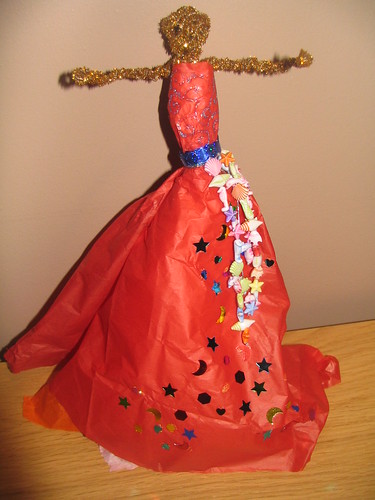
Seeing as I have quite a lot planned I decided to make the dealbh Bride (an icon of Bríd, made to represent her so that she can be invited in on the eve of celebrations, to bless the household) in advance - partly because of timing constraints (especially with the kids), and partly because I'm not the craftiest person, so if I mess the first attempt up, I can have another go...

I'm fairly happy with my first attempt, so I'm sticking with it (it took me bloody long enough, at any rate). Last year I made it out of raffia, which was the closest I could get to a sheaf of wheat or oats (what they were usually made of) - it was a natural substance at least - and I kept it fairly plain and simple as my first ever effort. This year I couldn't even find any raffia in a price range I could afford, let alone corn, so I had to opt for pipe cleaners. Hardly authentic, but thoroughly modern and in some ways more appropriate to my own circumstances. Tom was impressed, anyway, and he had fun with the leftovers. I was planning on burning the dealbh Bride from last year, but instead it seems more appropriate (and practical, given the wet weather) to bury it at the roots of the rowan I want to plant.

The pipecleaners were easier to work with than the raffia, so I got a bit more ambitious in terms of decoration. Unfortunately, all I could get at the time were glittery ones, which has resulted in my efforts looking more like an angel for the top of the Christmas tree, but ho hum. I'm just pleased that I've ended up with something that's vaguely doll-like. I've since found more local places to get plain ones from if I need to next year, so while I may not end up with an abundance of corn in the coming year, pipe cleaners shouldn't be a problem...

But without further ado, here's my somewhat humble effort:


I just bunched the pipe cleaners together, using some to wrap around each other into a ball for the head, and one tied lengthways to make the arms, which I then twisted round to give a little bulk and substance to them. If I'd used corn, then I could have done the same, using the ears of the corn for the head instead of having to make a ball, I think.

For decoration, I took inspiration from Martin Martin's description of an icon he saw made on Colonsay: "The mistress and servants of each family take a sheaf of oats and dress it up in women’s apparel..." (Which can be found here, but no page numbers are given, sorry). I also added a good measure of Alexander Carmichael's description, using shell-shaped beads to dangle off her belt (most of them ended up round the back, so you can't see them in the picture). The shells seemed to be particularly appropriate for our new location, and I've thought about collecting a little seaweed to use for bedding when I make a bed for her. I think I'll probably also pick some dandelions to hang from her belt as well, now that they've come out.

I used red tissue paper for her dress, with a blue belt - both protective colours, which seemed appropriate. Her underskirts are white and orange, to add a little fieryness (and body). I glued the stars and moons on in spirals, which haven't come out too well, so I used glitter glue from Tom's art supplies to carry the spirals above her belt as well.

Hopefully I'll be celebrating sometime next week, so we'll so how well my efforts are received...